
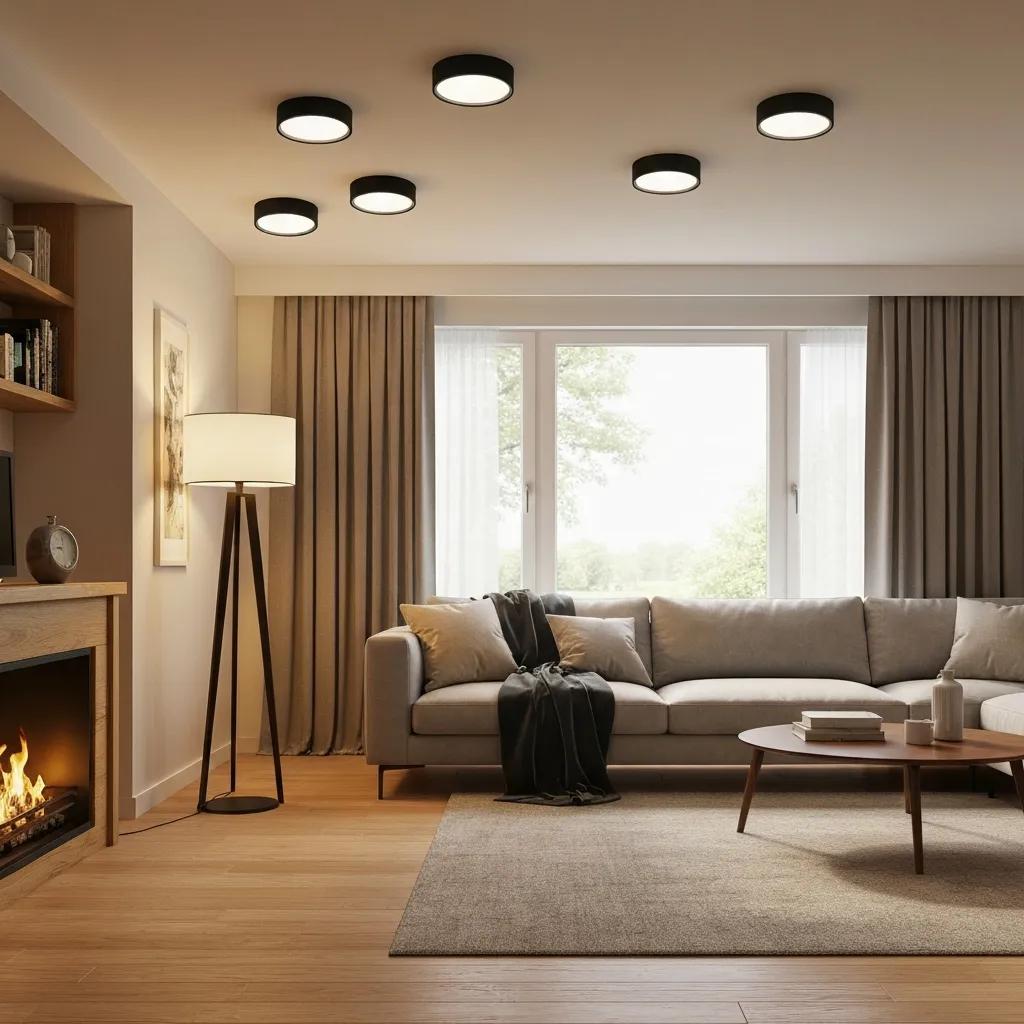
LED & Smart Lighting Controls for Energy Savings in Homes & Businesses
Upgrading to energy‑efficient lighting cuts electricity use, shrinks utility bills, and improves how your space looks and feels. This guide walks homeowners and business owners through the best options—LED upgrades, smart lighting, and simple savings calculations—so you can plan a retrofit that pays back. We explain lumens vs. watts, color temperature, and controls so you can see which changes deliver the biggest return. You’ll get clear technology comparisons, installation steps, smart lighting benefits, savings formulas, and rebate tips. Finally, we show how a local electrician can audit your site, help pick products, and handle professional installation. Keywords like LED lighting, smart lighting, lighting efficiency, and LED retrofit point you toward lower energy use and better light.
What Are the Best Energy Efficient Lighting Options Available Today?
When choosing efficient lighting, look for high lumens per watt, long life, and compatibility with controls. LEDs are the top choice for most homes and businesses because they’re efficient, durable, and come in many shapes and sizes—many models are ENERGY STAR certified. LEDs convert more electricity into visible light and work well with dimmers, motion sensors, and smart hubs, which increases savings. The table below compares common lamp types by energy use, expected life, and typical applications to help you rank options.
That side‑by‑side shows why most projects start with LED bulbs and fixtures: better efficiency, longer life, and easy control integration give the strongest payback. The next section compares LEDs directly to CFLs and incandescents.
How Do LED Lights Compare to CFL and Incandescent Bulbs?
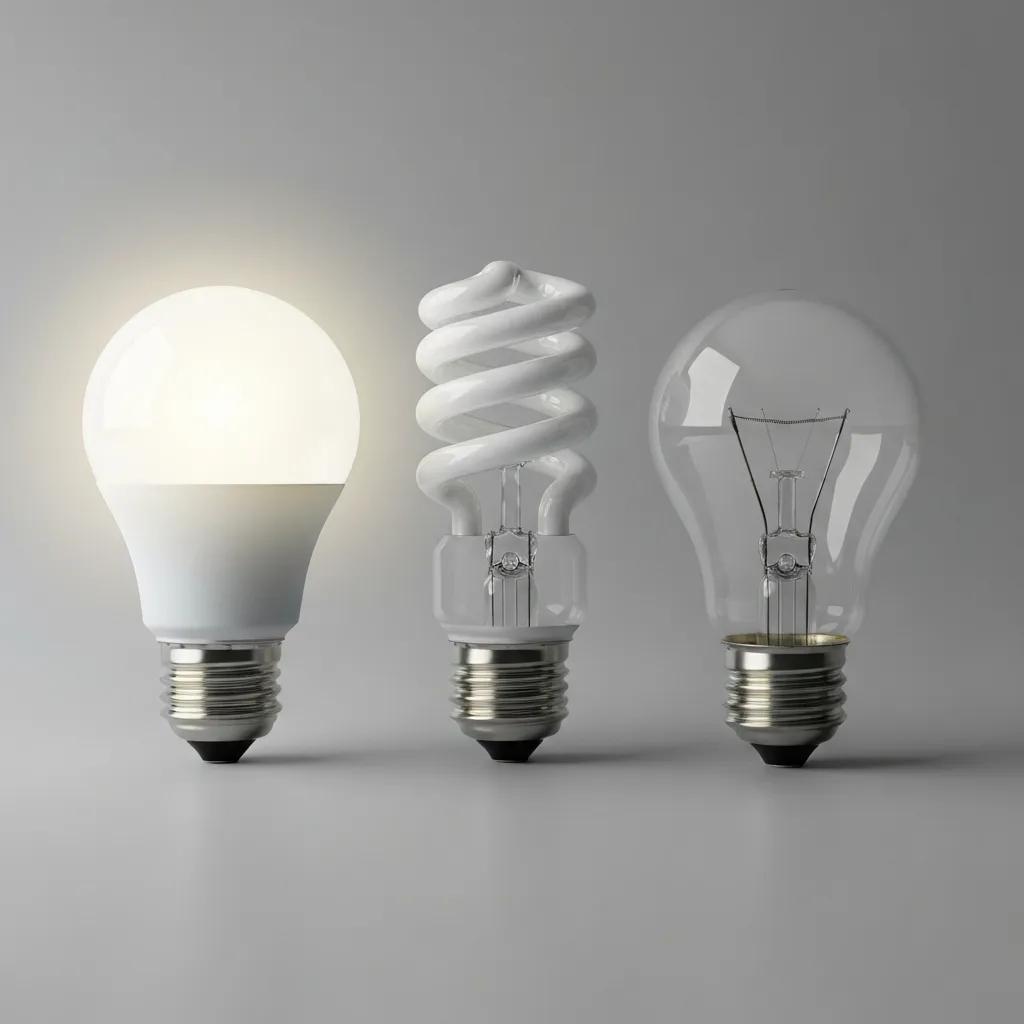
LEDs beat CFLs and incandescents on efficiency, lifespan, and usability. They usually cost more up front but save money over time through lower energy use and fewer replacements. LEDs deliver far more lumens per watt than incandescents and last longer than most CFLs, cutting maintenance. Unlike CFLs, LEDs contain no mercury and they dim more smoothly, keeping good light quality at lower output. For these reasons, LED retrofits are the recommended starting point for residential LED lighting upgrades and electrical installations.
What Are the Benefits of Using Energy Saving Light Bulbs?
Energy‑saving bulbs offer measurable savings, produce less heat, and provide better control over lighting. Swapping out high‑wattage incandescent lamps for LED equivalents reduces annual energy use, lowers cooling demand (LEDs run cooler), and cuts replacement frequency thanks to longer lifespans. LEDs also offer improved color rendering and a wide range of color temperatures so you can match the light to the task or mood. Plus, they work well with sensors and dimmers to cut runtime. Together, these benefits deliver quick energy reductions and lasting operational savings—especially when paired with smart controls.
| Lighting Type | Typical Efficiency (lumens/watt) | Typical Lifespan (hours) |
|---|---|---|
| Incandescent | 10–17 lm/W | 1,000–2,000 hours |
| CFL (compact fluorescent) | 40–70 lm/W | 8,000–12,000 hours |
| LED (modern) | 80–150+ lm/W | 25,000–50,000+ hours |
This table makes it clear why LEDs are usually our top pick: they deliver the most light for the least electricity and last far longer, cutting lifecycle costs and maintenance. Use these metrics to prioritize which fixtures to replace first.
The three most important metrics to compare lighting options:
- Efficiency (lumens per watt): more lumens per watt means the same brightness with less electricity.
- Lifespan (hours): longer life means fewer replacements and lower maintenance costs.
- Color and control compatibility: affects comfort and your ability to optimize energy use.
These measures help decide which lighting types are right for each room—and lead into why professional installation matters for real‑world savings.
How Can LED Lighting Installation Improve Home and Commercial Energy Efficiency?
Correct LED installation pairs the right fixtures with quality drivers, appropriate wattages, and controls that prevent wasted runtime. A professional retrofit ensures fixtures match the space, circuits are wired correctly, and dimmers and sensors are commissioned so everything works as intended—giving you verifiable energy reductions. In commercial settings, zoning, occupancy sensors, and daylight harvesting add even more savings. Experienced electricians start with an audit so upgrades focus on high‑use areas with the fastest payback, then use careful commissioning and measurement to lock in results.
What Are the Steps for Upgrading to LED Lighting in Des Moines Homes?
A typical electrician‑led LED upgrade follows: audit → select → install → verify. First, audit fixture types, lumen needs, hours of use, and control opportunities to prioritize by payback. Next, pick LED bulbs or fixtures with the right lumen output and color temperature for each room, and confirm dimmer compatibility or plan replacements. Then schedule licensed installation for wiring, mounting, or driver swaps. Finally, commission the system and verify performance, fine‑tuning controls and schedules for comfort and runtime.
Key homeowner upgrade steps:
- Audit and prioritize high‑use fixtures to boost payback.
- Select LED products by lumens and color temperature for each space.
- Engage a licensed electrician for safe installation and commissioning.
What Are Smart Lighting Solutions and How Do They Enhance Energy Efficiency?
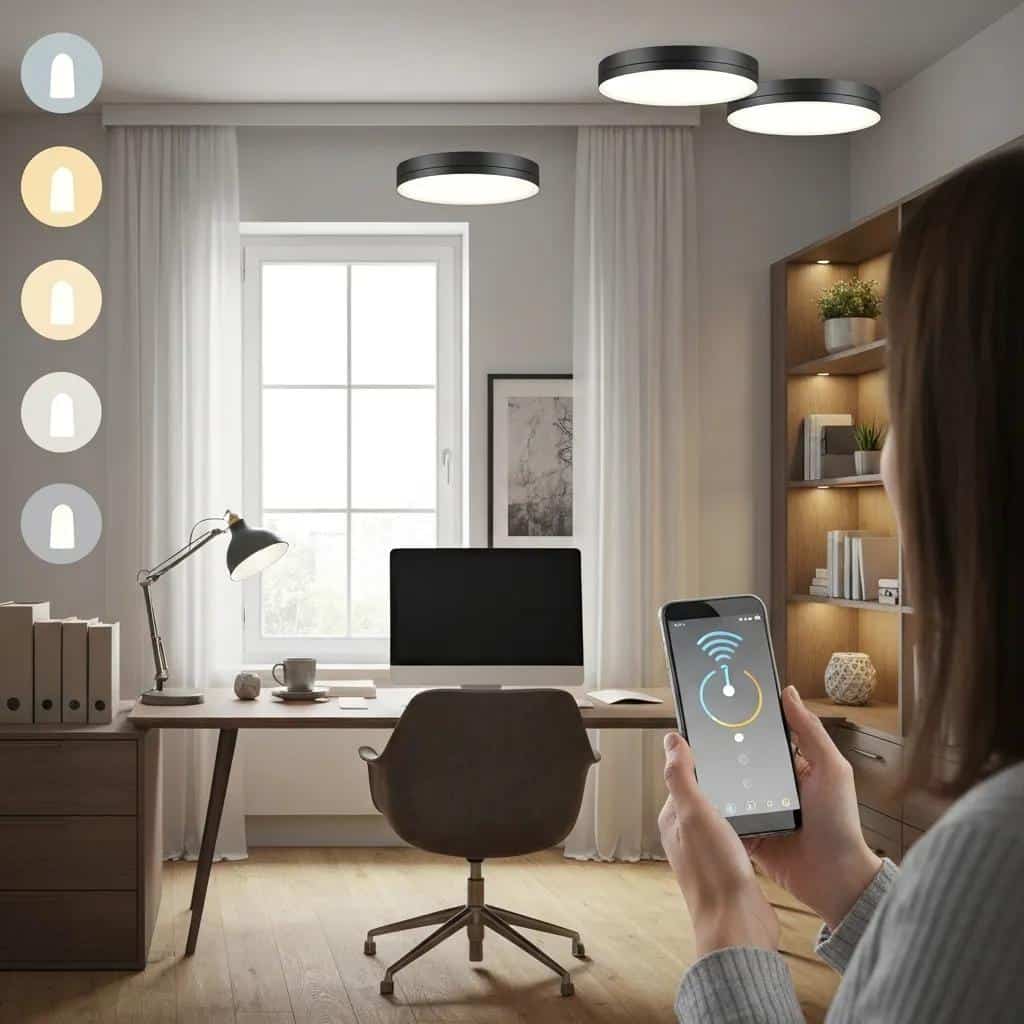
Smart lighting combines efficient LED fixtures with controls, connectivity, and automation to cut wasted runtime and react to occupancy and daylight. When LEDs are tied to motion sensors, schedules, and smart hubs, lights can dim, switch, or change levels automatically—saving energy without sacrificing comfort. Smart systems support scenes, demand‑response, and detailed usage tracking, benefiting both homes and commercial buildings. To work reliably, smart installs need compatible sensors, dimmable drivers, and the right hub; professional commissioning makes sure the rules behave and the savings show up.
Benefits of Intelligent LED Lighting Control Systems in Commercial Environments
As businesses look to control costs and energy use, intelligent LED control systems have become a key tool for managers. This analysis evaluates the economic benefits of smart LED controls in commercial settings using a real deployment as an example. Through cost‑benefit and data analysis, the study finds that intelligent lighting systems can cut energy and maintenance costs, improve the in‑space lighting environment, and boost customer and employee experience—producing clear commercial value.
Analysis of the Benefits of Intelligent LED Lighting Control Systems in Commercial Environments, 2025
How Do Smart Lighting Controls and Automation Work?
Smart lighting relies on sensors, controllers, and communication protocols to switch lights, adjust brightness, and run schedules based on occupancy or daylight. Motion and occupancy sensors spot presence; ambient light sensors enable daylight harvesting. A hub or controller ties scenes and schedules together, and apps or building management systems provide remote monitoring and analytics. Together they form a control loop—sensor → controller → fixture—that reduces needless energy use and makes performance measurable. Proper planning and commissioning are critical for reliable operation.
Smart Lighting Control Strategies for Commercial Buildings
A modern building lighting control strategy uses switches, dimmers, occupancy sensors, daylight sensors, and timers to reduce energy use by responding to occupancy, daylight levels, and time schedules. Integrating smart lighting with a building management system (BMS) can further improve savings and operational efficiency.
Smart lighting system control strategies for commercial buildings: A review, NH Baharudin, 2021
What Are the Advantages of Integrating Smart Lighting with Energy Efficient Bulbs?
Putting smart controls together with efficient bulbs multiplies savings: LEDs lower watts per lumen and controls cut runtime. Combined, they reduce energy consumption and extend fixture life by limiting full‑power operation, which lowers replacement and maintenance costs. Smart integration also improves comfort through scenes and adaptive lighting, while providing data for measurement and verification. Those benefits often shorten payback periods—especially in commercial settings with long operating hours.
Advantages of pairing smart controls with LED:
- Reduced runtime and peak demand through schedules and occupancy sensing.
- Extended fixture life from dimming and less full‑power use.
- Data‑driven optimization via monitoring and analytics to sustain savings.
How Much Can You Save with Energy Efficient Lighting Upgrades?
Estimate savings with this simple formula: savings = (old wattage − new wattage) × hours per year × cost per kWh. Plug in accurate wattage replacements and your local electricity rate to get annual dollar savings. Whole‑building lighting retrofits commonly cut lighting energy by roughly 40%–70%, depending on the starting technology and whether controls are added—smart controls typically increase savings. The table below shows typical savings, annual energy impact, and rough payback ranges for common replacement scenarios. Use correct hours of use and your local cost per kWh for meaningful ROI numbers, and verify performance after installation to confirm projected savings.
Smart Lighting Control Strategies for Commercial Buildings
A well‑designed building lighting control system uses switches, dimmers, occupancy sensors, daylight sensors, and timers to cut energy by aligning lighting with occupancy, daylight, and schedules. Integrating smart lighting with other building systems can increase savings and operational efficiency.
Smart lighting system control strategies for commercial buildings: A review, NH Baharudin, 2021
What Are Typical Energy Savings from LED Lighting Compared to Traditional Bulbs?
LED replacements usually save about 70–85% of lighting energy versus incandescents and roughly 30–50% versus older fluorescents. For one example: swapping a 60W incandescent for a 10W LED and running it 3 hours/day (1,095 hours/year) yields annual kWh savings of (60−10)×1,095/1,000 = 54.75 kWh. Multiply that by your local cost per kWh to get dollar savings. When you add up per‑fixture savings in high‑use spaces, annual reductions add up and payback shortens. Factors like electrical code corrections, control integration, and old ballast inefficiencies will affect the final numbers.
| Replacement Scenario | Estimated Annual kWh Saved (per fixture) | Typical Payback Range |
|---|---|---|
| 60W incandescent → 10W LED | ~55 kWh/year | Months to 1–2 years |
| 32W fluorescent → 15W LED equivalent | ~60–100 kWh/year | 1–3 years |
| Exterior halogen 100W → 25W LED flood | ~200+ kWh/year | 1–3 years |
That table shows how per‑fixture savings add up quickly—especially outdoors and in commercial spaces with long operating hours. Accurate audits and post‑install verification are the best way to confirm these projections and fine‑tune future projects.
Are There Local Rebates or Incentives for Energy Efficient Lighting in Des Moines?
Yes—local utilities, municipal programs, and manufacturers often offer rebates that can cut upfront costs and speed payback. To claim rebates, confirm program eligibility, get required pre‑approval, and save invoices and product specs for the application—ENERGY STAR products are commonly eligible. Many programs focus on commercial retrofits and high‑efficiency fixtures. Coordinating documentation between the customer, installer, and program administrator makes the process smoother.
Steps to claim rebates:
- Identify applicable programs and confirm eligibility before you buy.
- Seek pre‑approval when the program requires it to secure funding.
- Keep detailed documentation—invoices, product datasheets, and post‑install verification.
Why Choose Rewired Iowa for Your Energy Efficient Lighting Projects?
Rewired Iowa is a family‑owned electrical company serving Des Moines and nearby communities. We handle energy‑efficient lighting upgrades, smart home lighting, and commercial retrofits with fast, friendly service, clear pricing, and a 5‑year workmanship guarantee. As a local, accredited provider with strong reviews and 24/7 availability, we cover everything from the initial audit and product selection to professional installation, commissioning, and verification. Working with a qualified local electrician ensures fixtures are compatible, wiring is safe, code requirements are met, and systems are commissioned to deliver the savings you expect.
What Makes Rewired Iowa’s LED Installation and Smart Lighting Services Unique?
Our difference is practical: a 5‑year workmanship guarantee, 24/7 responsiveness, transparent upfront pricing, and a family‑owned focus on customer care. The workmanship guarantee reduces installation risk, which matters for commercial projects. Clear scopes and pricing minimize surprises, and around‑the‑clock availability helps with urgent issues. These features help property owners plan projects confidently and ensure steady support after the job is done.
How Does Rewired Iowa Support Sustainable and Reliable Lighting Solutions?
We promote sustainability through LED upgrades, smart control strategies that cut runtime, and commissioning that verifies performance and longevity. We recommend products and control approaches that lower energy use, reduce heat output, and cut maintenance. Our emphasis on quality workmanship and reliable service keeps systems performing as designed, with follow‑up support for any tuning or component issues. That approach pairs immediate savings with long‑term reliability and environmental benefit.
What Types of Energy Efficient Lighting Are Best for Different Applications?
Lighting should be matched to the space. Consider lux levels, fixture form, and control strategy when choosing products. Kitchens and task areas need higher lumen output and neutral color temperatures; living rooms benefit from warmer, dimmable fixtures. Offices and retail spaces need uniform light with glare control, plus schedules and occupancy sensing. Outdoor lighting should prioritize durability, appropriate IP ratings, and adaptive controls like photocells or motion sensors. Right‑sizing fixtures reduces waste and improves occupant comfort.
| Application | Recommended Product Type | Suggested Specs |
|---|---|---|
| Kitchen / Task | LED retrofit bulbs or under‑cabinet LED fixtures | 800–1,200 lm, 2,700–3,500K |
| Office / Retail | LED panels or troffers with diffusers | 300–500 lux target, 3,500–5,000K |
| Industrial / Warehouse | LED high bay lights, linear LED fixtures | 5,000–10,000+ lm per fixture, 4,000–5,000K |
| Outdoor / Security | LED floodlights, pathway LED fixtures | High IP rating, motion sensor or photocell |
When Should You Consider CFL Bulbs vs. LED Lighting?
CFLs can be a short‑term option if upfront cost is the main constraint, but LEDs are usually the better long‑term choice because they’re more efficient, last longer, dim better, and don’t contain mercury. CFLs sit between incandescents and LEDs for efficiency, but their warm‑up time, dimming limits, and disposal issues make them less practical for many retrofits. Choose CFLs only when LEDs aren’t compatible or immediate replacements are limited.
What Outdoor Energy Efficient Lighting Options Are Available?
Outdoor choices include LED floodlights, pathway and landscape fixtures, area lights, and solar‑hybrid units. Look for rugged construction, glare control, and controls such as photocells and motion sensors. Pick fixtures with the right IP and corrosion ratings and LED modules designed for proper thermal management. Photocells, timers, and motion sensors cut nighttime runtime; solar‑hybrid fixtures can be cost effective where power is limited. Properly specified outdoor lighting improves safety and security while keeping energy and maintenance costs down.
Outdoor selection checklist:
- Specify IP and corrosion ratings that match exposure and local weather.
- Use motion sensors and photocells to reduce unnecessary nighttime operation.
- Select thermal‑managed LED fixtures to preserve lumen output and lifetime.
Energy‑Saving Controller Design for Intelligent LED Lighting Systems
This paper presents a controller design that shapes LED output using sensor feedback and an optimized algorithm to reduce energy use while keeping target illumination levels. The controller aims to deliver meaningful energy savings for intelligent LED lighting applications.
Design of an energy‑saving controller for an intelligent LED lighting system, I Chew, 2016
Conclusion
Switching to energy‑efficient LED lighting and adding smart controls is one of the most reliable ways to cut energy use and operating costs while improving light quality. Knowing how controls work and using professional installation helps homeowners and businesses capture the full savings and comfort benefits. Work with a local expert to plan, install, and verify your upgrade so you get the performance and ROI you expect. Contact us to learn how we can help make your lighting more efficient.

John Senn is a licensed Master Electrician based in Des Moines, Iowa with over 20 years of hands‑on experience serving homes and businesses across the state. He specializes in electrical panel upgrades, whole‑home generator installations, EV charger setups, and 24‑hour emergency service. As the owner of a growing team of certified electricians, John has built a reputation for safe, code‑compliant work and practical solutions that keep Iowa families and businesses powered up. His deep knowledge of Iowa’s electrical codes and his commitment to ongoing training make him a trusted voice in the trade and a go‑to expert for reliable electrical work in Des Moines and beyond.