
EV Charger Installation Costs: Local Pricing & Step-by-Step Guide
This guide lays out the main things that drive the electric vehicle charger cost for homes in Des Moines and Central Iowa. We walk through typical installation steps, compare charger types, and point out local programs and discounts that can cut your final price.
Homeowners often worry about surprise expenses like panel upgrades or long wiring runs. This article gives clear price ranges, decision-making tips, and a practical checklist so you can plan accurately. You’ll also find a step-by-step look at the pre-installation check, permit and inspection expectations, and ways to claim rebates or tax savings.
Finally, we explain why hiring a licensed local installer matters and how Rewired Iowa supports homeowners with transparent estimates and rebate guidance. Read on for typical prices, the installation workflow, incentive options for Iowa residents, and help choosing between Level 1 and Level 2 chargers.
What Affects the EV Charger Installation Cost?
The biggest things that determine installation cost are the charger type and features, your home’s current electrical capacity, how far and complicated the wiring run will be, local labor and permit fees, and site-specific conditions (like a detached garage or required trenching).
These factors interact. For example, a smart Level 2 charger can cost more up front but may qualify for rebates. A long wiring route raises material and labor costs. Understanding these drivers gives you a realistic baseline and highlights where extra charges usually come from. The next sections list the main cost drivers and explain how each one affects your final bill.
Here’s a quick list of the top cost drivers and why they matter:
- Charger type and smart features: Affects equipment cost and the circuit requirements.
- Electrical panel capacity: Determines whether you need a subpanel or service upgrade.
- Wiring distance and path: Adds labor, conduit, and possible trenching costs.
- Permits and inspections: Local fees and mandatory checks add to the price.
- Site conditions (detached garage, obstacles, etc.): May require extra labor or materials.
How Do Different Charger Types Affect Installation Cost?
The charger you choose affects both hardware cost and installation complexity. Level 1 chargers run on a standard 120V outlet. Level 2 chargers need a dedicated 240V circuit and larger breakers.
Level 1 installs often require little or no electrical work—sometimes just a dedicated outlet—so labor stays low. The trade-off is much slower charging, which can be impractical for daily use. Level 2 chargers (including common options for Tesla wall chargers) come in different power levels and with smart features. The complexity of a Tesla charging installation, especially for higher-power or networked models, can cost more and may need heavier wiring and extra panel capacity.
Picking a smart Level 2 charger makes sense if you want scheduling, off-peak charging, or to qualify for utility incentives. Expect a higher upfront price, but potential long-term savings and convenience.
When choosing, weigh charging speed against installation difficulty and future benefits to find the best long-term value for your home.
When Are Electrical Panel Upgrades Needed and How Do They Impact Cost?
You may need a panel upgrade if there isn’t room to safely add a 240V circuit for a Level 2 charger. Upgrades are also common if the panel is old, undersized, or if you want to future-proof your home for more electric loads.
Options range from adding a dedicated breaker and short circuit, to installing a subpanel, to a full service upgrade to a higher amp rating. Each choice has different labor, equipment, and permit costs that can significantly change the project total, directly impacting the overall cost to install an EV charger at home. Older homes often need more work; an on-site check will show whether simple breaker changes are enough or if a larger upgrade is the better move. Costs can be minimal for a short run and new breaker or substantial for a full service replacement, so early assessment avoids surprises.
A licensed electrician’s written quote should explain the recommended option and list alternatives so you understand how each decision affects cost.
What Is the Average Cost to Install an EV Charger in Des Moines and Central Iowa?
Typical costs for home EV charger installation in Des Moines and Central Iowa fall into a few common scenarios: a basic Level 2 install near the main panel, a Level 2 install with minor panel work, and more complex jobs with long runs or service upgrades. Understanding the specific tesla wall charger installation cost or the general level 2 charger installation cost is crucial, as these generally fit into the same categories depending on the model and your home’s electrical setup.
Local labor rates, permit fees, and common home layouts in Central Iowa influence the ranges below. These reflect realistic expectations for homeowners budgeting for an EV charger. Review the table for quick local cost ranges, then read the examples showing what pushes projects from low to high complexity.
The following table summarizes local cost ranges for common installation scenarios:
| Installation Scenario | Typical Scope | Typical Total Cost (Local Range) |
|---|---|---|
| Level 2, panel adjacent | Charger + dedicated 240V circuit, short run | $1,000 – $2,000 |
| Level 2 with panel work | Charger + subpanel or minor service tweaks | $1,800 – $3,500 |
| Long run / detached garage | Conduit, trenching, extended wiring | $2,500 – $5,000+ |
In short: simple installs are often under $2,000, while panel upgrades or trenching push costs higher. These ranges include equipment, labor, and basic permit fees typical for Central Iowa homes as of late 2025.
Rewired Iowa provides free, no-obligation estimates to give homeowners a site-specific price. Their goal is fair, upfront pricing so those local ranges become an exact quote for your house. Next, we break down how labor, permits, and wiring distance change the final bill.
What Are Typical Price Ranges for Level 2 Charger Installation?
A standard Level 2 home install in Central Iowa usually includes the charger, a new 240V dedicated circuit, a breaker, and the on-site labor to mount and set up the unit. The overall Tesla charger installation cost typically falls within these Level 2 ranges.
If the panel is within a few feet of the parking spot and no upgrades are needed, totals tend to land in the lower $1,000–$2,000 range. Jobs that require a subpanel, service tweaks, or extra conduit for an outbuilding are commonly in the $1,800–$3,500 range. Very complex projects—trenching, long conduit runs, or full service upgrades—can exceed $5,000 depending on materials and labor.
A written estimate after a home assessment is the only reliable way to know where your project will fall.
How Do Labor, Permits, and Wiring Distance Affect Final Installation Cost?
Labor often accounts for roughly 30–50% of the total EV charging cost because licensed electricians handle critical wiring, breaker installation, and safety testing. Permit fees vary by city and are a predictable line item you should budget for. Inspections confirm code compliance and are required before use.
Budgeting for these extras helps avoid surprises. A good estimate will list labor hours, permit fees, and wiring cost per foot so you can spot where savings are possible.
How Does the EV Charging Installation Process Work?
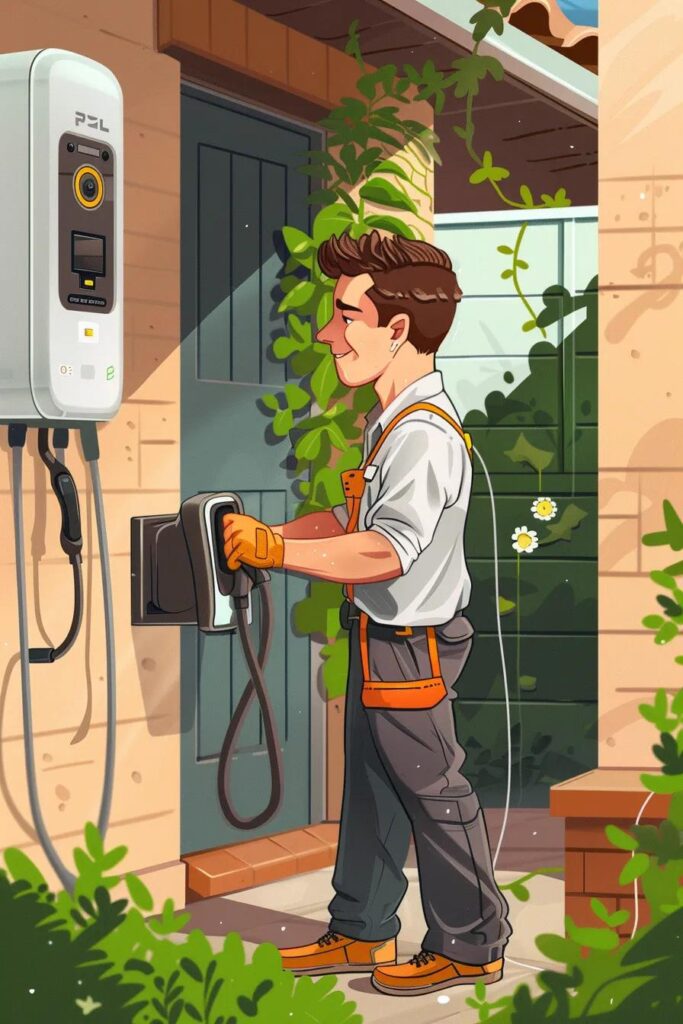
A typical installation follows clear steps: an initial conversation about your needs, a home electrical assessment, permit filing, the installation itself, a formal inspection, and final testing with a walkthrough. This sequence lets electricians identify upgrades, get permits, schedule safely, and verify the charger works properly.
Knowing the steps helps you prepare—clear the parking area, gather permits, and plan for inspector visits. The list below shows each step and when you’ll be involved.
- Consultation and scheduling: Tell us where you park and which charger you want.
- Home electrical assessment: An electrician checks your panel, breaker spots, meter, and wiring path.
- Written estimate and customer approval: Receive a detailed plan, cost breakdown, and timeline.
- Permit application and municipal review: We file the necessary paperwork for inspections.
- Installation day: A licensed electrician runs wiring, mounts the charger, and performs setup.
- Final inspection and testing: An inspector approves the work and the installer tests the charger with you.
From first check to final approval, the process usually takes one to three weeks depending on permit timelines and any required upgrades. The next sections explain the home assessment and the timeline for each phase.
What Happens During the Pre-Installation Home Electrical Assessment?
On the assessment visit an electrician evaluates your main service size, panel type, available breaker spaces, wiring condition, meter location, and the best route to the proposed charger spot. They’ll take photos of the panel and meter, note obstacles or required conduit runs, and measure distances to estimate material needs.
This check determines whether a dedicated breaker is sufficient or if a subpanel or service upgrade is required. The electrician also looks for safety issues like aging wiring or compatibility concerns. The visit ends with a written recommendation and a detailed estimate listing options and their costs so you can choose how to proceed.
A clear assessment minimizes surprises on install day and gives you the information needed to balance upgrades against your budget and charging goals.
What Are the Key Steps from Consultation to Final Testing?
Once you approve the estimate, the installer pulls permits, schedules the install, and orders any special equipment such as smart chargers or longer cables. On install day, licensed electricians install the dedicated circuit, run conduit, mount the charger, and perform tests including voltage checks and a load test if needed.
After the work, local inspectors typically review the installation to confirm it meets code. When the inspection passes, the installer walks you through how to use the charger, pairs any apps or smart features, and hands over warranty documents and paperwork needed for rebates or tax claims.
Clear communication through each stage keeps the timeline predictable. Documented testing also supports warranty claims and incentive applications.
What Local Incentives and Rebates Can Reduce Your EV Charger Installation Cost in Iowa?
Federal and utility programs can lower your out-of-pocket cost. These may include federal tax credits for qualifying equipment and local utility rebates that help offset hardware or installation labor. Program details and amounts change, so check current federal guidance and your utility’s website for eligibility and required documents.
The table below summarizes common incentive types, typical benefits, and how a local installer can help you claim them so you can quickly see what might apply to your home.
| Program / Incentive | Program Type | Typical Benefit / Amount | How Rewired Iowa Can Help |
|---|---|---|---|
| Federal EV charger incentives | Tax credit / rebate | Varies by program period and qualification | Confirm eligibility and provide required invoice documentation |
| State or utility rebates | Rebate / incentive | Utility-specific credits or bill credits | Explain local rules and submit forms when required |
| Manufacturer discounts | Discounted equipment pricing | Reduced charger hardware cost | Recommend compatible units and include savings in estimates |
Combining federal, state, and utility incentives can noticeably reduce your out-of-pocket expense—but it usually requires correct paperwork and properly formatted invoices.
Which Federal and State Programs Are Available for EV Charger Installation?
Federal incentives sometimes include tax credits or rebate programs for qualifying EV charger purchases and installations; these require specific documentation and adherence to program deadlines. State and utility offers vary among Iowa utilities and may appear as direct rebates, bill credits, or time-of-use programs that reward smart charging.
Eligibility commonly depends on home ownership, the equipment type, and whether the installer provides required certification or proof of professional installation. Keep installation invoices, charger serial numbers, and permit records handy—these are often required when applying for rebates or tax credits.
Staying organized during and after installation speeds up incentive claims and improves your chance of success when programs are open.
How Can Rewired Iowa Help You Navigate Local Utility Rebates and Incentives?
Rewired Iowa helps homeowners find applicable rebate programs, clarifies qualification steps, and prepares the paperwork that installers and rebate administrators typically require. They provide detailed invoices, note rebate-ready equipment, and coordinate inspection documents utilities often ask for.
As a local, family-owned electrical service with licensed electricians, Rewired Iowa focuses on clear, upfront pricing and practical advice. They help homeowners who search for “EV charging near me” or “Tesla charger installation” combine a specific installation plan with a targeted incentive strategy.
That support helps homeowners maximize savings while ensuring the installation meets program rules and inspection standards.
Why Choose Rewired Iowa for Your EV Charger Installation in Urbandale and Des Moines?
Rewired Iowa is a family-owned electrical service serving Des Moines and Central Iowa. They prioritize clear estimates, licensed workmanship, and fast local service. If you’re searching for “Tesla wall charger installation near me,” Rewired Iowa has focused experience.
Reasons homeowners trust them include licensed electricians, a workmanship guarantee, and positive reviews that reflect consistent service. A local installer usually smooths permit and utility coordination, offers faster scheduling, and provides advice tailored to local homes. Below are the main benefits Rewired Iowa brings to homeowners comparing installers.
- Licensed electricians on staff with ID verification available.
- A transparent workmanship guarantee covering installed work.
- Local focus on Des Moines, Urbandale, and surrounding Central Iowa communities.
What Expertise and Guarantees Does Rewired Iowa Offer?
Rewired Iowa employs licensed electricians and provides license numbers for verification. They back installations with a 5-year workmanship guarantee that covers the quality of their work. The company emphasizes fast, friendly service and fair, upfront pricing, and they hold accreditation and positive ratings on public review sites.
Homeowners can verify licenses through state lookup tools and check accreditation records for reassurance. These credentials show the electrician installing your charger is qualified and that post-install issues will be handled under a clear policy.
This transparency reduces risk and pairs well with the objective cost and process information in this guide.
How Does Rewired Iowa Provide Fast, Friendly, and Fair-Priced Service?
Rewired Iowa’s local, family-focused approach means prompt scheduling, clear written estimates that break down equipment and labor, and flexible availability for urgent or after-hours needs. They emphasize quick responses and straightforward communication from the first call through final testing, which helps homeowners manage permits and rebate paperwork efficiently.
The company offers free estimates so you can see a custom price before committing. Licensed electricians perform assessments and installations to code. Requesting a free estimate turns the local cost ranges in this guide into a precise, site-specific quote for your home.
That mix of transparency, licensing, and guarantees aims to deliver a worry-free installation experience for homeowners in Urbandale and greater Des Moines.
What Are the Different Types of EV Chargers and How Do They Affect Installation Cost?
Home EV chargers fall into three categories that influence charging speed and installation needs: Level 1 (120V), Level 2 (240V), and higher-power DC fast chargers (usually for commercial use).
The table below compares typical features and installation complexity so you can match your driving habits and budget to the right choice. Understanding these differences helps you balance convenience, cost, and future needs.
| Charger Type | Power (kW) | Typical Charging Speed | Typical Installation Complexity / Cost |
|---|---|---|---|
| Level 1 | 1.2–1.9 kW | ~3–5 miles/hour | Low: standard 120V outlet, minimal labor |
| Level 2 | 3.3–11 kW | ~12–50 miles/hour | Moderate: dedicated 240V circuit, potential panel work |
| DC Fast Charger (residential uncommon) | 50 kW+ | 100+ miles/30 min | High: commercial-grade equipment, utility coordination |
What Are the Benefits and Limitations of Level 1 EV Chargers?
Level 1 chargers plug into a standard 120V outlet and usually don’t require professional installation beyond ensuring a dedicated, safe outlet. That keeps upfront costs low and makes Level 1 a reasonable option for low-mileage drivers or as a short-term solution.
The downside is slow charging—only a few miles of range per hour—so Level 1 may not suit regular commuters unless you have ample overnight time. If your driving needs grow, plan for a possible future upgrade.
Why Are Level 2 Chargers the Most Popular Choice for Home Installation?
Level 2 chargers are popular because they charge far faster than Level 1 and meet the needs of most daily drivers. Installing one typically requires a dedicated 240V circuit, the correct breaker, and sometimes panel or service adjustments. Those installation needs raise costs but give much more convenience.
Smart Level 2 chargers let you schedule charging and manage power use, which can reduce operating costs and work with utility programs. That often makes the higher upfront cost worth it in the long run. For most homeowners, Level 2 is the practical standard: it matches daily driving demands and offers room for future expansion.
Picking the right Level 2 unit and ensuring a proper installation are key to maximizing long-term value and avoiding unexpected upgrade bills.
Frequently Asked Questions
1. What factors should I consider when choosing an EV charger for my home?
When selecting an EV charger, consider the charging speed, installation requirements, and your vehicle’s compatibility. Level 1 chargers are easier to install but offer slower charging, while Level 2 chargers provide faster charging but may require electrical upgrades. Additionally, think about smart features that allow for scheduling and energy management, which can save on utility costs. Assess your daily driving habits and future needs to ensure the charger you choose aligns with your lifestyle and budget.
2. How can I prepare my home for EV charger installation?
To prepare for EV charger installation, start by clearing the area where the charger will be installed, ensuring easy access for the electrician. Gather any necessary permits and documentation, and consider scheduling a pre-installation assessment to identify potential electrical upgrades. It’s also helpful to discuss your charging needs and preferences with the installer, so they can recommend the best charger type and installation plan tailored to your home’s electrical system.
3. Are there any ongoing maintenance requirements for EV chargers?
Yes, while EV chargers generally require minimal maintenance, it’s important to regularly inspect the unit for any signs of wear or damage. Ensure that the charging cable is in good condition and that connections are secure. Periodically check for software updates if you have a smart charger, as these can enhance functionality and efficiency. Additionally, consider scheduling a professional inspection every few years to ensure everything is functioning safely and effectively.
4. What should I do if my EV charger stops working?
If your EV charger stops working, first check the power supply and ensure that the circuit breaker hasn’t tripped. If everything appears normal, consult the user manual for troubleshooting tips. If the issue persists, contact a licensed electrician to diagnose and repair the problem. Avoid attempting to fix electrical issues yourself, as this can be dangerous and may void any warranties on the charger.
5. Can I install an EV charger myself, or should I hire a professional?
While some homeowners may consider a DIY installation, it is highly recommended to hire a licensed professional for EV charger installation. Electricians ensure that the installation meets local codes and safety standards, which is crucial for preventing hazards. They can also assess your home’s electrical system to determine if upgrades are necessary. Professional installation often comes with warranties and guarantees, providing peace of mind that the work is done correctly.
6. What are the potential savings from using an EV charger at home?
Using an EV charger at home can lead to significant savings on fuel costs compared to traditional gasoline vehicles. Additionally, many utility companies offer lower rates for charging during off-peak hours, which can further reduce your electricity bills. Homeowners may also qualify for federal and state incentives, rebates, and tax credits that can offset installation costs. Over time, these savings can make owning an electric vehicle more economical than conventional options.
7. How do I find local incentives for EV charger installation?
To find local incentives for EV charger installation, start by checking your utility company’s website for available rebates and programs. Additionally, visit government websites that outline federal and state tax credits for electric vehicle infrastructure. Local organizations and electric vehicle advocacy groups may also provide information on available incentives. Consulting with your installer can help, as they often have experience navigating these programs and can assist with the application process.

John Senn is a licensed Master Electrician based in Des Moines, Iowa with over 20 years of hands‑on experience serving homes and businesses across the state. He specializes in electrical panel upgrades, whole‑home generator installations, EV charger setups, and 24‑hour emergency service. As the owner of a growing team of certified electricians, John has built a reputation for safe, code‑compliant work and practical solutions that keep Iowa families and businesses powered up. His deep knowledge of Iowa’s electrical codes and his commitment to ongoing training make him a trusted voice in the trade and a go‑to expert for reliable electrical work in Des Moines and beyond.