
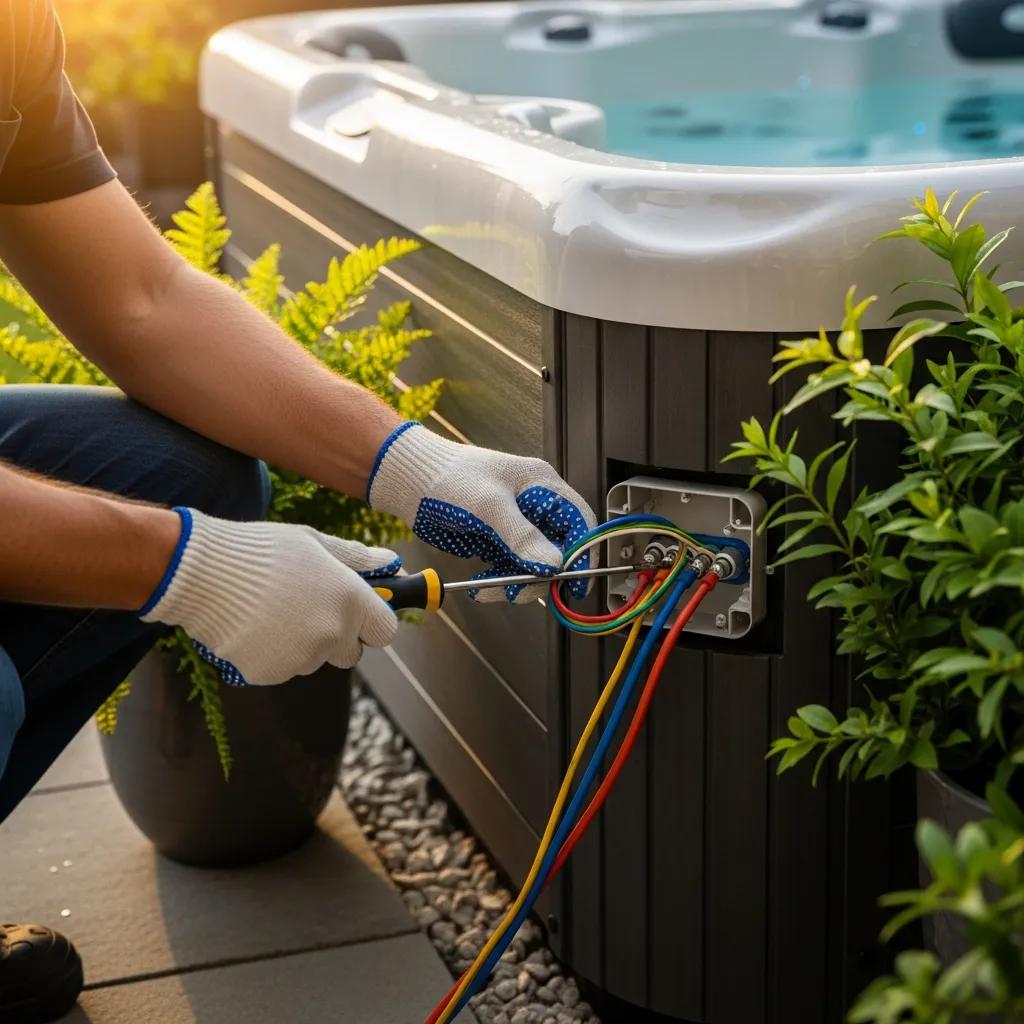
Plenty of homeowners expect hot tub electrical wiring or a full hottub hookup to be a weekend DIY win. In practice, many of those spa electrical installations quit working inside days because of wiring errors, missing protection, or incorrect circuit breaker sizing. This article lays out the failure paths you’ll see right away undersized copper conductors, absent or miswired spa GFCI breakers, loose terminations, and weak grounding/bonding, and shows how correct electrical wiring stops trips, shocks, and permanent spa damage. You’ll get clear technical explanations for why DIY jobs fail in week one, the exact electrical wiring and National Electrical Code elements that keep a spa running safely, the common DIY missteps and how professionals correct them, and guidance on when to call a licensed electrician. We cover National Electrical Code (NEC) requirements, copper conductor gauge and circuit breaker pairings, disconnect placement, waterproofing, and warranty impacts so you can follow a practical, safety-first checklist. Where helpful, Rewired Iowa’s local services are presented as a straightforward option for Central Iowa homeowners who need reliable fixes and fast emergency response. Keep reading for symptom lists, quick reference specs, troubleshooting steps, and scheduling tips tailored to Des Moines-area installs.
Why do most DIY hot tub electrical wiring or jacuzzi wiring jobs fail within the first week?
Shortly after a DIY install, failures usually trace back to a missing or incorrectly installed safety or sizing component. A spa draws sustained high current; when copper conductors are too small, spa GFCI breaker protection is absent or miswired, or terminations are loose, heat, voltage drop, and leakage currents reveal the problem quickly. Sometimes, a small internal fuse in the spa pack might blow, indicating an issue. Early signs include tripped circuit breakers, intermittent power, or a spa GFCI breaker that won’t reset — all indications the protective chain that prevents shock and fire is compromised. The immediate steps are simple: stop using the tub, isolate power, and get a licensed electrician to assess the situation. Continuing to run the equipment risks further spa-pack damage and can void warranties. Knowing the main failure modes helps homeowners figure out why a recent DIY job failed and what corrective actions will fix it.
Most people see the same short-term symptoms: repeated trips, strange burning or metallic smells, or controls that reset unexpectedly. Those signs point to overheating copper conductors, poor terminations, or ground-fault currents exceeding protection thresholds. Initial use exposes electrical wiring to sustained heat and moisture, which often brings latent faults to the surface. The sections that follow link each common mistake to its electrical cause and to practical remediation steps so you can respond safely and efficiently.
What common electrical mistakes cause early DIY failures?

DIY installers frequently create a mismatch between a hot tub’s continuous load and the protection or copper conductors intended to handle it. Typical mistakes are: using copper conductor too small for the circuit breaker, omitting or miswiring the spa GFCI breaker, leaving loose or corroded terminations, and routing copper conductors without electrical conduit or outdoor-rated enclosures. Each error causes a predictable problem: undersized copper conductor overheats, a missing spa GFCI breaker lets ground faults go undetected, and loose terminations produce high-resistance heating that can melt insulation. The professional fixes are straightforward: size copper conductors for continuous loads, install spa GFCI breaker protection per National Electrical Code (NEC), reterminate connections to torque spec, and protect cables with proper electrical conduit and boxes. Those corrections stop immediate failures and cut down on nuisance trips and hidden deterioration over time.
How do those mistakes cause tripped breakers and safety hazards?
Protective devices respond to symptoms: circuit breakers trip on overcurrent or thermal overload, and spa GFCI breakers trip on imbalance to ground — so electrical wiring errors create the triggers that shut systems down. For example, undersized copper conductors carrying sustained spa current heat up, raise resistance, and either cause the circuit breaker to trip or let insulation fail and create a ground fault that trips a spa GFCI breaker. Loose terminations can arc and heat locally, burning connectors and producing smells or ignition points. Moisture entering unsealed junctions raises leakage current and forces frequent spa GFCI breaker trips, while corrosion increases resistance over time. Recognizing these chains helps homeowners prioritize fixes: correct ampacity and tight terminations are first defenses, with proper spa GFCI breaker placement and sealing completing the safety chain.
Seeing how these mechanisms work makes it clear why a professional assessment matters and how corrective work prevents both nuisance trips and dangerous escalation.
What are the essential hot tub electrical wiring and spa electrical installation requirements?
Safe hot tub electrical wiring needs a dedicated, correctly sized circuit, dependable spa GFCI breaker protection, proper grounding and bonding, an accessible disconnect, and permits/inspections per National Electrical Code (NEC) and local rules. A hot tub is a continuous high-current appliance, so components must be sized and installed to carry and interrupt that load while protecting users from ground faults. Panel capacity, copper conductor ampacity, and circuit breaker type must match the tub’s nameplate ratings plus National Electrical Code continuous-load allowances, and outdoor electrical wiring must use weatherproof enclosures and electrical conduit. Below is a quick-reference mapping of common circuit sizes to copper conductor gauge and circuit breaker selection to help with planning and to show how the pieces fit together.
The table below summarizes common dedicated circuit configurations and typical copper conductor/circuit breaker pairings used to meet safe ampacity and National Electrical Code-style expectations.
| Dedicated Circuit / Typical Load | Voltage & Breaker Size | Typical Copper Conductor Gauge |
|---|---|---|
| Small spas (~30–40 A nameplate) | 240 V / 40 A circuit breaker | 8 AWG |
| Common 50 A hot tubs (~48–52 A range) | 240 V / 50 A circuit breaker | 6 AWG |
| Heavier-duty units (60 A nameplate) | 240 V / 60 A circuit breaker | 6 AWG or 4 AWG per manufacturer |
| Long-run installations (>100 ft) | 240 V / Upsize circuit breaker as required for voltage drop | Upsize copper conductor per voltage-drop calc (often +1 size) |
Why is a dedicated circuit required for hot tub wiring?
A dedicated circuit guarantees the continuous ampacity the spa needs so other household loads, such as outdoor lighting or even air conditioning, won’t cause overloads, voltage drop, or nuisance trips. Sharing a circuit can let other appliances change the voltage or push combined loads past the copper conductor’s safe limit, which often shows up during the tub’s initial runs when pumps and heater run together. The National Electrical Code treats hot tubs as continuous-load appliances, so copper conductors and overcurrent protection must be sized for sustained operation. Clear circuit separation prevents many early failures and makes troubleshooting straightforward.
How does GFCI protection safeguard the tub and users?
A ground-fault circuit interrupter monitors current balance and trips in milliseconds if current leaks to ground — a lifesaving function in wet locations. For spas, spa GFCI breaker protection is required at the circuit breaker or a listed disconnect, and the device should be tested monthly. Common problems are miswired neutrals, shared-neutral electrical wiring mistakes, or a failing spa GFCI breaker that produces nuisance trips. When water contacts an energized part, the spa GFCI breaker removes power before a dangerous current can persist through a person or structure. If a properly wired spa GFCI breaker keeps tripping, likely causes are moisture in equipment, degraded components, or an underlying electrical wiring fault that a licensed electrician needs to locate and fix.
Monthly testing and correct installation of spa GFCI breaker devices are simple, essential steps that reduce shock risk around water.
What wire gauge and amperage are needed for safe hot tub wiring?
Copper conductor and circuit breaker selection start with the tub’s nameplate ampacity, apply National Electrical Code continuous-load rules, and consider run length. Typical pairings are 6 AWG copper conductor on a 50 A circuit and 8 AWG copper conductor on a 40 A circuit, though manufacturer specs or long runs may require upsizing. Use the tub’s maximum continuous current, apply the National Electrical Code multiplier where required (commonly 125%), then pick copper conductor size from ampacity tables and check voltage drop. Keep voltage drop under about 3% at full load to protect heater performance and motor life. Always follow the manufacturer’s wiring diagram and schematic, and meet local inspection requirements.
Erring on the conservative side with copper conductor sizing reduces heat and prevents the component stress that often causes week-one failures.
Where should the disconnect switch be placed for hot tub safety?
The disconnect must be accessible for service but placed away from the tub’s splash zone, following National Electrical Code clearance and accessibility guidance. Common practice is a lockable disconnect within sight of the unit but a few feet from the water so it can be quickly isolated for service while staying out of direct user reach. Unsafe placements — hidden inside decking without labeling or in unsealed boxes — complicate inspections and invite corrosion. Inspectors expect clear lockout capability and accessibility, so professional installers position and label disconnects to meet code and manufacturer instructions.
Correct disconnect placement supports safe lockout/tagout and makes future maintenance easier without compromising user safety.
How does the National Electrical Code apply to hot tub electrical wiring?
The National Electrical Code (NEC) sets minimum safety requirements for spas and hot tubs — dedicated circuits, spa GFCI breaker protection, bonding, disconnects, and outdoor electrical wiring — and local jurisdictions may add amendments. Following the National Electrical Code and the edition adopted locally reduces safety risk and inspection rejections by ensuring spa electrical installations meet proven practices like continuous-load sizing and required bonding. Because the National Electrical Code updates periodically, check the edition your municipality enforces and get the proper permits and inspections. A licensed electrician will ensure the install satisfies both National Electrical Code requirements and local inspection expectations, avoiding costly rework and protecting warranty and insurance positions.
Permits and inspections create a documented safety record that protects homeowners and supports warranty or insurance claims if problems arise.
What are the most common DIY hot tub wiring problems — and how do you avoid them?
DIY mistakes usually fall into a few buckets: grounding and bonding errors, wrong circuit breaker/copper conductor pairings, poor outdoor sealing, and ignoring manufacturer spa electrical installation conditions — any of which can cause rapid failure or void a warranty. Avoid them by sizing copper conductors correctly, installing listed spa GFCI breaker devices in the right location, bonding and grounding per code, using outdoor-rated junctions and electrical conduit (such as polyvinyl chloride pipe), and following the manufacturer’s wiring diagram and checklist. The table below maps common DIY problems to their usual causes and the professional fixes that restore safe operation.
| Problem (DIY) | Root Cause | Professional Fix / Outcome |
|---|---|---|
| Repeated spa GFCI breaker trips | Moisture ingress, miswiring, or ground-faulting equipment | Find the leakage source, correct spa GFCI breaker wiring, and seal enclosures |
| Overheating wires or melted insulation | Undersized copper conductors or loose connections | Recalculate ampacity, replace copper conductors, and reterminate to torque spec |
| Corroded outdoor junctions | Unsealed boxes or incorrect materials | Install weatherproof boxes, electrical conduit, and corrosion-resistant fittings |
| Voided warranty | Non-compliant spa electrical installation or missing inspections | Reinstall to manufacturer specs and provide inspection documentation |
How does improper grounding and bonding cause wiring failures?
Grounding gives a reference to earth; bonding ties exposed metal parts together so fault currents have a clear path. If grounding or bonding is missing or wrong, metal parts can become energized during a fault and stray currents can cause nuisance trips or shock hazards. DIY errors include undersized bonding copper conductors, missing bonding jumpers around nonconductive barriers, or attaching the bond at the wrong point — all of which defeat the intended fault-clearing path. A professional fix installs the correctly sized bonding copper conductor, verifies continuity of bonded parts, and ensures grounding electrodes meet code. Additionally, considering a whole-home or dedicated spa surge protector can safeguard sensitive electronics from voltage spikes. That restores a predictable fault path, reduces trip events, and slows corrosion that damages pumps and heaters.
Solid grounding and bonding prevent many hidden failure modes that usually show up soon after energizing the spa.
What happens when circuits are overloaded or wired incorrectly?
Overloads and incorrect electrical wiring lead to frequent circuit breaker trips, hot copper conductors, and premature equipment wear — problems that become apparent during initial operation when heaters and pumps draw maximum current. Common DIY errors are tapping into a multi-wire branch circuit without tied circuit breakers, using a circuit breaker too large for the copper conductor, or ignoring continuous-load multipliers. The professional remedy is a redesign: correct circuit breaker/copper conductor pairings, panel or circuit breaker upgrades when needed, and a dedicated circuit for the hot tub. Fixing these design errors stops repeated interruptions, extends component life, and brings the spa electrical installation up to inspection standards.
Good circuit design prevents emergency callouts and lowers lifecycle costs versus repeated DIY fixes.
Why is waterproofing critical for outdoor hot tub electrical wiring?
Waterproofing keeps moisture out of junctions and equipment, preventing corrosion, insulation breakdown, and leakage currents that trip spa GF breakers or create hazardous paths. DIY misses include indoor-rated boxes used outdoors, exposed cable without proper grommets, or unsealed decking penetrations where water pools. Best practice is weatherproof enclosures, liquid-tight or polyvinyl chloride (PVC) electrical conduit with listed fittings, and approved sealants where copper conductors enter cabinets. Professionals also avoid low spots that trap water and provide proper drainage to reduce long-term moisture problems.
Proper waterproofing removes a primary source of early spa GFCI breaker trips and corrosion-related failures.
How can DIY wiring void your hot tub warranty?
Manufacturers often require spa electrical installations to meet listed electrical wiring and permitting conditions. DIY work without permits, inspection records, or adherence to the wiring diagram or schematic can void warranty coverage for electrical failures. Common warranty killers are modified components, non‑listed parts, or lack of proof of licensed installation where required. A licensed electrician documents compliance, pulls permits, and secures inspection signoffs to preserve warranty eligibility. Before any electrical work, review the manufacturer’s installation conditions and consider a pro when documentation is needed to keep coverage intact.
Code-compliant, documented work protects your warranty rights and gives you recourse if factory components fail.
Why hire a licensed electrician for hot tub electrical wiring and spa electrical installation?
A licensed electrician brings safety, National Electrical Code compliance, and documented workmanship that cut the risk of early failure and protect warranties and insurance claims for your spa electrical installation. Pros do the ampacity math for continuous loads, install listed spa GFCI breaker protection and properly placed disconnects, handle permits and inspections, and run tests that verify safe operation before the spa is commissioned. Rewired Iowa is a family-owned electrical company in Central Iowa (Des Moines, Ankeny, Grimes) that stands behind licensed electricians, upfront fair pricing, fast friendly service, a 5-year workmanship guarantee, and 24/7 emergency response — with a 5-star reputation and A+ BBB rating. This includes specialized services like jacuzzi tub on off switch replacement. Choosing a licensed provider moves responsibility to a documented professional process that fixes first-week failures and reduces long-term risk.
Below is a quick, scannable EAV table showing service features, customer benefits, and how Rewired Iowa delivers those outcomes.
| Service Feature | Benefit | Rewired Iowa Example / Outcome |
|---|---|---|
| Licensed electricians | Safe, National Electrical Code-compliant spa electrical installations | Technicians follow manufacturer specs and National Electrical Code-style practices |
| 5-year workmanship guarantee | Protection against future labor costs | Labor warranty reduces long-term repair expense for homeowners |
| 24/7 emergency services | Fast response for unsafe failures | Temporary isolation and same-day troubleshooting available |
| Upfront fair pricing | Transparent expectations | Clear estimates reduce surprise costs at completion |
What are the benefits of professional hot tub electrical wiring services?
Professionals provide correct circuit breaker sizing, reliable terminations, spa GFCI breaker and bonding installed to National Electrical Code, and permit handling — all of which prevent early failures and repeated service calls for your spa electrical installation. The value is measurable: faster commissioning, less downtime, and inspection documentation that protects warranties and insurance. A DIY install that trips constantly can damage the heater and require panel upgrades, while a professional job is intended to work on first energize. Licensed techs also do pre‑install assessments, anticipate panel capacity needs, and recommend mitigations like subpanels or service upgrades when required. That preventative approach lowers total lifecycle cost versus repeated fixes.
Hiring a pro is an investment in predictable operation and fewer emergency repairs over time.
How does Rewired Iowa ensure safe, National Electrical Code‑compliant hot tub installations?
Rewired Iowa follows an inspection → permit → install → final inspection workflow: we assess load and panel capacity, pull permits, install a dedicated circuit with a listed spa GFCI breaker/disconnect, and coordinate the final inspection. Our team verifies torque on terminations, performs voltage‑drop calculations for long runs, weatherproofs outdoor junctions using appropriate electrical conduit and polyvinyl chloride pipe, and documents the work for warranty and inspection records. Rewired Iowa’s core promises — 5‑year workmanship guarantee, 24/7 emergency services, upfront fair pricing, licensed electricians, fast friendly service, 5‑star reviews, and A+ BBB rating — give homeowners clarity and accountability when correcting DIY errors or commissioning new spa electrical installations. That process reduces first‑week failures and supports reliable operation over time.
These assurances are presented factually so homeowners can weigh professional installation benefits without sales pressure.
What is the typical cost to wire a hot tub professionally in Central Iowa?
Pricing depends on the spa’s rating, run length, and site conditions like panel upgrades or trenching. Expect costs to include labor for correct copper conductor sizing, spa GFCI breaker/disconnect installation, weatherproofing, permits, and inspection coordination for your hottub hookup. Major cost drivers are distance from the panel (longer runs raise copper conductor and labor expense), required electrical service upgrades, difficult site access, and local permit fees. Ask for a written, itemized estimate that lists copper conductor sizes, circuit breaker type, electrical conduit work, and inspection handling so you can compare value instead of just price. Spending on a documented professional spa electrical installation often avoids repeated repair bills and protects warranty coverage, yielding lower total ownership cost than repeated DIY fixes.
Request a clear, itemized estimate to understand how each factor affects cost and where value is provided.
How can professional installation prevent costly repairs and emergencies?
A correct first spa electrical installation prevents the failure sequence that generates emergency calls: proper ampacity sizing, solid terminations, correct spa GFCI breaker placement, and weatherproofing eliminate the common root causes of early breakdowns. Professionals also provide documentation and a workmanship guarantee, lowering your exposure to repair costs and simplifying insurance or warranty interactions if equipment fails through no homeowner fault. Replacing undersized copper conductors and redoing terminations once is typically far cheaper than multiple emergency visits and damaged spa electronics. Professional work focuses on durable fixes that reduce future callouts and deliver predictable performance.
Long-term reliability and lower emergency risk are why many homeowners choose licensed electrical wiring installation over DIY.
Frequently Asked Questions
What should I do if my hot tub electrical wiring installation fails shortly after completion?
Stop using the spa and isolate the power to prevent further damage or safety risks to your spa electrical installation. Then call a licensed electrician for an assessment. Note symptoms you observed — tripped circuit breakers, unusual smells, intermittent power — and share them with the electrician to speed diagnosis. Don’t repeatedly reset devices; that can worsen damage.
How can I ensure my hot tub electrical wiring meets local code requirements?
Consult the National Electrical Code (NEC) and your local amendments, and hire a licensed electrician familiar with the edition your jurisdiction enforces for your jacuzzi wiring or spa wiring. Pull the required permits and schedule inspections during the work. Also follow the manufacturer’s installation guidelines. A licensed pro will handle permits and inspections and make sure the spa electrical installation meets local and National Electrical Code requirements.
What are the signs that my hot tub electrical wiring is improperly installed?
Warning signs include frequent spa GFCI breaker trips, burning or metallic smells, hot or melted electrical wiring insulation, or inconsistent power. Visible damage, corrosion at junctions, or water pooling near electrical components are also red flags. If you see any of these, shut off power and call a licensed electrician.
Can I use indoor-rated materials for outdoor hot tub electrical wiring?
No. Outdoor hot tub electrical wiring must use materials rated for wet locations: weatherproof electrical conduit, outdoor-rated junction boxes, and listed fittings. Indoor-rated materials will degrade when exposed to moisture, leading to corrosion, insulation failure, and safety hazards. Always use components that meet National Electrical Code standards for outdoor use.
What is the role of bonding in hot tub electrical wiring?
Bonding connects all exposed metal parts so fault currents have a low-resistance path to clear. Proper bonding prevents metal components from becoming energized during a fault and helps protective devices operate as intended. If bonding is inadequate, the risk of shock and nuisance trips rises. A licensed electrician can verify and correct bonding to meet National Electrical Code requirements.
How often should I test my hot tub’s spa GFCI breaker protection?
Test the spa GFCI breaker at least once a month. Press the “Test” button — the device should trip and cut power — then press “Reset.” If the spa GFCI breaker does not trip or won’t reset, stop using the spa and call a licensed electrician to inspect or replace the device.
Can I wire tub a hot tub myself without professional help?
Technically, experienced homeowners who pull permits and strictly follow the manufacturer’s wiring diagram and National Electrical Code can do the wire tub work. But because spas are continuous, high‑current appliances in wet environments, most people are safer hiring a licensed electrician to ensure jacuzzi wiring code compliance and preserve warranties. DIY attempts often miss permit requirements, bonding details, and proper spa GFCI breaker placement — mistakes that create hazards or void coverage. If you do any DIY, limit it to non‑electrical prep and have a licensed electrician perform or verify the final electrical wiring connection.
When in doubt, professional verification reduces long-term risk and ensures regulatory compliance.
How far should the hot tub disconnect switch be from the tub?
Place the disconnect so it’s readily accessible for service but outside the immediate splash zone, following National Electrical Code clearance and manufacturer guidance. Common practice puts a lockable disconnect within sight of the unit but a few feet away from water, allowing quick isolation without creating an attractive nuisance at the tub edge. A licensed electrician will pick and label the location to meet inspection and safety requirements.
Proper placement balances accessibility for service with user safety around wet areas.
What copper conductor gauge is recommended for different hot tub sizes?
Typical mappings: 6 AWG copper conductor for 50 A circuits and 8 AWG copper conductor for 40 A circuits — but always follow the spa nameplate, apply continuous‑load calculations, and check voltage drop. Some 60 A units require 4 AWG, and long runs often need upsized copper conductors. Confirm final sizing with a licensed electrician and the manufacturer’s documentation to avoid undersizing, a leading cause of early failure.
Professional calculations prevent undersized copper conductors and the heat or nuisance trips that follow.
Why does my hot tub spa GFCI breaker keep tripping?
Frequent trips usually come from moisture in equipment, corroded or loose connections, shared-neutral electrical wiring errors, or a failing spa GFCI breaker device. If trips start after the first runs, moisture or electrical wiring mistakes that appear under load are often to blame. Troubleshooting steps include drying and inspecting equipment, checking polarity and neutral separation, and testing the spa GFCI breaker itself. If trips persist, a licensed electrician should run insulation-resistance tests and inspect equipment. Don’t ignore repeated trips — they signal a leakage or electrical wiring fault needing diagnosis.
Stopping repeated trips preserves component life and reduces hidden electrical hazards.
How long does a professional hot tub electrical wiring installation take?
A straightforward spa electrical installation with a short run and no panel upgrade is often finished in a single day. Jobs that require panel upgrades, long trenching, or permit scheduling can extend over multiple days, including inspection wait times. On-site electrical wiring and commissioning for a standard job usually occupy one workday; upgrades add time for parts and inspection coordination. Rewired Iowa coordinates permits and inspections to minimize delays and offers emergency services when failures require immediate stabilization before permanent repairs.
Expect timing to vary with site complexity; ask for a timeline in the written estimate so you know what to expect.
How can you get a safe, reliable hot tub electrical wiring installation in Central Iowa?
To secure a dependable spa electrical installation in Des Moines, Ankeny, Grimes, and nearby Central Iowa communities, follow a simple process: assess your electrical service, obtain required permits, schedule an on‑site estimate, and confirm a documented installation plan that includes testing and inspection. A licensed electrician will evaluate panel capacity, run length, and environmental protection needs, then provide an itemized estimate listing copper conductor sizes, circuit breaker type, electrical conduit work, and inspection handling. If you tried DIY electrical wiring and saw a first‑week failure, isolate power and contact a licensed pro for a safety assessment rather than repeatedly resetting devices.
Below are actionable steps to request an estimate or emergency service and what to expect during the visit.
How do you schedule a hot tub electrical wiring estimate with Rewired Iowa?
To schedule an estimate, give basic project details (hot tub nameplate ampacity, distance to the panel, and any access constraints for the hottub hookup) and request an on‑site assessment. The estimator evaluates service capacity, run requirements for the hottub hookup, and permit needs and delivers a transparent, itemized estimate. Rewired Iowa emphasizes upfront fair pricing and documents the scope to reduce surprises. Our licensed electricians will explain options like electrical conduit routing or panel upgrades. Expect the estimate to include a written scope, recommended copper conductor sizes and circuit breaker selection, permitting responsibilities, and a proposed timeline for work and inspection.
An on‑site estimate removes guesswork and helps ensure the final spa electrical installation meets safety, warranty, and inspection requirements.
What emergency hot tub electrical wiring services does Rewired Iowa offer?
Rewired Iowa provides 24/7 emergency response to isolate unsafe conditions, perform temporary safe isolation, and run diagnostics to find the cause of immediate failures. After stabilizing the site, we schedule permanent repairs and inspection coordination. Emergency actions typically include de‑energizing unsafe circuits, installing temporary isolation devices, and documenting hazards for rapid remediation, followed by permanent work such as copper conductor replacement, spa GFCI breaker repair, or panel upgrades. If you smell burning, experience repeated trips, or suspect shock risk, shut down the circuit and request immediate professional response rather than attempting repeated resets.
Fast emergency action limits damage and protects occupants while preserving the option for full, National Electrical Code‑compliant repairs.
This article combined National Electrical Code-style electrical wiring principles, clear failure‑mode mechanics, practical avoidance steps, and local service options for Central Iowa homeowners. It included quick reference specs, problem→cause→fix mapping for common DIY faults, and factual information about Rewired Iowa’s credentials and process to help you choose a reliable licensed electrician. Use the tables and symptom lists to prioritize safety steps and confirm that any corrective work restores National Electrical Code‑compliant, long‑term reliability.
Need Professional Hot Tub Wiring in Central Iowa?
Don’t risk costly DIY mistakes or safety hazards. Trust Rewired Iowa’s licensed electricians for safe, National Electrical Code-compliant, and reliable hot tub electrical wiring installations. We offer upfront pricing, a 5-year guarantee, and 24/7 emergency service.

John Senn is a licensed Master Electrician based in Des Moines, Iowa with over 20 years of hands‑on experience serving homes and businesses across the state. He specializes in electrical panel upgrades, whole‑home generator installations, EV charger setups, and 24‑hour emergency service. As the owner of a growing team of certified electricians, John has built a reputation for safe, code‑compliant work and practical solutions that keep Iowa families and businesses powered up. His deep knowledge of Iowa’s electrical codes and his commitment to ongoing training make him a trusted voice in the trade and a go‑to expert for reliable electrical work in Des Moines and beyond.