
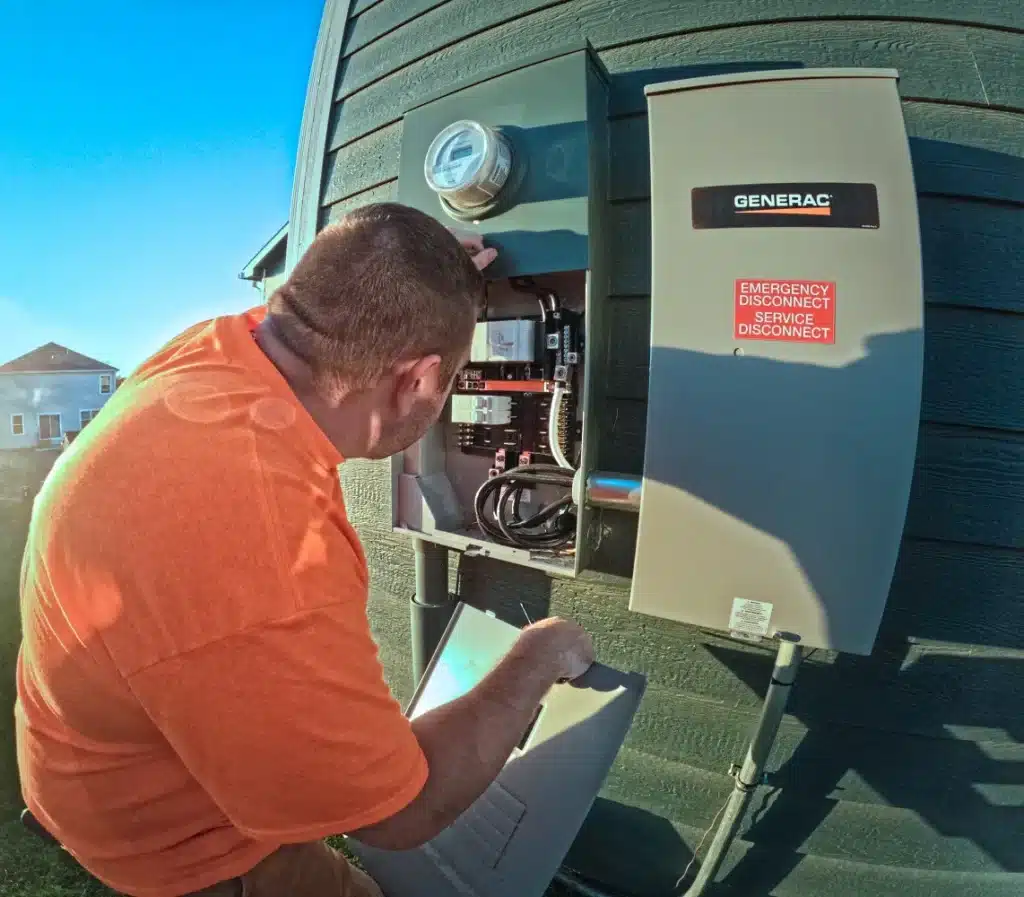
An electrical panel upgrade replaces or enlarges the main service equipment that distributes electricity through a home or business, increasing system capacity and improving overall power stability. This upgrade changes the panel’s amperage rating, main breaker size, and often adds modern safety devices, ensuring steady voltage delivery under variable loads. Readers will learn how capacity (amperage) interacts with load, why undersized panels cause flicker and breaker trips, and practical signs indicating an upgrade is due. The article explains safe diagnostic steps, the technical mechanism behind power instability, upgrade benefits such as AFCI/GFCI protection and EV-readiness, and typical local process and cost factors in Des Moines. Finally, you’ll get a clear comparison of upgrade options (100A, 200A, 400A), an overview of advanced smart-panel solutions and load-management strategies for EV charging, and concise next steps to evaluate whether a panel upgrade is right for your property.
What Are the Signs You Need an Electrical Panel Upgrade?
An electrical panel struggling to meet demand shows observable signs before failure, preventing damage and fire risk through early recognition. Homeowners often notice recurring breaker trips, flickering lights with heavy appliances, or unusual heat and smells at the panel—symptoms directly linked to the panel’s inability to safely carry current. Early identification allows for temporary mitigation and helps determine if a capacity increase, new breakers, or full panel replacement is needed. Subsequent sections detail breaker trips and other symptoms, distinguishing nuisance issues from systemic undercapacity.
The most common observable signs include:
- Frequent breaker trips when multiple appliances run simultaneously, signaling overloads on shared circuits.
- Flickering or dimming lights tied to specific appliance use, indicating voltage sags under load.
- Burning smells, buzzing sounds, or a hot panel cover, which can indicate loose connections or overheating components.
These signs point to either an overloaded circuit or aging panel components; understanding breaker behavior is the next step in diagnosing capacity issues.
How Do Frequent Breaker Trips Indicate Panel Capacity Issues?
Frequent breaker trips usually indicate a circuit load exceeding its rating or a fault. In many homes, repeated trips occur when multiple high-draw appliances compete on the same circuit (e.g., dryer, oven, microwave), pushing it into overload—distinct from a single short-circuit trip. Homeowners should log trip occurrences and running appliances; this diagnostic record helps determine if an upgrade, load balancing, or dedicated circuits are needed. Immediate safety steps include unplugging nonessential loads, resetting after a short interval, and shutting off circuits producing heat or smell. Persistent trips warrant a licensed professional inspection to assess service amperage and potential panel replacement.
Understanding breaker trip patterns leads naturally into recognizing other panel symptoms, which collectively reveal the panel’s condition and capacity under everyday loads.
What Other Symptoms Signal Electrical Panel Struggles?
Beyond trips, struggling panels often show voltage fluctuations (e.g., lights dimming with HVAC or kitchen appliances) and warm or loose outlets, signaling poor connections or aged components. A burning odor, discoloration around breakers, or visible corrosion on bus bars are urgent safety hazards requiring immediate circuit disconnection until a professional evaluation. Reliance on extension cords, power strips, or frequent space heater use can mask an undersized panel by deferring service capacity issues. Homes with fuse boxes or obsolete panels clearly indicate a need for replacement with a modern, code-compliant panel for stability and safety.
These symptoms emphasize why understanding capacity — the amperage the panel can deliver — is central to stable power delivery and safe operation under modern household demands.
How Does Electrical Panel Capacity Impact Power Stability?
Electrical panel capacity, measured in amperes (amps), defines the total current a service can supply simultaneously. When combined load approaches or exceeds this capacity, voltage sags, breaker trips, and unstable power delivery result. Like a water main, a larger pipe (higher amperage) delivers more flow without pressure drop, while an undersized service restricts flow and causes pressure loss under demand. Adequate capacity maintains voltage within tolerances, preventing nuisance trips and protecting sensitive electronics from repetitive voltage sag. Subsequent subsections define capacity for homeowners and explain how undercapacity creates safety and equipment risks, aiding decisions on 200-amp or other upgrades.
What Is Electrical Capacity and Why Is It Critical for Modern Homes?
Electrical capacity, the main service amperage rating (e.g., 100A, 200A, 400A), dictates total current available to branch circuits; higher capacity supports more simultaneous loads without voltage degradation. Modern homes, with electric HVAC, induction cooktops, hot water heaters, whole-home EV charging, and numerous electronics, are more energy-intensive, often exceeding older 60A–100A systems. A Level 2 EV charger, for instance, typically needs a dedicated 30–50 amp circuit, potentially exceeding an undersized panel’s capacity when added to existing heavy loads. When upgrading, consider the panel as a central distributor whose amperage must align with expected peak loads and future additions like EV charging or battery storage.
Recognizing capacity needs leads directly to understanding the risks of an undersized panel and why upgrading improves stability and safety.
How Does an Undersized Panel Cause Power Instability and Safety Risks?
An undersized panel forces breakers to operate near or above limits, generating heat at connections and increasing nuisance trips and thermal stress on wiring. Chronic voltage sags damage electronics, shorten motor life, and corrupt data-sensitive equipment; repeated overloads raise fire risk as connections loosen or insulation degrades. Code-wise, undersized or obsolete panels may lack modern safety features like AFCI/GFCI protection and NEC coordination, causing compliance and insurance issues during resale. While temporary mitigation like load shedding or dedicated circuits can reduce symptoms, long-term stability and fire prevention demand aligning service amperage with realistic household demand.
Understanding these risks clarifies why upgrades are both a reliability and safety investment rather than merely a convenience.
What Are the Benefits of Upgrading Your Electrical Panel with Rewired Iowa?
Upgrading an electrical panel enhances safety, increases usable circuit capacity, and reduces nuisance trips, preparing your home for modern appliances and EV charging. These benefits, applicable regardless of installer, should guide decision-making. Modern panels support AFCI/GFCI protection, whole-home surge protection, and improved bus-bar/breaker designs that reduce heat and connection issues. For homeowners considering a trusted local provider, Rewired Iowa—a family-owned electrical company in Des Moines serving Central Iowa—emphasizes transparent pricing, licensed technicians, and customer-focused guarantees. Below is a concise comparison of typical upgrade outcomes, illustrating how moving from 100A to 200A or higher impacts safety features, circuit capacity, and use-cases.
| Upgrade Option | Key Safety & Capacity Changes | Typical Use-Cases |
|---|---|---|
| 100-amp service | Basic protection, limited circuits; may lack modern breakers | Small homes or minimal modern loads |
| 200-amp service | Supports multiple high-draw appliances, EV charging readiness, AFCI/GFCI options | Most modern single-family homes |
| 400-amp service | High-capacity feed for large homes/businesses, whole-home EV + backup generator | Large properties, commercial or heavy-load homes |
This comparison clarifies practical trade-offs: increasing amperage enhances circuit availability and safety device options, which in turn improves power stability and future-proofs the electrical system.
- The company provides a 5-Year Workmanship Guarantee to back installations.
- Technicians offer upfront, fair pricing and fast, friendly service to minimize surprises.
- Rewired Iowa is licensed and authorized with local credentials and acts as a Generac Authorized Dealer when backup power solutions are relevant.
These local credentials help homeowners feel confident about permitting, inspection coordination, and lasting performance; readers ready to evaluate options should consider both technical needs and installer trust signals before proceeding.
How Does Increased Capacity Enhance Safety and Energy Efficiency?
Increasing service amperage and installing a modern panel enables proper distribution of dedicated circuits and modern safety devices, directly reducing overload-induced heat and fire risk while improving energy management. AFCI breakers prevent arcing faults, GFCI devices protect against ground-fault shock hazards, and whole-home surge protection guards sensitive electronics from transient events—collectively reducing failure risk and long-term replacement costs. Efficiency-wise, eliminating repeated trips and voltage sags means appliances run closer to designed voltage, reducing motor stress and wasted energy during restart cycles. Measurable outcomes for homeowners include fewer service interruptions, lower long-term repair bills, and improved comfort from reliable HVAC and kitchen appliance performance.
These safety and efficiency gains naturally support higher home valuation and buyer preference, which is discussed in the next subsection.
How Does Upgrading Future-Proof Your Home for Technology and Resale?
A modernized panel signals to buyers and inspectors that the home meets contemporary electrical demands and local code, improving marketability and simplifying inspections. Future technologies—smart home systems, Level 2 EV chargers, home battery storage, integrated solar—require additional dedicated circuits or load-management features best supported by a 200-amp or higher service and smart-compatible panels. Sellers find updated electrical systems reduce negotiation friction and insurance concerns, while buyers appreciate EV and automation readiness. Local market knowledge is crucial; family-run providers familiar with Central Iowa resale expectations can align upgrades to buyer/inspector preferences while ensuring NEC compliance.
Preparing a property for modern demands leads into the typical upgrade process and local cost considerations, which follow.
| Service Size | Typical Use | Cost Factors & Local Requirements |
|---|---|---|
| 100A | Smaller homes with limited modern loads | Lower material/labor; may still require meter swap |
| 200A | Standard modern single-family homes | Most common; may require service disconnect and permit |
| 400A | Large homes or small commercial | Higher labor and utility coordination; possible new meter base |
What Is the Electrical Panel Upgrade Process and Cost in Des Moines?
The local upgrade process typically involves assessment, a transparent quote, and licensed installation coordinated with permitting and utility work, demystifying timing and cost. Key cost drivers include chosen amperage, need for a new meter base or service disconnect, panel accessibility, and any obsolete wiring mitigations. Permits and inspections are required by local code and utility policies; coordination with MidAmerican Energy may be necessary for meter/service changes. Below is Rewired Iowa’s practical, 3-step process, outlining timing, responsibilities, and warranty coverage for Des Moines-area homeowners.
- Initial Consultation & Load Calculation: Rewired Iowa technicians perform an on-site assessment, including a load calculation and panel inspection, to determine the appropriate service size and identify any necessary safety upgrades. Homeowners should prepare by noting major appliances and expected future additions.
- Transparent, Itemized Quote: A clear, upfront quote is provided, detailing equipment, labor, permit fees, and any utility coordination required. This ensures homeowners understand all cost drivers before work begins.
- Licensed Installation & Activation: Licensed technicians perform the installation, coordinate required permits and inspections, and ensure the site is clean. The upgraded panel is tested and commissioned, and the job is backed by a 5-Year Workmanship Guarantee. The contractor handles permit pulls and utility notifications.
How Do Amperage Options and Local Codes Affect Upgrade Costs?
Amperage options impact material and labor costs: a 200-amp upgrade typically involves a new panel, larger conductors, and possible meter-base work, while 400-amp service adds extra labor, specialized equipment, and more extensive utility coordination. Permit and inspection fees vary locally; panel accessibility (e.g., hard-to-reach or weather-protected) can increase installation time and cost. Older homes often have hidden cost drivers like knob-and-tube or aluminum wiring requiring code-compliant remediation, significantly increasing total expense. Utility coordination for meter or service disconnect changes is a common time/cost factor in Des Moines; licensed contractors typically manage these contacts to streamline the homeowner’s experience.
These cost drivers clarify why a detailed on-site assessment is essential before finalizing a budget for an electrical panel upgrade.
| Amperage Option | Typical Cost Drivers | Recommended For |
|---|---|---|
| 100A | Simple panel swap, minimal conductor upgrades | Small properties with limited loads |
| 200A | New panel, larger conductors, possible meter work | Most modern single-family homes |
| 400A | Heavy-gauge conductors, coordination with utility, equipment upgrades | Large homes, small commercial sites |
Electrical Panel Upgrade: Boost Capacity for Steady, Reliable Power
Advanced panels and load-management tools enhance power stability through circuit-level monitoring, real-time energy insights, and automated load shedding, preventing overloads during EV charging or other high-draw appliance use. Smart electrical panels offer diagnostics for faster troubleshooting, while integrated load management allows simultaneous use of multiple heavy loads without exceeding service capacity. Whole-home surge protection and backup generation coordination add resilience against transients and outages. EV charging strategies, including managed charging and dedicated circuits, preserve service stability. The following subsections explain smart panels and specific EV considerations to guide upgrade or add-on solution decisions.
| Solution | Core Feature | EV Support & ROI |
|---|---|---|
| Smart panel | Circuit-level monitoring, remote control | Enables usage data, targeted upgrades; good ROI for troubleshooting |
| EV-ready panel | Dedicated EV circuit support, load management | Simplifies Level 2 charger integration; reduces need for full service upgrades |
| Whole-home surge protection | Protects electronics from transients | Lowers replacement costs for sensitive devices; complements smart/EV setups |
What Are Smart Electrical Panels and Their Energy Monitoring Benefits?
Smart electrical panels feature sensors and communication modules providing real-time circuit-level data, allowing homeowners to identify high-draw circuits and abnormal usage patterns quickly. This visibility reduces diagnostic time for tripped breakers and helps prioritize targeted upgrades over broad replacements by revealing true load distribution. Smart panels often integrate with home automation, energy-monitoring apps, and battery storage, optimizing EV charging schedules and solar generation use. For homeowners controlling energy costs and avoiding unnecessary upgrades, smart panel monitoring and analytics offer tangible value through informed decision-making and reduced downtime.
Greater visibility into loads also makes it easier to decide between subpanel additions, load management, or a full service upgrade.
How Does Integrating EV Chargers Affect Panel Capacity and Safety?
Integrating EV chargers necessitates dedicated circuits sized for the charger’s maximum continuous load. Level 1 chargers use standard household circuits with minimal amperage increase, while Level 2 chargers typically require a 30–50 amp dedicated circuit, often prompting a service evaluation. If a home’s combined load plus charging demand exceeds safe panel capacity, options include upgrading the main service (e.g., to 200A), installing a dedicated subpanel, or implementing load-management systems to stagger/limit charging rates during peak use. Safety considerations involve proper GFCI/AFCI protection on EV circuits, correct conduit/wiring, and permitting; licensed electricians coordinate these to ensure code compliance and reliable charging performance.
Given the technical and permitting considerations, many homeowners choose an assessment to determine whether a service upgrade or managed charging solution best balances cost and convenience.
Rewired Iowa’s local expertise in Des Moines and Central Iowa communities, combined with licensed technicians, upfront pricing, and a 5-Year Workmanship Guarantee, can simplify the process of evaluating smart panel or EV-ready options; homeowners can request a consultation or inspection to assess needs and next steps.
Conclusion
Upgrading your electrical panel significantly enhances safety, increases capacity, and prepares your home for modern energy demands, including EV charging. Understanding the benefits of a higher amperage service ensures reliable power delivery and reduces the risk of nuisance trips and equipment damage. For homeowners in Des Moines, Rewired Iowa offers transparent pricing and expert installation to guide you through this essential upgrade.
