
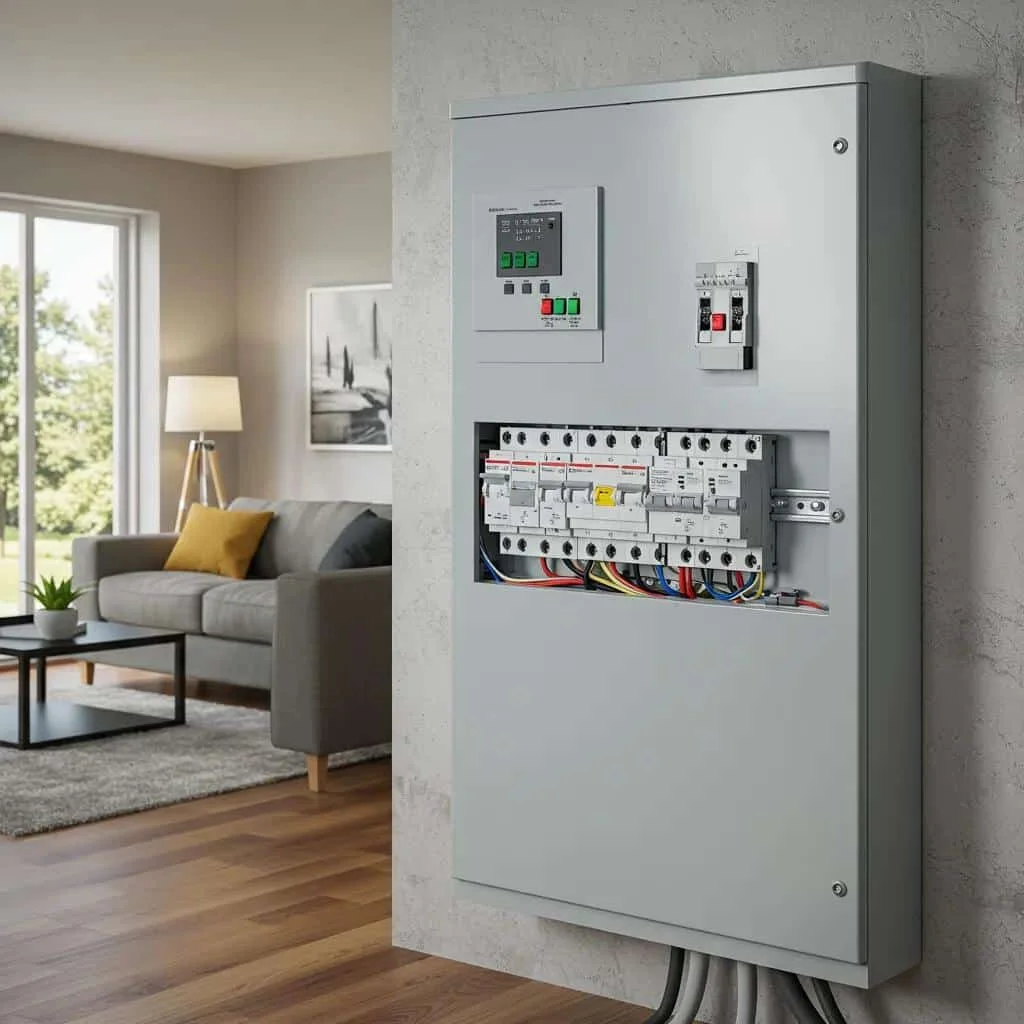
Electrical Panel Upgrades in Urbandale, Iowa: Costs, Signs, and Expert Services
Electrical panel upgrades replace or modernize a home’s main service equipment to improve safety, increase capacity, and ensure code compliance in Urbandale, Iowa. This article explains what a panel upgrade is, how it protects against overloads and arcing, and why upgrading is often the right solution when breakers trip, lights flicker, or an older fuse box is present. Homeowners will learn how to recognize the key warning signs, what typical local cost ranges look like for 100A, 200A, and 400A upgrades, and how Urbandale’s permit and SPD requirements affect scope and price. The guide also covers panel types, EV charger implications, and practical steps to prepare for an estimate. Throughout, actionable checklists and comparison tables help you weigh options and plan projects, and the article closes with how local licensed professionals can streamline permits, financing, and installation. If you are considering an electrical service upgrade in Urbandale, this guide provides the diagnostic tools, cost clarity, and code-oriented advice you need to decide and act confidently.
What Are the Key Signs You Need an Electrical Panel Upgrade in Urbandale?

An electrical panel upgrade becomes necessary when the existing service cannot safely handle a home’s modern load, creating nuisance trips, overheating, or fire risk. The underlying mechanism is capacity and connection limits—older panels and breakers were not designed for present-day appliances and EV chargers—so upgrading restores safe, balanced distribution and modern protective devices. Recognizing signs early prevents escalation to damaged wiring or property loss and ensures compliance with inspection requirements. Below are the principal diagnostic indicators that signal it’s time to evaluate a panel upgrade in Urbandale.
Common warning signs that indicate a needed panel upgrade include:
- Frequent breaker trips: Repeated trips under normal use suggest overloads or failing breakers that require assessment.
- Flickering lights or dimming: Visible dimming when heavy loads run can point to loose connections or insufficient capacity.
- Burning smells or scorch marks: Odors or discoloration near the panel indicate immediate safety hazards needing urgent inspection.
These signs are practical alerts; the next sections explain each symptom in detail and what information to collect before a technician visit.
How Do Frequent Circuit Breaker Trips Indicate Panel Issues?
Frequent circuit breaker trips occur when circuit load exceeds a breaker’s rated capacity or when breakers or connections fail, and these events reveal either branch-circuit overloads or service-level limitations. In many homes, routine appliance start-up currents—like HVAC compressors or microwave ovens—create momentary surges that older breakers interpret as overloads, producing nuisance trips. Recurrent trips tied to a single breaker may indicate a problem localized to that circuit, whereas multiple breakers tripping under moderate load suggest a panel capacity shortfall. Homeowners should document when trips occur, which appliances were running, and any recent electrical work to help an electrician diagnose whether the panel, breakers, or wiring require upgrade.
Why Do Flickering Lights and Dimming Power Signal a Panel Problem?
Flickering lights and temporary dimming often mean voltage fluctuation caused by loose connections, overloaded services, or failing bus connections inside the panel, and these conditions increase the risk of arcing and heat. For example, starting a high-draw device like an air conditioner can pull voltage down across the service if the panel is undersized or connection resistance is high, producing noticeable dimming. Loose neutrals or poor bus bar contact can create intermittent flicker that worsens over time and may escape detection during casual observation. If flicker is repeatable when certain appliances run, schedule an inspection to check connections, load distribution, and whether a service capacity upgrade is warranted.
What Are the Dangers of Burning Smells or Scorch Marks Near Your Panel?
Burning smells, burning odors, or visible scorch marks at the panel are urgent red flags that indicate overheating, arcing, loose lugs, or failing breakers and require immediate attention to prevent electrical fire. These signs reflect excess heat at connections or devices that may have compromised insulation and can lead to rapid degradation and ignition of adjacent materials. Homeowners should avoid opening the panel and instead shut off affected circuits if safe to do so, then contact a licensed electrician for inspection and repair. A thorough inspection often reveals whether targeted repairs suffice or whether a full panel replacement is necessary to eliminate persistent overheating sources.
How Does an Outdated Fuse Box Compare to a Modern Circuit Breaker Panel?
An outdated fuse box provides overcurrent protection via replaceable fuses but lacks modern safety features like AFCI/GFCI protection, and fuse replacement can mask underlying distribution problems rather than resolve them. Modern breaker panels offer resettable breakers, improved labeling, and integration with arc-fault and ground-fault protective devices that reduce shock and fire risk. Insurance and code expectations increasingly favor breakers with modern protective functionality, and lenders or buyers often require upgrades before sale. Replacing a fuse box with a modern panel addresses safety, convenience, and inspection compliance and is usually recommended when a property shows other signs of electrical system aging.
When Is No Room for New Circuits a Sign to Upgrade Your Panel?
No spare breaker slots or reliance on tandem/cheater breakers typically signals that a panel has reached its practical capacity and cannot safely accept additional circuits for new appliances or EV chargers. Panels filled to capacity force unsafe workarounds, increase overload probability, and complicate load balancing across phases. When homeowners plan additions—such as a new HVAC system, kitchen remodel, or garage EV charger—and the panel has no usable slots, a service expansion or full panel upgrade should be considered. An electrician can evaluate whether a sub-panel, module expansion, or main service upgrade best meets the home’s load growth and code requirements.
How Much Does an Electrical Panel Upgrade Cost in Urbandale, Iowa?

A local cost guide for panel upgrades clarifies typical ranges and the factors that drive price variance, helping homeowners set realistic budgets and compare quotes. Costs primarily vary by target amperage (100A, 200A, 400A), complexity of service equipment changes, meter or mast relocation, grounding improvements, and permit/inspection fees required by the city. Understanding these components enables homeowners to evaluate estimates and identify which line items are optional (e.g., whole-home surge protection) versus mandatory code-driven work. Below is a concise EAV-style comparison of common amperage upgrade options and typical cost expectations for Urbandale homes.
| Amperage Upgrade | Typical Use Case | Typical Cost Range |
|---|---|---|
| 100 Amp Upgrade | Smaller or older homes with limited circuits | $1,200–$2,500 |
| 200 Amp Upgrade | Most modern single-family homes; EV readiness | $2,500–$5,500 |
| 400 Amp Upgrade | Large properties, workshops, multi-meter setups | $6,000–$12,000+ |
This table illustrates baseline ranges; actual bids reflect site-specific issues such as panel accessibility, meter equipment replacement, and required grounding or conduit work. The following subsections unpack permit and labor influences and explain how to obtain a free estimate locally.
What Are Typical Costs for 100 Amp, 200 Amp, and 400 Amp Panel Upgrades?
Typical costs reflect equipment, labor, and inspection; 100A upgrades address basic service concerns and are generally the least expensive, while 200A upgrades are the common path for modern electrical needs and EV readiness. A 100A replacement often resolves nuisance trips and aging equipment at lower cost, whereas a 200A upgrade includes new main breaker equipment and potentially a meter base or service conductor upgrade. A 400A service is significantly more complex, may require multi-meter or split-service arrangements, and involves heavier equipment and coordination with the utility. Use the above EAV table to compare how each amperage aligns with household needs and budget.
How Do Permit Fees and Labor Affect Your Panel Upgrade Price?
Permit fees, inspection costs, and electrician labor are meaningful components of total price and vary with job scope; permits ensure code compliance and protect the homeowner. Labor rates reflect required licensing, travel, and on-site complexity such as working in confined spaces or performing grounding upgrades. Additional tasks—moving a meter, installing new conduit, or coordinating with the utility—add hours and specialized trades work, increasing costs. Homeowners should expect itemized quotes that list permit handling and inspection coordination as separate line items to clarify scope.
What Factors Influence the Final Cost of a Residential Electrical Service Upgrade?
Several variables cause wide cost variance: panel location accessibility, presence of knob-and-tube or degraded wiring, required grounding improvements, and code-mandated device installations like SPDs when main service OCP is replaced. Weatherproofing, exterior mast replacement, and required utility coordination also increase expenses. Unexpected discoveries during work—corroded lugs, outdated meter bases, or hidden wiring issues—can add scope and cost, which is why contingencies in quotes are common. Use a checklist to compare bids and verify what each contractor includes.
How Can You Get a Free Estimate for Your Panel Upgrade from Rewired Iowa?
Rewired Iowa provides a free estimate process designed to clarify scope, pricing transparency, and permit handling for Urbandale homeowners seeking panel and service upgrades. To request an estimate, prepare photos of the existing panel, meter, and any visible labels, note observed issues (trips, smells, flicker), and provide address and preferred contact method for scheduling. Rewired Iowa’s free estimate includes a written, itemized quote, explanation of permit and inspection steps, and discussion of financing options where appropriate. Homeowners should expect a clear scope-of-work document and an outline of timeline and warranty terms during the estimate visit.
What Are the Benefits of Upgrading Your Electrical Panel in Urbandale?
Upgrading a home’s electrical panel enhances safety, increases usable capacity, improves reliability, and often raises marketability, delivering both practical daily benefits and longer-term financial upside. Mechanically, modern panels accommodate AFCI/GFCI protection, improved bus and lug connections, and options for whole-home surge protection that reduce fire and equipment-damage risk. Functionally, upgrades enable new circuits for EV chargers, HVAC, and kitchen appliances while reducing nuisance trips and voltage drop. The next list highlights the core, tangible benefits homeowners typically experience after a professional upgrade.
Upgrading your panel provides these primary benefits:
- Improved Safety: Modern breakers and AFCI/GFCI devices reduce shock and fire risk.
- Increased Capacity: More amperage and spare circuits allow additional appliances and EV chargers.
- Enhanced Reliability: Balanced load distribution reduces nuisance trips and flicker.
- Market Appeal: Updated electrical systems simplify home inspections and buyer confidence.
After reviewing benefits, many homeowners opt to pair upgrades with surge protection or monitoring to further protect electronics and future-proof the home for smart systems and EV chargers. For those ready to proceed, the next paragraph explains how a local provider can help.
- Five-year workmanship guarantee: Rewired Iowa stands behind installation quality with a guaranteed workmanship period.
- Financing options: Flexible payment programs can make higher-amperage upgrades more affordable.
How Does a Modern Panel Enhance Home Electrical Safety?
A modern panel improves safety by integrating protective technologies—AFCI to detect arc faults, GFCI for shock prevention in wet locations, and properly rated breakers that meet current NEC practices. These devices interrupt dangerous fault conditions faster and more reliably than legacy equipment, reducing the probability of overheating and ignition. Improved bus materials and secure lug connections decrease connection resistance and hot spots, further enhancing safety. Upgrading also allows for labeled circuits, modern grounding, and coordinated overcurrent protection that streamline inspections and future maintenance.
In What Ways Does an Upgrade Improve Electrical Efficiency and Power Capacity?
Upgrading the panel and service capacity enhances efficiency by enabling better load distribution, minimizing voltage drop across circuits, and allowing higher-powered appliances to operate without undue strain. A properly sized main service prevents frequent cycling of large loads and reduces motor wear in HVAC and appliances. Capacity increases also permit the addition of smart breakers or energy monitoring, giving homeowners insight into usage and opportunities to optimize consumption. The result is smoother performance and reduced risk of overloaded circuits during peak demand.
How Can a Panel Upgrade Increase Your Home’s Value and Market Appeal?
Updated electrical systems reduce buyer friction during inspections and can be a selling point that differentiates a listing, particularly for buyers planning EV adoption or significant remodels. Homes with modern panels pass inspection more readily and avoid costly negotiation credits for outdated equipment. Real estate agents and appraisers often consider upgraded electrical service as a positive factor in marketability, helping listings close faster and reducing contingencies. For homeowners preparing to sell, an electrical upgrade can therefore deliver a measurable return in sale readiness and buyer confidence.
Why Is Future-Proofing Important for EV Chargers and Smart Home Technology?
Future-proofing ensures that a home has the capacity, conduit routing, and protective devices required for EV charging and expanded smart-home loads without costly rework later. EV chargers typically draw significant continuous current, and planning for dedicated circuits, spare conduit, and potential 200A service reduces disruption when adding chargers. Incorporating surge protection and circuit monitoring supports connected devices and provides headroom for additional EVs or high-demand appliances. Planning now avoids multiple service interruptions and aligns electrical infrastructure with expected technology adoption.
What Are Urbandale’s Electrical Code and Permit Requirements for Panel Upgrades?
Urbandale requires permits and inspections for electrical service work to ensure compliance with adopted codes and safety requirements, and one noted local mandate is the requirement for a surge protection device (SPD) when the main service overcurrent protection device is replaced. The permit process formalizes required documentation, inspection stages, and fee submission; these steps mitigate risk and ensure installations meet both NEC and local amendments. Hiring a licensed electrician familiar with Urbandale procedures streamlines approvals and reduces rework. The table below outlines typical permit steps, fees, and inspection points homeowners should expect.
| Permit Step | Required Documentation | Typical Outcome |
|---|---|---|
| Application & Fee | Scope description, contractor license | Permit issued or additional info requested |
| Rough Inspection | Equipment placement, grounding, wiring | Approve rough to proceed to finalize panel installation |
| Final Inspection | Labeling, device testing, meter coordination | Final approval for energized service |
This table summarizes common milestones; homeowners should plan for permit turnaround and coordinate with their electrician to ensure timely inspections and code compliance.
What Are the Minimum Amperage and Safety Standards in Urbandale?
While minimum practical service sizes depend on home size and load, Urbandale’s requirements include modern protective measures and, in applicable cases, SPDs when replacing the main service overcurrent protection device. The National Electrical Code and local amendments guide minimum device protection, grounding, and labeling standards that inspectors verify. Homeowners should expect inspectors to require AFCI/GFCI protection where mandated and to enforce proper neutral-ground separation in sub-panels. Discuss expected mandatory devices during the estimate to avoid surprises at inspection.
How Does the Permit Process Work for Electrical Panel Upgrades in Urbandale?
The permit process typically begins with an application and fee submission, followed by scheduled inspections at rough and final stages to verify compliance at each milestone. Required documentation often includes contractor licensing and a scope of work detailing amperage changes, device types, and grounding methods. Inspectors will verify safe installation, device labeling, and that any meter or service equipment work coordinates with utility requirements. Typical rework reasons include insufficient grounding, missing AFCI/GFCI protection, or unlabeled circuits, so clear, itemized proposals that anticipate these checks help streamline approval.
Why Is Hiring a Licensed Electrician Like Rewired Iowa Essential for Code Compliance?
Hiring a licensed electrician ensures familiarity with local inspection expectations, permit handling, and the technical requirements that lead to approval and safe operation. Rewired Iowa holds relevant licenses and provides workmanship assurances that reduce homeowner risk during permitting and inspections. Licensed professionals coordinate with inspectors and utilities, prepare required documentation, and implement code-mandated devices such as SPDs when main OCP is replaced. This expertise minimizes delays, lowers the chance of costly rework, and increases the likelihood that the installation will pass final inspection.
Which Types of Electrical Panels and Amperage Options Are Available for Urbandale Homes?
Homes in Urbandale commonly use main service panels with various amperage ratings or add sub-panels to extend capacity without changing the main service; choice depends on load, layout, and expansion plans. The functional difference is that the main panel contains the service disconnect and interfaces with the meter, while sub-panels distribute circuits in remote locations and require neutral-ground separation. Comparing options helps determine whether a full service upgrade, sub-panel installation, or fuse box replacement is the appropriate path. The table below contrasts main panel, sub-panel, and old fuse box attributes to guide decisions.
| Panel Type | Characteristic | Typical Implication |
|---|---|---|
| Main Service Panel | Contains main disconnect and meter interface | Central point for service upgrades; affects utility coordination |
| Sub-Panel | Distributes circuits in remote area; requires neutral-ground separation | Cost-effective for additions without replacing main service |
| Fuse Box (Legacy) | Uses replaceable fuses; lacks AFCI/GFCI | Higher fire risk; often recommended for replacement |
Use this comparison to align your home’s layout and future plans with the most suitable panel approach and to understand replacement urgency.
What Is the Difference Between Main Service Panels and Sub-Panels?
A main service panel includes the service disconnect and connects to the meter and utility supply, providing central overcurrent protection and distribution, whereas a sub-panel is fed from the main panel to serve separate areas such as garages or additions. Sub-panels allow localized circuit distribution and can reduce long-run wiring costs, but they require neutral-ground separation and correct feeder sizing. Choosing between expanding the main panel or adding a sub-panel depends on available main capacity, spare breaker spaces, and long-term load plans. An electrician evaluates whether a sub-panel meets needs or whether a main service upgrade is more appropriate.
How Do 100 Amp, 200 Amp, and 400 Amp Panels Meet Different Home Needs?
A 100A service typically suits smaller or older homes with modest appliance loads, a 200A service meets modern single-family home demands and provides headroom for EV charging, and a 400A service supports large properties, workshops, or multi-family meters. The amperage decision balances current demand, future growth, and budget, with 200A being the most common upgrade for homeowners preparing for additional loads. Use the earlier amperage cost table and a professional load calculation to match capacity to anticipated usage and to avoid undersizing that triggers subsequent rework.
When Are Specialized Panel Upgrades Necessary for Larger or Older Homes?
Specialized upgrades—such as split services, service relocation, or multi-meter setups—are needed when homes have extensive additions, accessory-dwelling units, heavy workshop equipment, or degraded legacy service equipment. Older homes with corroded lugs, degraded meter bases, or complex wiring may require comprehensive upgrades rather than simple panel swaps to meet code. Remodeling projects that add EV charging, new HVAC, or major kitchen appliances often necessitate custom service solutions. A site survey and load analysis reveal whether specialized planning and utility coordination are required.
What Are the Risks of Federal Pacific Electric Panels and Why Replace Them?
Certain legacy panel brands have documented safety concerns related to breaker failure and poor fault interruption, making replacement advisable when identified. These panels can exhibit breakers that fail to trip under overload, increasing fire risk from sustained overheating and arcing. When a suspected hazardous legacy panel is present, replacement with a modern, code-compliant panel reduces risk and aligns the home with inspection expectations. If you suspect a legacy brand, schedule an inspection to confirm identification and receive replacement recommendations.
How Does EV Charger Installation Affect Your Electrical Panel Upgrade Needs in Urbandale?
EV charger installation commonly increases household continuous load and frequently requires either a dedicated circuit or an upgraded service to maintain safe operation and comply with code. The mechanism is an EV charger’s continuous amperage draw, which must be incorporated into the home’s load calculation to avoid overloading service equipment. Planning options include adding a dedicated circuit, installing a sub-panel near the charging location, or upgrading the main service to 200A or higher. The following list summarizes typical upgrade approaches homeowners consider when adding an EV charger.
Common upgrade approaches for EV charging:
- Dedicated Circuit: For single charger installations when service capacity accommodates the additional load.
- Panel Boost or Sub-Panel: Localized capacity increase without full service change in some scenarios.
- 200A Upgrade: Standard approach to future-proof homes for EV charging and other high-demand loads.
Integrating EV chargers with an electrical plan also involves surge protection, correct conduit and breaker sizing, and permit coordination to ensure safe, code-compliant charging.
Why Do EV Chargers Require Increased Panel Capacity?
Level 2 EV chargers typically draw 30–60 amps continuously, and because continuous loads are calculated at 125% of rated current, many household services must be evaluated for sufficient headroom before installation. Simultaneous operation of other high-draw equipment—HVAC, electric ranges, dryers—can push service demand beyond safe limits, requiring a service upgrade. Understanding diversity and load-calculation principles helps determine whether a dedicated circuit is enough or whether an overall service increase is necessary. An electrician performs these calculations to produce a compliant installation plan.
How Can Rewired Iowa Ensure Your Panel Supports Safe EV Charging?
Rewired Iowa evaluates existing service capacity, performs load calculations, inspects panel condition, and coordinates permits and inspections to ensure EV charger integration is safe and compliant. Their process includes assessing whether a dedicated circuit, sub-panel, or main service upgrade is the correct solution, and they provide free estimates that outline scope, timeline, and financing where applicable. Licensed technicians also recommend surge protection and proper conduit routing to accommodate future expansion. Homeowners benefit from a clear, itemized plan that aligns charger requirements with service capacity and code.
What Are the Best Practices for Integrating EV Chargers with Existing Electrical Systems?
Best practices include installing appropriately sized conduit and wiring from panel to charger location, using correctly rated breakers and ensuring AFCI/GFCI protection where required, and adding whole-home surge protection to protect vehicle and home electronics. Planning for spare capacity and conduit simplifies future charger upgrades or additional chargers and reduces total lifecycle cost. Documentation of the load calculation and permit approvals ensures transparency and simplifies future resale or inspection processes. Implementing these practices reduces disruption and improves long-term reliability for EV charging.
Why Do Urbandale Homeowners Trust Rewired Iowa for Electrical Panel Upgrades?
Rewired Iowa earns homeowner trust through licensed service delivery, performance guarantees, and a focus on transparent pricing and financing options that make upgrades practical and reliable. The company presents a five-year workmanship guarantee, holds relevant Iowa licenses (EL011713EC, EL011713RM, EL011713JA), and maintains reputation metrics such as a 5-star rating from over 400 customers and an A+ rating with the BBB, which collectively reduce homeowner risk when hiring a contractor. Below is a concise list of the trust signals homeowners should consider when choosing a provider for panel and service upgrades.
Key trust signals to evaluate:
- Workmanship Guarantee: A documented guarantee provides post-installation assurance.
- Licensing: Proper licenses demonstrate compliance with trade and inspection requirements.
- Verified Reviews & Ratings: High review counts and BBB ratings indicate consistent performance.
After reviewing trust indicators, the next section explains the guarantee scope, testimonial significance, and how to schedule an estimate with clear next steps.
What Does Rewired Iowa’s 5-Year Workmanship Guarantee Cover?
Rewired Iowa offers a five-year workmanship guarantee that affirms their commitment to installation quality; homeowners should request written terms during the estimate to understand specific coverage details. A written guarantee clarifies responsibilities for repairs tied to installation defects and provides peace of mind during the warranty term. Asking for the guarantee in writing during the estimate helps compare contractors on equal footing and ensures transparency. Homeowners should keep warranty documentation alongside installation records for inspection and future resale.
How Do Customer Testimonials Reflect Rewired Iowa’s Reliability and Quality?
Quantitative metrics—such as a 5-star rating from over 400 customers and an A+ BBB rating—signal consistent customer satisfaction and reliability across many projects, and these metrics help reduce buyer uncertainty. Homeowners often find value in short anonymized testimonials or local case studies that show before-and-after scenarios, illustrating practical outcomes like resolved trips, upgraded capacity for EV charging, or smooth inspection sign-off. Requesting local Urbandale examples during the estimate provides context for expected timelines and results and demonstrates the provider’s local experience.
What Makes Rewired Iowa’s Pricing and Service Transparent and Fair?
Rewired Iowa emphasizes transparent pricing through itemized quotes that separate equipment, labor, permit handling, and optional add-ons like surge protection, enabling homeowners to compare bids accurately. Clear financing options and free estimates reduce upfront cost barriers and allow families to plan upgrades. Transparency practices—written scopes, documented permit responsibilities, and explicit warranty terms—ensure homeowners understand what is included and what might be additional. This clarity simplifies decision-making and reduces surprises during project execution.
How Can You Schedule a Free Estimate or Service Appointment?
To schedule a free estimate with Rewired Iowa, homeowners can call the provided phone number and prepare basic information such as panel photos, address, and a brief description of observed issues to streamline the visit. During the estimate, expect an itemized scope, discussion of permit and inspection steps, and options for financing or warranty terms. Preparing photos and noting when problems occur expedites diagnosis and helps the estimator produce a clear written quote. Follow-up typically includes a written proposal and scheduling options for permitted work. Contact Rewired Iowa now!

John Senn is a licensed Master Electrician based in Des Moines, Iowa with over 20 years of hands‑on experience serving homes and businesses across the state. He specializes in electrical panel upgrades, whole‑home generator installations, EV charger setups, and 24‑hour emergency service. As the owner of a growing team of certified electricians, John has built a reputation for safe, code‑compliant work and practical solutions that keep Iowa families and businesses powered up. His deep knowledge of Iowa’s electrical codes and his commitment to ongoing training make him a trusted voice in the trade and a go‑to expert for reliable electrical work in Des Moines and beyond.