Electrical Safety Code Upgrades West Des Moines: Complete Guide to Panel Upgrades, Inspections, and Compliance
Ensuring your home’s electrical system meets current safety standards is critical: outdated wiring and overloaded panels contribute to thousands of residential fires annually. In this guide, you will learn exactly which codes govern West Des Moines properties, why upgrading your electrical system matters, how to spot warning signs, what the upgrade process involves, which services are available, how much you can expect to invest, and why Rewired Iowa’s licensed electricians deliver reliable, code-compliant solutions. By the end of this article, homeowners and business owners will understand National Electrical Code requirements, Iowa amendments, local permit steps, panel upgrade triggers, cost factors, and the benefits of professional inspections—all to help you pursue safe, efficient electrical safety upgrades in West Des Moines.
West Des Moines Electrical Safety Code Upgrades & Inspections
What is the National Electrical Code (NEC) and How Does It Apply Locally?
The NEC is a model safety standard published by the National Fire Protection Association that defines minimum requirements for electrical installations. West Des Moines enforces the 2020 NEC version, mandating grounded outlets, proper conductor sizing, and modern safety devices in new and altered circuits to minimize fire and shock risks.
This municipal adoption underpins all residential and commercial upgrades, ensuring each installation—from panel replacements to device additions—meets national benchmarks adapted for local needs.
How Does the Iowa Electrical Safety Code Affect West Des Moines Homes and Businesses?
The Iowa Electrical Safety Code incorporates NEC requirements and adds state-specific rules for agricultural and commercial installations. In West Des Moines, electricians must follow Iowa Administrative Code Chapter 25, which addresses equipment grounding, conductor ampacity, and special occupancies, ensuring consistency across urban and rural settings.
Understanding these state amendments helps property owners anticipate additional inspections and specialized permitting for unique electrical loads or agricultural circuits.
What Are West Des Moines Electrical Permit Requirements for Upgrades?
Upgrading a panel or rewiring interior circuits requires a city-issued electrical permit before work begins. Applications include project scope, amperage rating, and licensed electrician credentials. Inspections must occur at rough-in and final stages, validating compliance with local and NEC rules before the homeowner energizes new circuits.
Stringent permitting and inspection schedules protect occupants by catching code violations before hazards develop.
How Do Local Ordinances Impact Electrical Safety Code Upgrades?
West Des Moines municipal code mandates dedicated circuits for appliances, AFCI/GFCI protection in specified areas, and tamper-resistant receptacles in bedrooms and kitchens. These city-level requirements layer on top of state and national codes, creating a multi-tiered compliance framework that ensures comprehensive safeguards against electrical faults.
Local enforcement offices review plans and perform onsite inspections to confirm adherence to every regulation tier.
Why Are Electrical Safety Code Upgrades Essential for West Des Moines Properties?
Upgrading electrical systems brings three essential benefits: it prevents fires and shocks, supports rising power demands, and boosts property value while reducing liability. Modern panels and devices eliminate outdated hazards and prepare homes for future technologies.
How Do Upgrades Prevent Electrical Fires and Shock Hazards?
Replacing old fuse boxes and installing arc-fault circuit interrupters (AFCIs) and ground-fault circuit interrupters (GFCIs) interrupts dangerous arcs and ground faults before they spark fires or injure occupants. AFCIs detect irregular current patterns, while GFCIs cut power within milliseconds upon leakage detection—mechanisms proven to reduce fire and shock incidents significantly.
Implementing these devices forms the first line of defense in code-compliant safety upgrades.
How Do Electrical Upgrades Support Modern Home Electrical Demands?
Modern households run EV chargers, air conditioners, home offices, and smart appliances concurrently. Upgrading from a 100-amp to a 200-amp service panel doubles capacity, prevents nuisance breaker trips, and ensures consistent voltage under heavy loads. Dedicated circuits for high-power devices maintain performance and prevent overheating.
Meeting contemporary usage patterns requires panels and wiring sized to anticipated future demands.
Can Electrical Code Compliance Increase Property Value and Insurance Eligibility?
Homes with up-to-code electrical systems appraise higher because buyers value safety and reliability. Insurance carriers often offer reduced premiums or require proof of AFCI/GFCI installations and proper grounding. Documented compliance with NEC and Iowa amendments can streamline claims and minimize liability.
Code-compliant upgrades thus translate into tangible financial and risk-management benefits.
What Are the Risks of Ignoring Electrical Code Violations?

Failing to address code violations invites fines, voided insurance coverage, electrical fires, and personal injury. Inspectors may issue stop-work orders or require costly retroactive corrections. Unpermitted work can trigger legal disputes when selling a property.
Timely compliance avoids fines and ensures uninterrupted protection for occupants.
How to Identify Signs You Need an Electrical Panel Upgrade in West Des Moines?
Early detection of panel issues prevents emergencies and ensures continuous power. Key warning signs include frequent breaker trips, flickering lights, and reliance on extension cords for permanent appliances.
What Are Common Warning Signs of Outdated or Overloaded Panels?
Frequent circuit breaker trips under normal loads, warm panel covers, buzzing noises, and rusted or corroded components indicate overload. Fuse boxes and two-prong outlets without grounding are clear markers of obsolete systems. These conditions elevate fire risks and warrant prompt panel evaluation.
Recognizing these indicators guides homeowners toward timely safety interventions.
How Do 100-Amp and 200-Amp Panels Differ for Residential Use?
A 100-amp panel typically serves older, smaller homes, limiting simultaneous appliance use. A 200-amp panel accommodates modern demands—HVAC systems, EV charging, kitchen appliances—without tripping breakers. The upgrade adds spaces for circuit expansion and heavier gauge conductors for reliable performance under high loads.
Choosing the correct amperage ensures both safety and future flexibility.
When Should Fuse Boxes Be Replaced with Modern Breaker Panels?
Homes built before the 1960s often contain fuse boxes lacking arc-fault protection. Replace fuse panels when you experience blown fuses, ungrounded outlets, or when renovating. Modern breaker panels streamline maintenance and integrate AFCI/GFCI safety features, aligning with NEC mandates.
Timely replacement eliminates single-point failures and enhances overall system safety.
How Do AFCI and GFCI Devices Enhance Panel Safety?
AFCIs monitor current waveforms to detect dangerous arcing, disconnecting power to prevent electrical fires. GFCIs sense tiny ground faults—common in wet areas—and cut power instantly to prevent shock. Integrating these devices into branch circuits meets NEC requirements and fortifies residential safety against two of the most prevalent electrical hazards.
Their combined deployment maximizes protection in living spaces and service areas.
What Does the Electrical Safety Code Upgrade Process Look Like in West Des Moines?
An efficient upgrade follows a clear sequence: inspection, estimate, permit acquisition, installation, and final inspection. This process ensures every step aligns with NEC, Iowa code, and local ordinances.
What Happens During a Home Electrical Inspection?
A licensed electrician inspects wiring, grounding, panel condition, and safety devices. The evaluation covers conductor sizing, protective device placement, outlet configuration, and bonding. A detailed report outlines code violations, safety hazards, and recommended corrective actions—forming the blueprint for any required upgrade work.
Completing this inspection uncovers hidden risks and defines the scope of necessary improvements.
How Does Rewired Iowa Handle Permits and City Inspections?
Rewired Iowa’s master electricians prepare permit applications that detail panel specifications, load calculations, and compliance plans. We submit to the West Des Moines Building Inspection Department, coordinate rough-in and final inspections, and address code officer feedback promptly. By managing these steps, clients avoid delays and ensure code-approved completion.
Professional permit handling reduces homeowner burden and accelerates project timelines.
What Are the Steps for Electrical Panel Upgrades and Wiring Updates?
- Consultation & Measurement – Assess existing panel, wiring routes, and load requirements.
- Estimate & Planning – Deliver a detailed quote including labor, materials, and permit fees.
- Permit Submission – File applications and attach technical plans per city requirements.
- Rough Installation – Replace panel, upgrade feeders, and install protective devices.
- Inspection & Corrections – Facilitate code officer review, remedy any issues.
- Final Wiring & Commissioning – Complete branch circuit terminations, test devices, and close permit.
How Long Does a Typical Electrical Safety Upgrade Take?
A standard residential panel upgrade and partial rewiring require one to two days on-site. Thicker conductors and AFCI/GFCI installations add setup time, while full-home rewiring may span three to five days. Permit review cycles can introduce an additional one-week delay. Planning for inspections and potential corrections helps homeowners set realistic timelines.
Transparent scheduling fosters confidence and preparedness throughout the project.
What Residential Electrical Upgrade Services Are Available in West Des Moines?
Rewired Iowa provides a full suite of services—from panel modernization to specialized device installations—ensuring safe code compliance and future readiness.
Before outlining individual offerings, here is a comparison of core services, their safety features, and homeowner benefits:
| Service | Safety Feature | Benefit |
|---|---|---|
| Electrical Panel Upgrade | AFCI & GFCI Integration | Prevents arcing faults and ground leaks |
| Full/Partial Rewiring | Proper Conductor Sizing | Reduces overheating and fire hazards |
| AFCI/GFCI Protection Installation | Circuit-level fault detection | Instantaneous shutdown on faults |
| EV Charger Circuit Installation | Dedicated high-amp circuit | Safe, reliable EV charging at home |
How Do Electrical Panel Upgrades Improve Safety and Capacity?
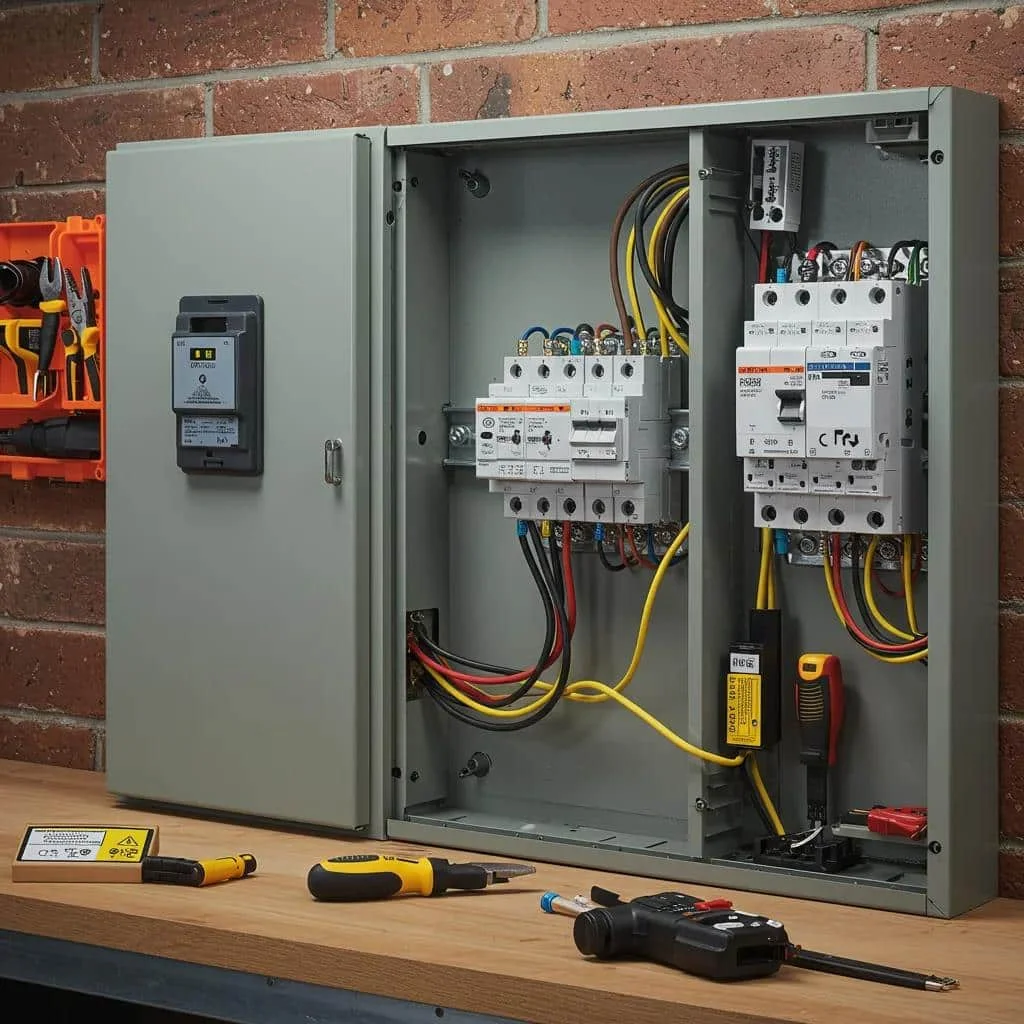
Panel upgrades replace worn bus bars and outdated breakers, integrating arc-fault and ground-fault protection. A modern enclosure with additional circuit spaces accommodates new loads—EV chargers, spa installations, or smart home controls—while meeting code-mandated surge protection standards.
Upgraded panels thus serve as the hub for safe, reliable power distribution.
When Is Residential Electrical Rewiring Necessary?
Homes with knob-and-tube or aluminum wiring exhibit brittle insulation, loose connections, and poor grounding. Partial rewiring targets problem areas, while full rewiring ensures uniform conductor quality and proper grounding throughout. This eliminates hidden fire risks and satisfies NEC requirements for renovated living spaces.
Replacing hazardous wiring secures both structural safety and code compliance.
What Are AFCI and GFCI Protection Installation Requirements?
The NEC requires AFCIs in bedrooms, living rooms, and guest areas, and GFCIs near sinks, garages, and outdoors. Devices must be installed at the first outlet on a branch circuit or integrated into the panel. Professional installation verifies device compatibility, correct wiring orientation, and functional testing per code.
Complying with these mandates minimizes arcing and ground-leak hazards in every living area.
How Are EV Charger Electrical Upgrades Integrated into Existing Systems?
Electric vehicle chargers demand dedicated 240-volt circuits sized at 30 amps or more. Upgrading a service panel to 200 amps often precedes installation to ensure sufficient headroom. Rewired Iowa sizes feeders, installs meter sockets, and adds labeled breakers, coordinating with city inspectors for final approval.
This specialized service future-proofs homes for evolving transportation electrification demands.
How Much Do Electrical Safety Code Upgrades Cost in West Des Moines?

Costs vary based on service scope, amperage capacity, labor rates, and permit fees. Understanding key cost drivers helps homeowners plan accurate budgets.
What Factors Influence the Cost of Electrical Panel Upgrades?
Before comparing prices, review major cost drivers in the table below:
| Upgrade Component | Cost Factor | Typical Range |
|---|---|---|
| Panel Amperage | Labor & Materials | $1,800 – $3,200 |
| AFCI/GFCI Devices | Device Quantity | $50 – $120 per device |
| Permit & Inspection Fees | Municipal Rates | $150 – $350 |
| Wiring Complexity | Conductor Length | $2 – $5 per linear foot |
How Does Partial vs. Full Home Rewiring Affect Pricing?
Partial rewiring for targeted circuits averages $3,000 – $6,000, while full home rewiring can range from $8,000 to $15,000 depending on home size and accessibility. Labor intensity, wall openings, and required drywall repair influence final pricing. Project scopes are customized to address only the most hazardous segments or to achieve comprehensive modernization.
Tailored rewiring options let homeowners balance budget with safety needs.
Are There Additional Costs for AFCI/GFCI and EV Charger Installations?
AFCI and GFCI breakers add device costs of $50–$120 each plus installation labor. EV charger circuits include breaker, wiring, and conduit expenses totaling $800 – $2,500 depending on distance and panel upgrades. Whole-home surge protection runs $400–$900, factoring device type and connection complexity.
Including all safety devices in a single permit submission can optimize inspector fees and reduce overall costs.
How Can Homeowners Get Accurate Estimates from Licensed Electricians?
Request on-site consultations where electricians inspect your panel, load demands, and code status. A detailed written proposal should break down material, labor, permit fees, and anticipated inspection costs. Compare quotes that include warranty coverage, licensing credentials, and project timelines to ensure true apples-to-apples comparisons.
Accurate, transparent estimates protect homeowners from surprises and support informed decisions.
Why Choose Rewired Iowa for Electrical Safety Code Upgrades in West Des Moines?
Rewired Iowa stands apart through deep local expertise, comprehensive service offerings, and unwavering commitment to safety and customer satisfaction.
What Certifications and Experience Do Rewired Iowa Electricians Have?
Our team comprises licensed master electricians insured for residential and commercial work, certified in the latest 2020 NEC and Iowa code amendments. With nearly two decades of experience, we handle complex projects—historic home rewiring, high-capacity panel upgrades, and specialized EV charger installations—demonstrating proven technical proficiency and adherence to best practices.
This level of certification and practical experience builds homeowner confidence.
How Does Rewired Iowa Ensure Code Compliance and Safety?
We integrate code research into every project, referencing NEC article numbers and Iowa Administrative Code sections. Our detailed permit packages and thorough inspection coordination eliminate code violations. Each installation undergoes rigorous multi-point testing for grounding integrity, AFCI/GFCI operation, and conductor continuity—ensuring full compliance before energizing circuits.
Our systematic approach ensures installations not only meet but often exceed safety requirements.
What Do West Des Moines Customers Say About Rewired Iowa’s Services?
Homeowners praise our punctuality, clear communication, and meticulous workmanship, reflected in a 4.97-out-of-5 customer satisfaction rating. Testimonials highlight rapid response for emergency repairs, transparent pricing, and thorough code-compliant upgrades. Local referrals and repeat business underscore our reputation for dependable, high-quality electrical services.
Positive homeowner feedback affirms our trusted standing in Central Iowa.
How Does Rewired Iowa Provide Emergency and Same-Day Electrical Services?
We maintain a fleet of fully equipped service vehicles and on-call master electricians ready 24/7 for urgent breakdowns and safety hazards. Same-day panel repair or temporary grounding solutions prevent extended power loss, while immediate code-compliant corrections minimize fire and shock risks. Our rapid-response capability ensures peace of mind for homeowners and businesses alike.
Emergency readiness solidifies our promise of reliable service whenever it’s needed.
Rewired Iowa invites you to schedule a free estimate and discover why homeowners across West Des Moines trust us for safe, efficient code upgrades. Your next electrical safety improvement is a call away—empower your property with modern, compliant electrical solutions today.

John Senn is a licensed Master Electrician based in Des Moines, Iowa with over 20 years of hands‑on experience serving homes and businesses across the state. He specializes in electrical panel upgrades, whole‑home generator installations, EV charger setups, and 24‑hour emergency service. As the owner of a growing team of certified electricians, John has built a reputation for safe, code‑compliant work and practical solutions that keep Iowa families and businesses powered up. His deep knowledge of Iowa’s electrical codes and his commitment to ongoing training make him a trusted voice in the trade and a go‑to expert for reliable electrical work in Des Moines and beyond.