
A main panel surge protector (SPD) mounts at your service entrance or main electrical panel and diverts and clamps high-voltage spikes so less energy reaches your branch circuits and appliances. This guide walks you through whole-house surge protector installation, what a panel unit realistically protects, and why a layered strategy—panel protection plus point-of-use devices—gives the best practical defense against sudden damage and slow wear. We clear up a common mix-up between plug-in strips and service-panel SPDs, explain key components (MOVs, GDTs, thermal fuses), and spell out the real outcomes you can expect—fewer appliance failures and longer equipment life. You’ll also learn how SPD types map to meter, panel, and outlet locations, what drives installation cost, and a simple decision framework for choosing the right specs and monitoring features. Finally, we bust myths—like the idea a panel SPD makes you immune to a direct lightning strike—and explain safe installation steps and when to call a licensed electrician. Along the way you’ll see useful search terms such as whole house surge protector installation, main panel surge protector, and whole-house surge protector to help homeowners find this information.
What Is a Main Panel Surge Protector and How Does It Work?
A main panel surge protector is an SPD installed at your service panel that clamps sudden voltage spikes and shunts surge current to ground, protecting downstream circuits and whatever is plugged into them. It senses a transient and uses components like metal-oxide varistors (MOVs) or gas discharge tubes (GDTs) to redirect excess energy, while thermal fuses or monitoring modules warn when the device needs replacing. For homeowners, the immediate benefit is less exposure for hard-wired appliances and branch-circuit gear to damaging voltage swings—fewer sudden failures and less cumulative degradation over time. That’s also why a layered plan—panel-level protection plus targeted point-of-use devices—gives the best real-world protection for sensitive electronics.
How Do Whole House Surge Protectors Protect Your Electrical System?
Whole-house surge protectors work by clamping overvoltages and diverting surge currents before they spread through branch circuits, which reduces stress on wiring, breakers, and equipment. MOVs react quickly by changing resistance as voltage rises, GDTs handle very large transients by ionizing and sending energy to ground, and thermal fuses stop overheating and catastrophic failure. These parts are coordinated so big spikes are caught at the service entrance, leaving only smaller residual transients for downstream point-of-use protection. That staged approach lowers the chance of acute surge damage and the small, repeated stresses that shorten appliance life.
A staged, layered approach to surge protection is the practical way to protect a home’s electrical installations from a range of threats.
Practice of Lightning Protection: Risk Assessment and Surge Protection Strategies
This reference covers protection of electrical and electronic installations inside buildings, including how to choose and place surge protection devices to guard equipment from lightning-related damage. It also describes zoning practices used when designing lightning and surge protection systems.
Practice of Lightning Protection: Risk Assessment, External Protection, Internal Protection, Surge Protection, Air Termination, Down Conductor, Earthing, and Shielding, SRH Hoole, 2022
What Types of Main Panel Surge Protectors Are Available?
Surge protectors are categorized by where they install and what they handle—Type 1, Type 2, Type 3, meter-socket units, and plug-in or point-of-use devices. Each plays a role in a layered protection plan. Type 1 units connect at the service entrance for primary external protection, Type 2 units install at the main panel for whole-house coverage, and Type 3 devices protect individual outlets and sensitive equipment. Your choice depends on exposure risk, local code, and whether you want features like monitoring or replaceable modules. The table below summarizes common options so homeowners can compare at a glance.
How protector types typically map to locations and use cases:
| Surge Protector Type | Typical Location | Typical Use |
|---|---|---|
| Type 1 | Service entrance / line side | Primary protection against external surges |
| Type 2 | Main panel / load side | Whole-house protection for branch circuits |
| Type 3 | Point-of-use (outlet or equipment) | Final protection for sensitive electronics |
| Meter-socket SPD | Meter base | Protection at meter for added upstream defense |
| Plug-in surge strip | Outlet | Localized protection for specific devices |
What Are the Key Benefits of Installing a Main Panel Surge Protector?
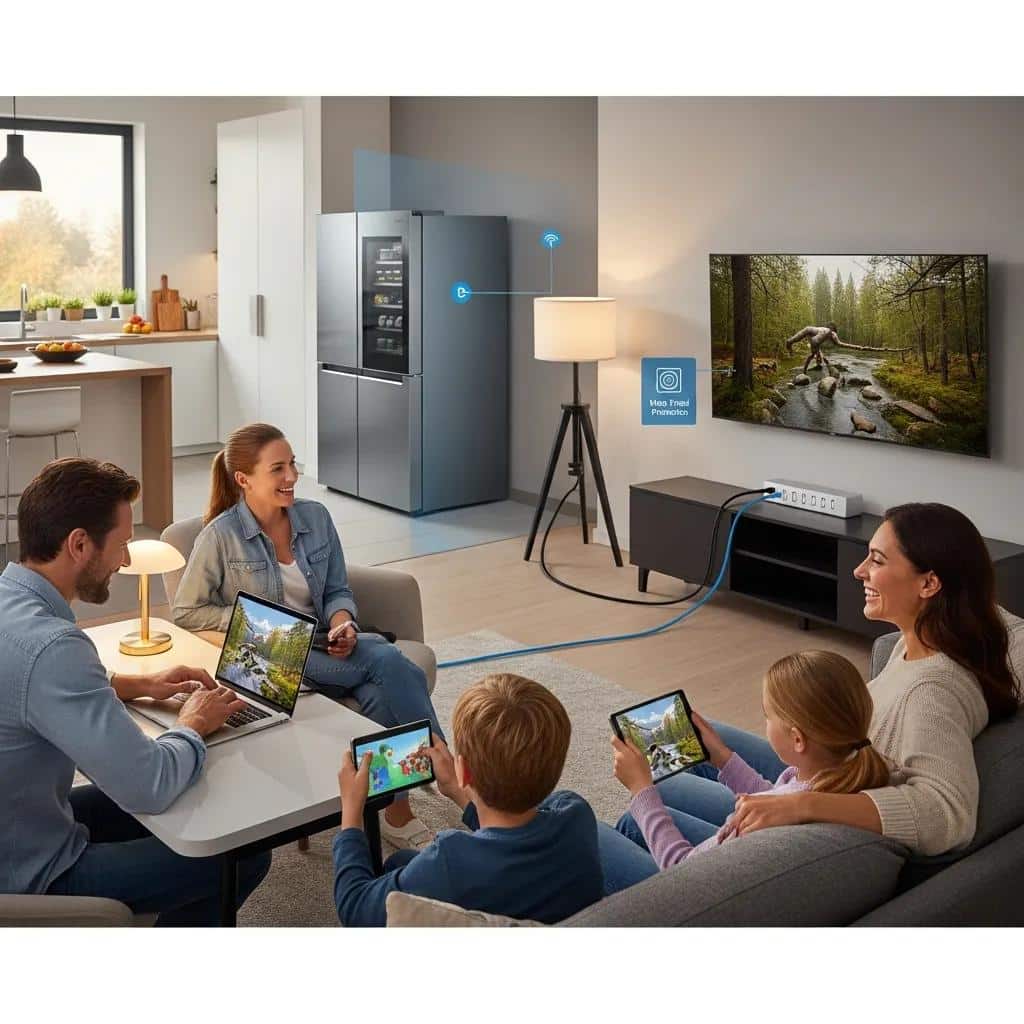
A main panel surge protector reduces the amount of damaging energy that reaches branch circuits and connected appliances, which lowers sudden failures and slows the wear that shortens equipment life. By clamping high-voltage transients and diverting surge current to ground, an SPD can cut replacement costs, reduce downtime for critical systems (HVAC, refrigeration, medical equipment), and support insurance or warranty claims when installed and documented properly. Many homeowners value visible status lights or remote monitoring that show SPD health and end-of-life so they can plan maintenance or module replacement. For protecting high-value electronics and essential systems, whole-house surge protector installation is a practical, cost-effective step.
How the mechanism translates to homeowner benefits:
| Benefit | Mechanism | Example outcome |
|---|---|---|
| Reduced appliance damage | MOV/GDT clamping diverts surge energy | Fewer failed compressors and circuit boards |
| Lower cumulative wear | Limits recurrent micro-surges on electronics | Longer lifespan for smart TVs and computers |
| Faster fault awareness | Visual/remote monitoring reports end-of-life | Timely replacement before protection is lost |
If you’re ready to act, a licensed local electrician can inspect your panel and recommend the right SPD type. Rewired Iowa offers evaluations, installs whole-house protectors, and provides estimates or emergency service when surge-related issues appear. Working with a local provider turns interest into action while keeping the technical guidance practical and useful.
How Much Does Whole House Surge Protector Installation Cost?
Installation costs for a whole-house surge protector depend on equipment type and site complexity. Basic panel-mounted SPDs usually cost less than meter-socket or Type 1 service-side units, which require more specialized work. Key cost drivers include hardware rating, monitoring features, panel accessibility, whether the panel needs upgrades, permits or inspections, and whether service is needed quickly. Expect equipment plus labor to vary widely by model and local rates; meter-mounted or service-side installs and units with replaceable modules or remote monitoring generally cost more. Knowing these drivers helps you compare quotes and decide if a higher-rated SPD is worth the investment for long-term protection.
Cost factors to watch when reviewing estimates:
- Hardware rating and type (Type 1 vs Type 2 vs meter-socket)
- Labor complexity and panel condition (upgrade vs straightforward mount)
- Permits, inspections, and monitoring/warranty options
These items explain why two bids can differ and why a site visit matters before you commit to a purchase.
Typical cost components to consider:
| Cost Component | Typical Range | What Influences Cost |
|---|---|---|
| Equipment | Moderate to high depending on type | Type 1 vs Type 2, monitoring, replaceable modules |
| Labor | Variable by region and complexity | Panel accessibility, wiring reroutes, time on site |
| Permits/inspection | Low to moderate | Local code and municipality requirements |
| Panel upgrades | Moderate to high | Old or undersized panels needing updates |
After you compare the pieces, many homeowners ask whether to DIY or hire a pro. Because of safety, code compliance, and warranty considerations, hiring a licensed electrician is usually the sensible choice. Rewired Iowa provides personalized estimates and can schedule installations or emergency appointments when surge events cause apparent damage.
How to Choose the Right Whole House Surge Protector for Your Home?
Picking the right whole-house surge protector means checking technical specs—clamping voltage, nominal discharge current (In), protection modes (L-N, L-G, N-G), and response time—along with practical features like status indicators, replaceable modules, and UL/IEC certifications. Lower clamping voltage and higher nominal discharge current generally give stronger protection. Monitoring and replaceable modules make long-term upkeep easier. Coordinate a panel-level SPD with point-of-use devices: the panel reduces upstream energy, while outlet protectors catch residual transients for sensitive gear. Prioritize UL 1449 compliance and clear warranty documentation, which can simplify insurance claims after an event.
Essential features to evaluate, in prioritized order:
- Certification and standards: Verify UL 1449 or equivalent safety listing.
- Clamping voltage: Lower is generally better for downstream protection.
- Nominal discharge current: Higher In indicates greater energy-handling capacity.
- Monitoring and replaceable modules: Enables predictable maintenance and serviceability.
Balance these specs with installation location and your budget to build a coordinated protection plan across service, panel, and point-of-use layers.
What Features Should You Look for in a Main Panel Surge Protector?
When comparing products, prioritize certified ratings and practical features: UL/IEC certification, published clamping voltage and nominal discharge current, fast response time, and multi-mode protection. Visual or remote status indicators and modular replaceability prevent silent failures when an SPD reaches end-of-life. Warranties that cover connected equipment—when paired with professional installation records—add a financial safety net, but read the fine print. Choosing a unit with clear specs and monitoring helps make sure the protector delivers the protection you expect and simplifies long-term upkeep.
These features form the core of an effective selection process and directly affect real-world protection results.
How Do Different Types of Surge Protectors Compare in Performance?
Panel-mounted SPDs stop most external and internally generated transients before they reach branch circuits. Meter-socket devices add upstream defense, and point-of-use protectors guard sensitive endpoints from whatever residual surge gets through. Type 1 and Type 2 devices handle large energy events better when grounding and bonding are correct; plug-in strips clamp quickly at the outlet but have much lower energy capacity. Using multiple device types in a layered architecture—panel SPD plus outlet SPD—gives both bulk energy handling and final-stage protection for electronics. Understanding these trade-offs helps homeowners design a protection plan that fits their budget and risk tolerance.
A quick comparison of complementary strengths:
- Panel SPD: high energy handling, whole-house defense.
- Meter-socket SPD: upstream protection against external surges.
- Point-of-use SPD: final protection for sensitive devices.
What Are Common Misconceptions About What Main Panel Surge Protectors Protect?
One common misconception is that a single panel surge protector removes all surge risk. It doesn’t. SPDs reduce exposure and risk but don’t make your home immune, especially to a direct lightning strike. SPDs are effective against many surge types—switching events and nearby lightning-induced spikes—but an extremely high-energy direct strike or major utility failure can exceed an SPD’s capacity. Another myth is that plug-in strips are the same as panel SPDs; plug-in devices offer local protection but don’t have the energy handling or whole-house coverage of a properly installed main panel protector. Understanding these limits helps homeowners adopt a layered approach that pairs panel-level SPDs with point-of-use protection.
Does a Main Panel Surge Protector Protect Against All Power Surges?
No. A main panel surge protector significantly reduces many surge risks but cannot stop every possible surge—especially direct lightning strikes or utility failures that overwhelm grounding. Panel SPDs clamp and divert common transient overvoltages and switching events, but extremely high-energy strikes can exceed an SPD’s ratings and still cause damage. For the highest-risk scenarios, additional measures—lightning rods, improved grounding, and combined meter/panel protection—may be needed, though none are foolproof. The best practical strategy is layered protection: service-side or meter-level SPDs, panel SPDs, and point-of-use devices to minimize leftover risk.
Knowing the limits of surge protection is essential to building an effective mitigation plan.
Practice of Lightning Protection: Risk Assessment and Surge Protection Strategies
This source details how to protect electrical and electronic installations inside structures, covering device selection and placement to reduce lightning damage and describing zoning for lightning protection design.
Practice of Lightning Protection: Risk Assessment, External Protection, Internal Protection, Surge Protection, Air Termination, Down Conductor, Earthing, and Shielding, SRH Hoole, 2022
How Does It Differ from Point-of-Use Surge Protectors?
Panel-level SPDs reduce upstream surge energy across all circuits, while point-of-use protectors shield individual devices from the smaller transients that pass the panel SPD. They work together: the panel handles bulk energy and keeps many surges from ever reaching outlets, and point-of-use units provide a last line of defense for sensitive gear like computers and home theaters. Relying only on plug-in strips leaves wiring and hard-wired equipment vulnerable; only using a panel SPD may leave delicate endpoints exposed to small residual surges. Combined deployment gives the most resilient protection for homes full of sensitive devices.
This complementary setup is why professionals recommend a layered approach rather than trusting a single device.
How Is a Whole House Surge Protector Installed at the Main Panel?
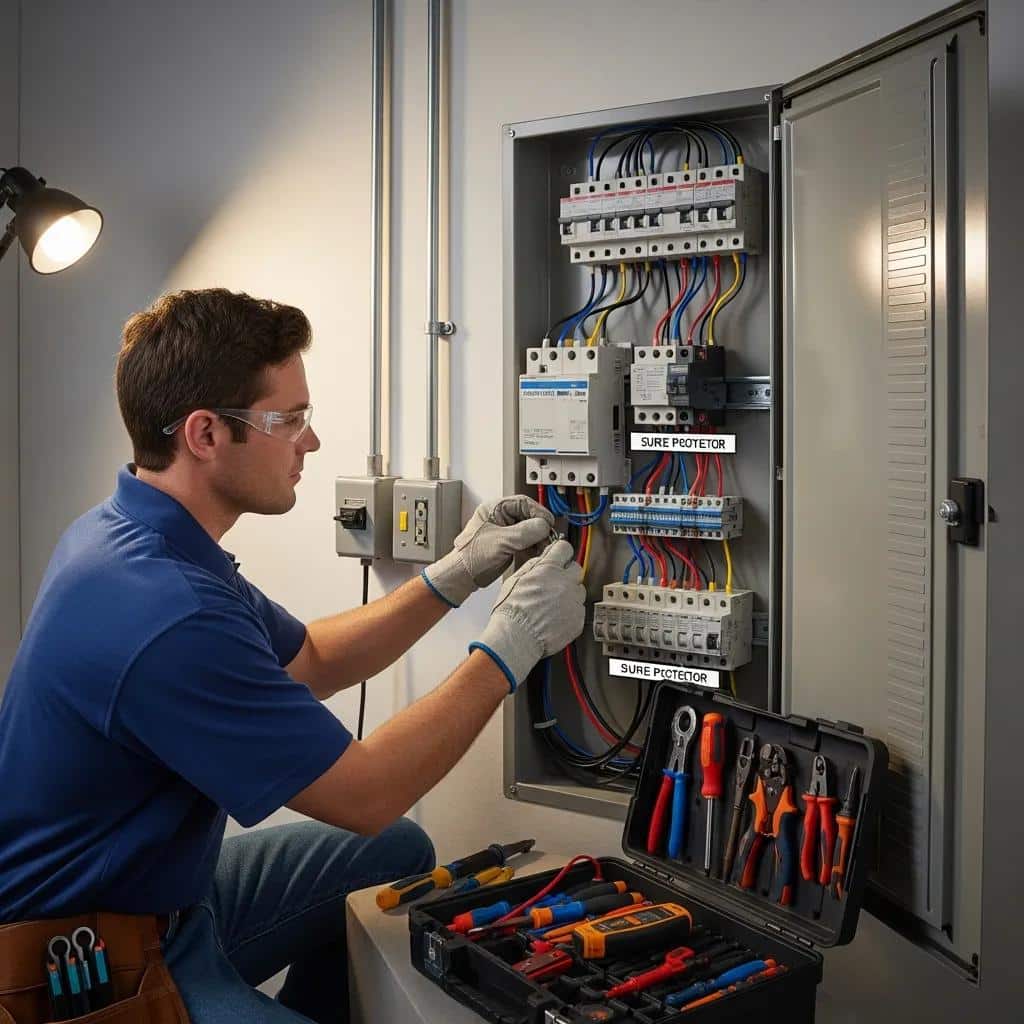
Installing a whole-house surge protector starts with a service and panel assessment, followed by safely shutting off power, mounting the SPD in the panel or a nearby enclosure, connecting the SPD leads to the correct bus or line and to a low-impedance grounding path, then commissioning and testing the unit. Proper installation requires confirming grounding and bonding meet code, using the correct conductor sizes per the SPD instructions, and documenting the work for warranty and insurance. Post-install checks usually include continuity tests, voltage verification, and confirming status indicators so you know the SPD is working as intended. Following these steps ensures the SPD performs to spec and that downstream protection is optimized.
What Are the Steps for Safe and Effective Installation?
A professional installer follows a safety-first sequence: site assessment, power shutdown, mounting, secure wiring connections, grounding verification, and functional testing after power is restored. Each step includes code checks—confirming panel condition, verifying space for wiring, and ensuring allowed connection points per manufacturer guidance. Typical time on site for a standard panel-mounted SPD is short, but it increases when panel upgrades, grounding improvements, or meter-level work are needed. Proper documentation and visible status indicators support warranties and provide evidence in insurance claims if surge events occur.
A homeowner-facing checklist for a professional visit:
- Assessment and quote: Electrician inspects panel, grounding, and scope of work.
- Power off and install: Technician mounts the SPD and secures connections safely.
- Grounding verification and testing: Confirm a low-impedance path and verify unit operation.
Can You Install a Main Panel Surge Protector Yourself or Should You Hire a Professional?
Because panel-mounted surge protectors involve live electrical work, code compliance, and grounding checks, they’re best handled by licensed electricians. DIY attempts risk shock, fire, incorrect wiring, or voiding warranties and insurance. Homeowners can safely install point-of-use devices, but service-entrance or panel work usually requires a permit and professional documentation to protect warranties and support insurance claims. Hiring a pro ensures proper coordination with existing protection, correct grounding, and that the SPD is installed where it will work as rated. Rewired Iowa offers local evaluations, whole-house SPD installation, and emergency service for surge-related incidents.
Rewired Iowa provides local inspections, professional whole-house surge protector installation, and emergency appointments for surge-related damage; contact them for an estimate or to schedule a panel inspection so you get the right SPD type and installation plan for your home. This call-to-action points homeowners to a licensed electrician who can deliver site-specific recommendations and the documentation you may need.
Frequently Asked Questions
What are the signs that my main panel surge protector needs replacement?
Signs your main panel surge protector (SPD) may need replacing include visible damage like burn marks or discoloration and status lights indicating a fault. Many modern SPDs include monitoring that alerts you when protection is spent. Regular inspections by a licensed electrician will catch these issues early and keep your home protected.
How do I choose the right surge protector for my specific needs?
Choosing the right surge protector starts with your home’s electrical setup and the devices you want to protect. Look at clamping voltage, nominal discharge current, protection modes, and monitoring features. Consider installation location and your budget, and consult a licensed electrician for recommendations tailored to your risk factors.
Can a surge protector help with power fluctuations caused by my utility provider?
Yes. A surge protector can reduce damage from utility-caused voltage spikes or sags. It won’t eliminate every issue, but it significantly lowers the risk to your electrical system and connected devices. For best results, combine panel-mounted and point-of-use protection.
What should I do if my home experiences a power surge?
After a surge, check for tripped breakers and visibly damaged devices. If your surge protector has status indicators, see whether it shows a fault. Safely disconnect sensitive electronics and call a licensed electrician to assess damage and verify your protection system is still working.
Are there specific installation codes or regulations for surge protectors?
Yes. Installation codes and regulations vary by location and ensure SPDs are installed safely and effectively. Hire a licensed electrician familiar with local rules to ensure compliance and optimal performance.
How can I improve my home's overall surge protection strategy?
Improve protection with a layered plan: a main panel surge protector, point-of-use devices for sensitive equipment, and possibly meter-level protection. Keep grounding in good shape, use UL-listed devices, and schedule periodic checks. A licensed electrician can help tailor a comprehensive plan for your home.
What is the lifespan of a main panel surge protector?
Lifespan depends on how often the SPD absorbs surges, environmental conditions, and unit quality. Most main panel surge protectors last roughly 3 to 10 years. Frequent surge activity or harsh conditions shorten that. Modern units often include indicators or remote monitoring to show when protection is spent—periodic checks or an electrician’s inspection will confirm your SPD is still working.
Can a main panel surge protector be used in conjunction with other surge protection devices?
Yes. A layered approach is recommended. Combine a panel-mounted SPD with point-of-use protectors for sensitive electronics and consider meter-level protection for additional upstream defense. Together these devices reduce both external and internal surge risks and increase overall system resilience.
How can I tell if my surge protector is still functioning properly?
Look at visual indicators like status lights or monitoring alerts—many modern SPDs show operational health. If lights indicate a fault or monitoring reports end-of-life, replace the unit. When unsure, call a licensed electrician to inspect the SPD and confirm it’s protecting your home.
Are there any maintenance requirements for a main panel surge protector?
SPDs are low-maintenance but benefit from periodic checks. Look for visible damage, discoloration, or warning lights. Review monitoring alerts if available, and have a professional electrician inspect the SPD during routine electrical checks to ensure it remains effective.
What should I do if my surge protector fails?
If the SPD fails, disconnect affected devices if practical and call a licensed electrician to evaluate the situation. Check for burned components or tripped breakers and consult any monitoring indicators for details. A pro can replace the unit and verify grounding and connections so your home is protected again.
Can I install a surge protector myself, or should I hire a professional?
Homeowners can install plug-in surge strips, but panel- or meter-level SPDs involve live electrical work, grounding checks, and code requirements—so hiring a licensed electrician is strongly recommended. Professional installation ensures safe, code-compliant wiring, proper grounding, and documentation that protects warranties and supports insurance claims.
Main Panel Surge Protector: Installation & Complete Home Protection
Adding a main panel surge protector is a practical way to improve your home’s electrical safety—reducing appliance damage, slowing equipment wear, and giving clearer indicators of protection health. For the best results, pair panel protection with point-of-use devices and work with a licensed electrician who can recommend the right SPD for your setup and document the installation. If you want help evaluating options or scheduling installation, contact a local pro like Rewired Iowa for a site-specific recommendation and an estimate. Taking that step now can save you replacement costs and headaches down the road.
