
Electrical Service Problems Aren’t Always Inside the House
Problems that start outside—at the service entrance, meter box, or utility equipment—often show up indoors. Spotting them quickly lowers risk and gets power restored sooner. This guide walks you through how outdoor faults can create indoor symptoms, defines the main service-entrance parts, and helps you tell utility-side failures from homeowner-side repairs. You’ll find common causes, safe visual checks you can do from the ground, clear ownership boundaries, and practical prevention steps. Put safety first when power trouble begins outside your home.
Common causes of outdoor power outages
Most outdoor outages come from severe weather, equipment failure, physical damage, or animals and vegetation. Knowing these categories helps you triage symptoms like flicker or partial outages and decide whether to call the utility or hire a licensed electrician. Below are the frequent causes and what to do first.
- Weather events: Wind, lightning, ice, or flooding can bring down lines or cause dangerous surges. Report outages and stay away from downed wires.
- Equipment failure: Corroded connections, transformer faults, or broken insulators can cause intermittent power or arcing. Note what you see and call the utility.
- Physical damage: Fallen trees, vehicle strikes, or digging can sever service drops or poles. Keep clear of the area and call emergency utility services.
- Animal/vegetation interference: Wildlife or overgrown branches can short conductors or cause phase-to-ground faults. Keep people and pets away and report the hazard.
Each cause shows predictable signs and needs a specific immediate response. The table below summarizes likely causes and the best first steps.
| Cause | Typical Signs | Immediate Action |
|---|---|---|
| Weather (wind, ice, lightning) | Multiple homes affected, visible sparks or arcing, snapped lines | Report the outage to your utility and keep clear of any lines |
| Equipment failure (transformer, insulator) | Intermittent power, buzzing sounds, localized outage | Document what you observe and notify the utility for inspection |
| Physical damage (tree strike, vehicle) | Broken pole or conductor in plain sight, partial outage | Avoid the area and call the utility’s emergency number |
| Animal/vegetation interference | Single-phase trips, scorch marks, chewed insulation | Secure the area and report to the utility or a licensed electrician |
How weather damages external electrical systems
Weather damages infrastructure through mechanical stress, water intrusion, and electrical surges. Wind or falling trees can snap service drops or pull weatherheads off masts. Ice and snow add weight and cause sagging or breakage. Lightning creates high-voltage transients that can arc across insulators or damage transformers. After a storm, scan from a safe distance for leaning poles, dangling wires, or other visible damage and report any outages to your utility. Never touch equipment that looks energized.
Other common causes of outdoor electrical problems
Outside of weather, problems come from aging infrastructure, accidents, animal contact, and human activity like excavation. Worn insulators, loose connections, or corrosion at the meter base and mast can create hotspots or intermittent faults. Rodents chewing insulation cause shorts, and vehicle strikes or dig-ins can expose conductors or cut service. Look for scorch marks, exposed wires, or freshly disturbed soil along service paths as clues to the root cause.
How to diagnose service-entrance issues outside your home
Start with a safe, non-contact visual inspection. From the ground, check the service drop, weatherhead, service mast, meter box, and grounding components for signs of trouble. Watch for corrosion, loose hardware, water intrusion, burn marks, buzzing, or noticeable heat. The table below links common components to failure modes and homeowner-detectable indicators.
| Component | Common Failure Mode | Diagnostic Indicator / Homeowner Action |
|---|---|---|
| Weatherhead | Cracks, water ingress | Cracks, leaks, or dripping — don’t touch; report to an electrician if it’s on your side of the meter |
| Service mast / mast damage | Bent mast, loose conduit | Leaning or split mast, loose clamps — keep area clear and call a professional |
| Service drop | Frayed conductor, broken insulation | Sagging or visibly damaged wire — don’t touch and notify the utility if the problem is pole-to-pole |
| Meter box / meter base | Corrosion, loose lugs | Rust, scorch marks, or a hot enclosure — contact a licensed electrician |
| Ground rod & connections | Corroded or loose ground | Loose clamps, heavy rust — schedule a grounding inspection with an electrician |
If you find anything beyond light, dry-surface corrosion—like arcing, heat, wet seals, or exposed conductors—stop your inspection and call a licensed electrician. Early escalation cuts fire and electrocution risk and ensures repairs comply with codes and utility boundaries.
Key components of the electrical service entrance
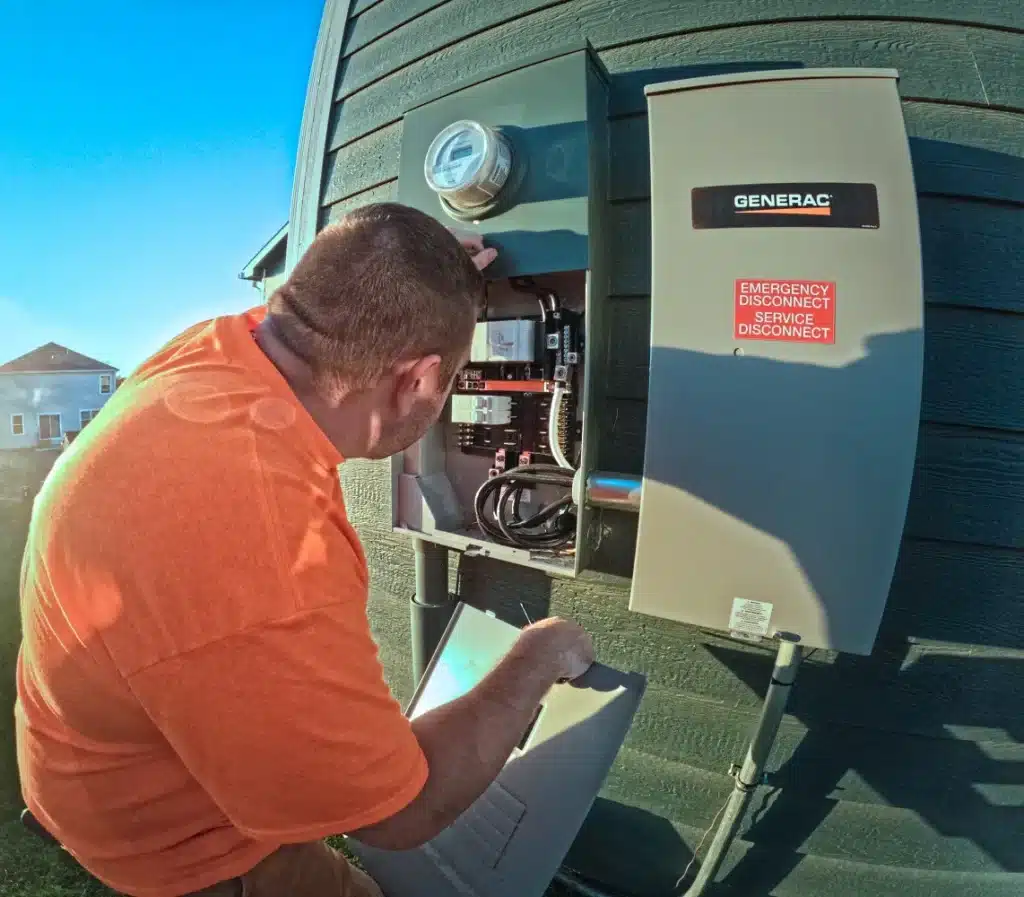
The service entrance links the utility’s distribution to your home. Main parts include the service drop (overhead conductor from the pole), weatherhead (keeps water out), service mast (supports the drop), meter box (measures energy and often marks responsibility), drip loop (diverts water), and ground rod (stabilizes voltages). Knowing these pieces helps you interpret symptoms like a buzzing meter or frequent flicker.
How to identify problems with the weatherhead, service mast, and meter box
Look for cracks or gaps at the weatherhead, a proper drip loop, a bent or split mast, and rust, moisture, or burn marks on the meter box. Buzzing or humming and partial outages are red flags. Water stains under the weatherhead, loose conduit clamps, or a rocking meter base usually require a licensed electrician. If you see structural damage or energized exposures, don’t touch anything and take photos for the service call.
Homeowner vs. Utility: Who to Call for Outdoor Electrical Repairs
Responsibility usually splits at the meter or meter base, but rules vary by area. Utilities generally maintain poles, primary lines, transformers, and often the service drop up to the meter. Homeowners are typically responsible for the weatherhead, service mast, meter base to the main disconnect, grounding past the meter, and conduit on private property. That split tells you whether to call the utility for a downed pole or to hire a licensed electrician for meter-base work.
| Component | Responsible Party | Typical Contact / Action |
|---|---|---|
| Utility pole & primary lines | Utility company | Call the utility’s emergency line for leaning poles or downed lines |
| Transformer & distribution network | Utility company | Report widespread outages or arcing equipment to the utility |
| Service drop to meter | Varies (often utility up to the meter) | Call the utility for overhead drop issues affecting multiple homes |
| Weatherhead / service mast / meter base | Homeowner (often) | Arrange a licensed electrician for repairs or meter-base replacement |
| Grounding past the meter | Homeowner | Hire an electrician to test and repair the grounding system |
For homeowner-side repairs, hire a licensed electrician. For damaged poles, downed primary lines, or transformer faults, contact your utility immediately and keep clear of the area. Treat suspected utility equipment as dangerous and avoid contact.
When to contact a licensed electrician for outdoor repairs
Call a licensed electrician if you find meter-base corrosion, burned lugs, loose or exposed conductors on homeowner-side equipment, a hot meter box, degraded grounding, or if the weatherhead or mast needs replacement. Electricians can torque-test connections, replace meter bases, fix grounding problems, and secure masts to code. Prompt professional help reduces fire risk and restores safe service faster. Electricians in Des Moines can assist with your electrical needs.
Signs of utility pole damage and how it affects your power
Damaged poles show mechanical and electrical signs: leaning or cracked poles, missing crossarms, or sagging conductors are visible warnings. Electrically, you may see flicker, intermittent service, surges, or complete outage. Damaged gear can also arc or expose energized parts, creating dangerous zones that need immediate utility response. Keep your distance and report the location and visible damage to your utility’s emergency number.
What to do if you see a leaning or damaged utility pole
If you spot a leaning or damaged pole, keep people and pets away and don’t touch wires or the pole. Call the utility’s emergency line. If you see sparks, smoke, or conductors contacting vehicles or structures, evacuate the area and call emergency services as well. Give clear location details and describe visible hazards. While you wait, warn neighbors and avoid standing water near downed lines. Public safety comes first—do not approach suspected energized equipment.
How to prevent weather-related faults in your outdoor electrical system
Prevention centers on regular inspections, securing hardware, managing vegetation, and keeping weatherproofing in good condition. Check mast fasteners, seals at the weatherhead and meter box, and the drip loop after major storms or once a year. Trim trees to keep safe clearance and upgrade corroded components before they fail. For homeowner-responsibility items, schedule a professional when you spot rust, loose hardware, or damaged seals.
- Inspect the service entrance annually and after major storms for corrosion, loose clamps, or damaged weatherheads.
- Maintain safe clearance around overhead lines by trimming trees and hiring professional tree crews when needed.
- Keep the drip loop intact and seals around the meter box sound to prevent water entry.
How drip loops and ground rods reduce failures
A drip loop is a downward bend in the service conductors that prevents water from running into the weatherhead and conduit, keeping connections dry. Ground rods give a path to earth that stabilizes voltage during faults and lowers stray-voltage risk. Proper installation matters: a shallow ground rod or missing drip loop lets water pool and accelerates corrosion, and poor grounding can prolong arcing and failures. Watch for water trails into conduits or rusted grounding clamps—these signs mean a licensed electrician should test and repair the grounding system. Learn more about electrical safety from the NFPA.
How to safely diagnose and troubleshoot outdoor electrical problems
Follow a strict no-contact, observation-first process: look for warning signs from a safe distance, don’t touch equipment, only de-energize circuits if you’re qualified, and escalate immediately for suspected energized hazards. Start by documenting a timeline and taking photos from a safe spot. Simple homeowner-safe checks include verifying breakers and GFCIs, making sure outdoor outlets are dry, and scanning for visible arc marks. Anything involving the meter base, live conductors, or underground digs needs professional service. When in doubt, call the utility for pole or line issues and a licensed electrician for service-entrance or grounding work—safety beats DIY every time.
- Observe from a safe distance: Look for downed lines, sparks, smoke, or leaning poles and keep others away.
- Document symptoms: Photograph visible damage, note times of flicker or outages, and list affected circuits.
- Check interior indicators: Verify breaker positions and GFCI status to rule out internal tripping.
- Avoid contact with equipment: Never touch dangling wires, enclosures that feel hot, or wet boxes.
- Call the right party: Contact the utility for pole/line issues and a licensed electrician for meter-base or service-entrance repairs.
Warning signs of external electrical issues
Watch for visible arcing or sparking near poles or service entrances, scorch marks on the meter box, a consistently hot meter enclosure, frequent breaker trips tied to outside events, and partial outages. Buzzing or humming near outdoor equipment usually means loose connections. Inside, sudden voltage dips or appliances acting up during storms may point to an unstable external supply. If you see any of these signs, stop any hands-on checks and call utility crews or a licensed electrician—these symptoms often indicate imminent failure or fire risk.
When it’s safe to do basic troubleshooting—and when to call pros
Homeowner-safe checks are limited to non-contact steps: confirming breakers and GFCIs, noting which circuits are affected, and visually inspecting from the ground. Anything that requires touching the meter, opening the meter box, climbing for attachments, working near live conductors, or dealing with utility-side equipment is unsafe and should be left to utility crews or licensed electricians. Escalate immediately if you see arcing, hot enclosures, downed lines, water inside the meter box, or any burning smell. When you call a professional, have photos, a short symptom timeline, and any outage ticket numbers ready to help them diagnose and coordinate repairs quickly.
Need expert help with outdoor electrical problems?
Don’t take chances. Contact a licensed professional for correct diagnosis and safe repairs.
Finding and fixing outdoor electrical issues protects your home and keeps power reliable. Understanding common causes and early warning signs lets you take practical steps to reduce risk. Regular inspections and prompt professional help stop small problems from becoming major hazards. For experienced support and lasting solutions, reach out to a licensed electrician today.
