
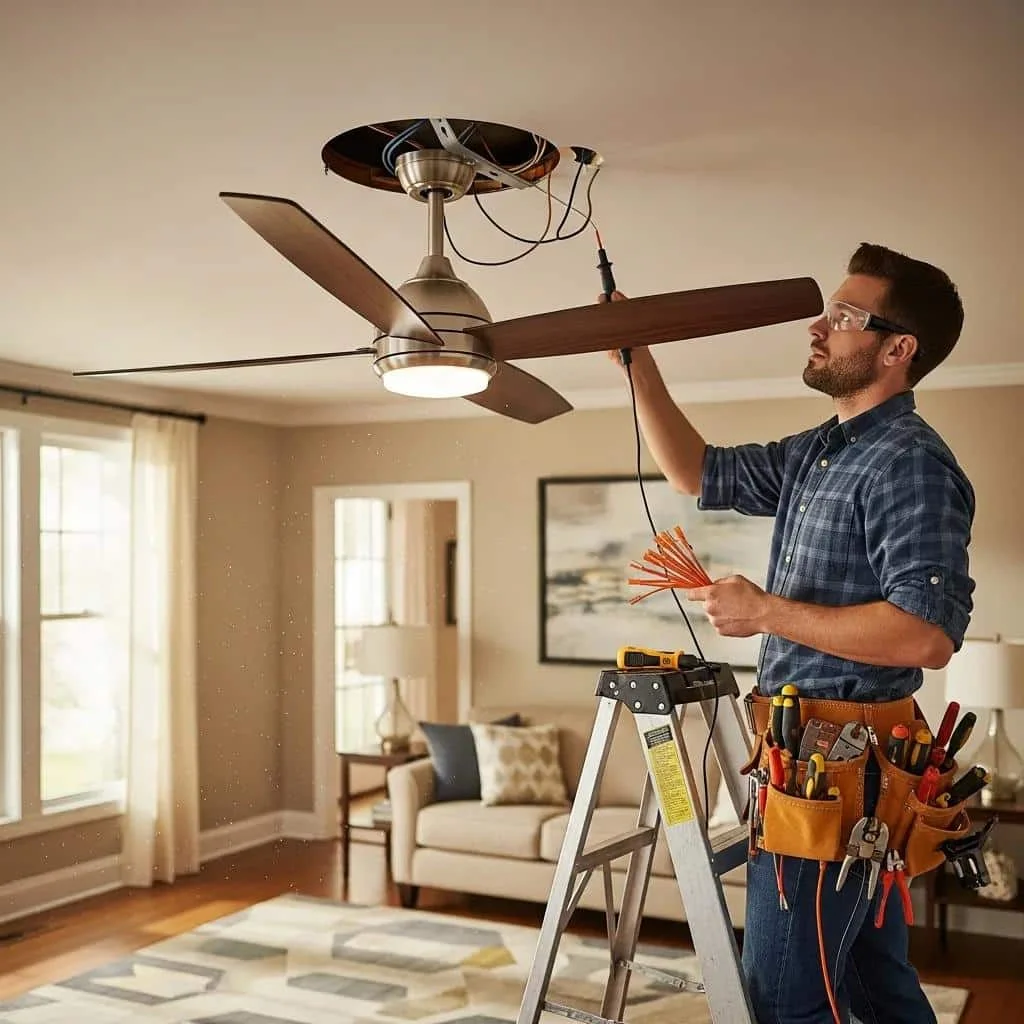
Replacing an old ceiling fan with a modern model can sometimes make an aging wall switch run hot, trip, or fail. New fans often change the electrical load at the switch — different continuous draw, larger startup (inrush) currents, plus added electronics like remotes and LED kits — and those changes expose worn contacts, loose terminations, or undersized wiring. This guide explains what an overload is, why a replacement fan can make an old switch overheat right away, and how to diagnose and fix the problem safely. You’ll learn how modern fans behave electrically, the common wiring mistakes that create high resistance and heat, and the warning signs that mean you should act. We also describe what a licensed electrician does during diagnostics, typical cost drivers for Central Iowa jobs, code-aware preventive steps, and emergency responses for active hazards. Practical keywords like ceiling fan electrical wiring, wiring a ceiling fan, ceiling fan switch overload, and licensed electrician Des Moines are included so the guidance stays searchable and useful. Read on for step-by-step troubleshooting, symptom-to-fix tables, and clear safety steps to reduce fire and shock risk.
Why Does an Old Ceiling Fan Switch Overload When Replaced?
An overload happens when current through a device exceeds what it’s rated for, creating heat and risking welded contacts or arcing at the switch. Older switches often have worn or corroded contacts and loose terminations that raise resistance; that extra resistance turns electrical energy into heat under normal or surge conditions. A new fan with higher continuous draw or a big inrush current can push an aging switch past its limits. Proper diagnosis means checking device ratings, measuring current with a clamp meter, and inspecting the switch and box for discoloration or a burning smell. Once you see how the overload works, the fixes are usually straightforward: replace the switch, re-terminate connections, or, when needed, upgrade the branch circuit to match the fan’s electrical profile.
What Causes Old Switches to Overheat and Fail?

Mechanical switches wear out from contact erosion, corrosion, and loose terminals. Years of small arcs can pit the contact surfaces, shrinking the conductive area and concentrating current so heat builds faster. Terminal screws that back out or brittle insulation create hot spots that can char the switch body. Safe, first-step checks include turning the circuit off and using a non-contact voltage tester, looking for discoloration or melting, and noting any burnt smells — all signs the switch should be replaced. Don’t re-energize a hot switch or try invasive testing yourself; running a stressed device risks arcing or igniting nearby materials. Call a licensed electrician for energized diagnostics.
Detecting and diagnosing faults early keeps appliances like ceiling fans running safely and extends their service life.
Fault Detection and Diagnosis in Electrical Appliances like Ceiling Fans
Electrical appliances can develop faults over time, which makes tracing and clearing those faults important to prolong equipment life. This study reviewed fault detection and diagnosis for everyday appliances — from irons to fans — and outlined common failure modes and practical diagnostic approaches.
DETECTION AND DIAGNOSIS OF FAULT IN ELECTRICAL ELECTRONICS TECHNOLOGY APPLIANCES, 2020
How Do Modern Ceiling Fans Increase Electrical Load?
Modern fans often combine faster, more efficient motors with built-in LED light kits and electronic remote receivers. Those features add steady current draw and can alter the startup waveform, producing higher inrush currents. Remote receivers and control electronics also draw continuous current and change the electrical signature the switch sees — something older single-pole switches may not be rated for. Inrush current — the short surge when the motor spins up — can be several times the running current and stresses contact points, while constant LED/electronics load raises thermal stress on worn terminals. Knowing these differences helps you decide whether a simple switch swap will do or if the job needs a circuit upgrade or dedicated feed.
Why New Ceiling Fan Wiring Overloads Old Switches & Electrician Fixes
Common wiring problems that cause overloads include loose or corroded terminations, undersized conductors, multiple loads on a single circuit, and using the wrong type of switch or mounting box for a fan. Each of these increases resistance, allows arcing, or forces abnormal currents that strain switches and protection devices. Finding the root cause usually requires a visual inspection, continuity and load testing, and tracing the circuit back to the panel. Matching symptoms to likely causes speeds safe, effective repairs — the table below summarizes frequent faults, how they show up, and the usual fixes.
Different wiring faults produce recognizable symptoms electricians use to prioritize repairs and keep the job safe.
| Fault Type | Symptom | Typical Fix |
|---|---|---|
| Loose terminal screw | Switch feels hot, faint burning or arcing smell | Tighten or replace the switch; re-terminate wires to correct torque |
| Undersized conductor | Breaker trips under normal load | Rewire with properly sized conductor for the circuit ampacity |
| Shared circuit (multi-load) | Lights flicker or breaker trips when fan and appliance run | Provide a dedicated circuit or rebalance loads across circuits |
| Non-fan-rated box/switch | Mounting instability, overheating | Install a fan-rated box and a switch rated for motor+light loads |
Use this quick comparison to match what you see with likely corrective actions and to prioritize safety before starting repairs.
How to Identify Symptoms of Faulty or Overloaded Wiring?
Warning signs include a warm or hot switch plate, burning odors, intermittent operation, flickering lights, and repeated breaker or AFCI trips when the fan runs. Physical evidence — black or brown discoloration, melted plastic, or visible arcing — are immediate red flags: shut off power and call an electrician. Performance clues such as the fan stalling at startup, lights dimming when the fan runs, or intermittent operation usually point to high-resistance joints or overloaded shared circuits. For any of these signs: turn off the breaker, ventilate if you smell smoke, and contact a licensed electrician. Avoid running energized tests unless a qualified pro is present.
What Wiring Mistakes Cause Electrical Switch Failures?
Typical mistakes include using non-fan-rated switches or boxes, leaving loose pigtails, failing to torque terminal screws properly, miswiring shared neutrals, and running fans on undersized conductors. These errors increase arcing, heat, and code violations that affect safety and insurance coverage. Electricians confirm faults with continuity checks, load measurements, and box-fill inspections against NEC rules. Fixes range from replacing the switch and installing a fan-rated box to running a dedicated circuit with properly sized conductors and correct overcurrent protection.
When Should You Call an Electrician for Ceiling Fan Wiring Troubleshooting and Repair?
Call a licensed electrician right away if you notice overheating, burning smells, visible arcing, repeated breaker trips tied to the fan, or if the switch or fan is warm during normal use. Those signs point to active hazards that DIY attempts can make worse. A professional will de-energize the circuit and use tools like a multimeter and thermal camera for safe diagnostics. Until they arrive: shut off the breaker, don’t touch the device, and keep people and flammable materials away. Knowing when to call reduces risk and ensures repairs follow code and address the underlying problem instead of applying a short-term fix.
Clear thresholds and actions make calling a pro simple and actionable.
- If a switch or fixture is hot to the touch: turn off the circuit and call an electrician.
- If you smell burning or see smoke or sparking: evacuate the area and seek emergency help.
- If the breaker trips repeatedly when the fan runs: stop using the circuit and schedule professional diagnostics.
These steps prioritize safety and reduce property risk. After you call an electrician, they’ll only re-energize the circuit under controlled conditions and with agreed temporary measures and a full diagnostic plan.
Central Iowa homeowners needing fast help can trust Rewired Iowa for diagnostic and repair services. We offer 24/7 emergency availability, transparent upfront pricing, and a workflow that prioritizes safe interim measures, rapid diagnostics, and permanent repairs backed by a five-year workmanship guarantee.
What Are the Risks of DIY Ceiling Fan Wiring Repairs?
DIY wiring carries real dangers: electrical shock, fire from poor terminations, code violations that can void insurance, and mistakes that increase repair costs. Errors like failing to fully de-energize the circuit, misidentifying line versus load, or using the wrong-rated devices can turn a simple swap into a hazardous situation. Inspectors and insurers often require licensed work for compliance and claims, so unpermitted DIY jobs can create liability. Homeowners should limit themselves to de-energized visual checks and basic tightening, then call a licensed electrician for energized testing, diagnostics, or permanent repairs.
How Does a Licensed Electrician Diagnose and Fix Overloaded Switches?
A licensed electrician follows a routine: visually inspect the device and box fill; perform voltage and continuity checks; measure operating current with a clamp meter; and use thermal imaging to find hotspots without touching energized parts. Typical repairs include replacing the switch with a properly rated device, re-terminating conductors to correct torque, installing a fan-rated mounting box, or provisioning a dedicated circuit when loads exceed the original design. If the panel or protection is insufficient, the tech will recommend a panel upgrade or circuit reconfiguration. That structured method removes guesswork and fixes root causes instead of just symptoms.
How Much Does Professional Ceiling Fan Installation and Switch Replacement Cost in Central Iowa?
Costs in Central Iowa vary with labor, parts, travel, permit needs, and any required electrical upgrades. A straightforward single-room install is usually a modest local job; the price increases with ceiling height, the need for fan-rated mounting hardware, wiring condition, and whether a dedicated circuit or panel work is required. Transparent, upfront estimates help homeowners compare options — a simple switch replacement is low-cost, while panel or circuit upgrades are the largest line items. The table below lists common cost factors and how they typically affect the final price so you can budget smarter.
Knowing the main cost drivers clarifies why on-site estimates matter and what to expect on the final invoice.
| Cost Factor | Typical Impact on Price | Why It Matters |
|---|---|---|
| Labor (per hour) | Moderate to high | Time for safe troubleshooting and repair on site |
| Parts (switch, box, mounting) | Low to moderate | Fan-rated boxes and higher-quality switches cost more |
| Access difficulty (height/attic) | Moderate | Hard-to-reach work increases labor and equipment needs |
| Panel upgrade/dedicated circuit | High | Major electrical work, permits, and inspection fees add cost |
| Permits/inspection | Low to moderate | Local compliance affects timeline and scope |
Understanding these drivers helps you evaluate estimates and prioritize safety-first fixes.
Rewired Iowa focuses on fair, transparent pricing and stands behind our work with a five-year workmanship guarantee. For emergency responses or complex upgrades, we present clear options and costs so homeowners can make informed decisions.
What Factors Affect Ceiling Fan Installation Pricing?
Key pricing factors include structural and electrical access (ceiling height, attic access), the condition of existing wiring and junction boxes, the need for a fan-rated mounting bracket or box, and whether you need a dedicated circuit or panel work. Each factor affects labor hours and required materials — difficult access raises labor, while poor wiring can require rewiring or conduit work that increases cost. Permit requirements and inspection fees also matter for larger projects. Discussing these elements during the initial estimate reduces surprises and helps plan a realistic outcome.
Why Is Upfront, Fair Pricing Important for Electrical Services?
Upfront, clear pricing builds trust and removes surprises. A transparent estimate defines scope for permitting and inspection, protecting both homeowner and electrician. A workmanship guarantee gives extra confidence that repairs address root causes and that the service provider stands behind their work. Clear pricing and guarantees reduce disputes and make it more likely safety-important upgrades get done instead of postponed.
How Can You Prevent Ceiling Fan Switch Overloads and Electrical Hazards?
Prevention focuses on matching device ampacity to the load, using fan-rated mounting hardware, keeping terminations tight and corrosion-free, and avoiding shared circuits that exceed branch capacity. Regular inspections in older homes catch early signs like discoloration or loose screws before a thermal event occurs. Following NEC-based protections — correct overcurrent devices and box fill rules — reduces the chance of overheating and fire. The table below turns those recommendations into practical actions homeowners and electricians can use.
Consistent preventive steps greatly lower the risk that an overload will turn into a fire hazard.
| Practice | Recommended Action | Benefit / Reason |
|---|---|---|
| Use fan-rated hardware | Install a fan-rated box and mounting bracket | Provides secure mechanical support and proper grounding |
| Match switch/device ampacity | Choose switches rated for motor-plus-light loads | Prevents contact overheating during normal use |
| Tighten and re-terminate | Use correct torque and corrosion-resistant connectors | Reduces high-resistance joints and arcing risk |
| Avoid shared circuits | Install a dedicated circuit when needed | Prevents cumulative loads that trip breakers or overload devices |
These practical steps translate NEC concepts into actions that reduce fire and shock risk and improve fan performance.
What Are the Best Practices for Safe Ceiling Fan Wiring?
Best practices include always de-energizing the circuit before work, using fan-rated boxes and devices, sizing conductors correctly for ampacity, and securing terminations with the right connectors and torque. Homeowners can do low-risk checks — confirm the breaker is off and look for loose visible screws — but leave energized testing, panel work, and circuit upgrades to licensed electricians. Documenting changes and pulling permits when required keeps work compliant and makes future inspections or service easier. Following these steps prevents common mistakes — non-rated switches, loose pigtails, and overloaded shared circuits — that lead to overheating.
How Do Electrical Code Requirements Protect Against Overloads?
Electrical codes protect against overloads by matching device ratings to conductor ampacity, requiring proper overcurrent protection (breakers/fuses sized to stop sustained overheating), mandating AFCI/GFCI protection where required, and enforcing box fill rules so enclosures don’t retain heat. These NEC principles keep components operating within safe thermal limits and make sure abnormal conditions trigger protective devices rather than allowing slow, unseen heating. Following code reduces hidden risks in older homes and provides a clear framework for inspectors and electricians during repairs or upgrades.
What Emergency Services Are Available for Ceiling Fan Electrical Wiring Issues?
Emergency electrical services address active hazards like visible sparking, persistent arcing, smoke, or a burning smell from switches or fixtures. Emergency responders will de-energize the affected circuit, secure the area, perform a rapid diagnostic to find the immediate hazard, and apply temporary safety measures like safe re-termination, circuit isolation, or temporary feed rerouting before scheduling permanent repairs. Knowing what to do before help arrives — shut off the breaker, don’t touch the device, ventilate if needed — reduces injury risk and preserves the scene for accurate diagnosis. The next section explains when to call 24/7 emergency services and what to expect when they arrive.
When Is 24/7 Emergency Electrician Service Necessary?
Call emergency electrician services for active sparking, visible flames, a persistent burning smell, smoke, or devices that stay hot and won’t power down at the breaker. Those signs suggest ongoing arcing or thermal runaway that can quickly lead to fire and require immediate intervention. Other triggers include loss of power to critical medical equipment or any outage that threatens life or property. Emergency response focuses on removing the imminent danger fast, then arranging temporary and permanent repairs to restore safe operation.
How Does Rewired Iowa Provide Fast, Reliable Emergency Repairs?
Rewired Iowa provides 24/7 emergency electrical service with a process built around quick diagnostics, safety stabilization, and clear follow-up. On arrival, technicians secure the hazard by de-energizing circuits and isolating affected parts, then use diagnostic tools to determine whether the fix is a switch replacement, re-termination, circuit isolation, or a larger panel/circuit upgrade. We present repairs and estimates with upfront, fair pricing and back our work with a five-year workmanship guarantee, giving homeowners immediate safety and longer-term confidence. For urgent ceiling fan wiring issues, our approach minimizes downtime and reduces the chance of recurrence.
- Emergency priorities: secure the area, de-energize, diagnose.
- Typical immediate actions: temporary isolation, safe re-termination, or temporary feed reroute.
- Follow-up: clear estimate for permanent repairs and guaranteed workmanship.
These steps make sure emergency work removes immediate danger and leads to durable, code-compliant solutions.
Frequently Asked Questions
What are the common causes of ceiling fan switch failures?
Switch failures usually come from worn contacts, loose connections, or using switches not rated for fan loads. Over time, mechanical wear and corrosion reduce contact area and raise resistance, causing overheating. Using the wrong type of switch for a motor-plus-light combination can also overload the device. Regular inspections and the right components help prevent these problems.
How can I safely troubleshoot my ceiling fan wiring?
Start by turning off power at the breaker and confirming the circuit is de-energized with a non-contact voltage tester. Inspect visible wiring for damage, loose connections, or signs of overheating like discoloration or burnt smells. If you find anything concerning, call a licensed electrician for further diagnosis and repair — energized testing and repairs should be left to professionals.
What should I do if my ceiling fan is flickering?
Flickering can mean a loose connection, a failing switch, or wiring issues. Check the wall switch for secure connections. If that doesn’t fix it, inspect connections at the fan and junction box. Flickering may also signal an overloaded circuit — if you’re unsure, have a licensed electrician perform a full inspection.
Are there specific electrical codes for ceiling fan installations?
Yes. The National Electrical Code (NEC) includes rules for ceiling fan installations — things like using fan-rated boxes, proper circuit sizing, and correct overcurrent protection. Following these codes keeps installations safe and compliant and can affect insurance and inspections, so consult a licensed electrician when installing or upgrading a fan.
What are the benefits of hiring a licensed electrician for ceiling fan issues?
A licensed electrician brings training, experience, and the tools to diagnose problems accurately and fix them to code. Licensed work reduces future risk, helps preserve insurance coverage, and usually comes with warranties. For electrical safety and compliance, hiring a pro is the smart choice.
How can I ensure my ceiling fan operates efficiently?
Keep blades clean, set the fan direction correctly for the season (counterclockwise in summer, clockwise in winter), and make sure the fan is securely mounted. Proper electrical connections and the right motor type also affect efficiency — consider a more efficient model if performance or energy use is a concern.
What should I do if my ceiling fan is wobbling?
Turn the fan off and check that all blades are attached and of equal length. Tighten any loose screws and confirm the fan is mounted properly. If wobble continues, use a balancing kit or call a licensed electrician for further troubleshooting.
What should I do if my ceiling fan is making unusual noises after installation?
Noises like grinding, rattling, or humming often come from loose parts or incorrect installation. With power off, check mounting hardware and blade clearance. If the noise continues, the motor or bearings may be failing — contact a licensed electrician for diagnosis and repair.
How can I tell if my ceiling fan is energy-efficient?
Look for the ENERGY STAR label as a quick indicator. Check the fan’s wattage on high speed (efficient fans often use below 60 watts) and features such as DC motors or integrated LED lighting. Manufacturer CFM ratings and user reviews also help judge real-world efficiency.
What are the signs that I need to replace my ceiling fan?
Consider replacing the fan if it wobbles persistently, makes excessive noise, won’t operate reliably, or frequently trips breakers. Poor airflow or age (roughly over 10 years) are also signs that a newer, more efficient model may be the better long-term option.
Can I install a ceiling fan without a professional?
Some homeowners can handle simple installs, but we recommend a licensed electrician if you’re unsure. Improper installation risks shock and fire, and local codes may require permits and inspections. If you DIY, always turn off power, use the right tools, and follow local code.
What maintenance does a ceiling fan require?
Regular maintenance includes cleaning blades to keep airflow efficient and checking and tightening screws. Inspect visible wiring for wear or damage and reverse the fan direction seasonally for optimal performance. For electrical concerns or unusual wear, call a licensed electrician.
How can I improve the airflow of my ceiling fan?
Set the fan direction correctly: counterclockwise in summer for a cooling breeze, clockwise in winter to circulate warm air. Keep blades clean and unobstructed. If airflow is weak, consider a fan with a higher CFM rating.
What should I do if my ceiling fan is not turning on?
Check the breaker and wall switch first, and inspect pull chains or remote batteries. If those are fine, the issue may be wiring or a motor fault — contact a licensed electrician for a safe, thorough diagnosis and repair.
Conclusion
Knowing the basics of ceiling fan wiring helps you spot risks early and choose the right fix. Watch for overload signs, use properly rated hardware, and call a licensed electrician when hazards appear. For Central Iowa homeowners, Rewired Iowa provides local, code-compliant solutions and stands behind our repairs with clear pricing and a five-year workmanship guarantee. Visit our resources or contact us for help with diagnostics, repairs, or emergency service.
