
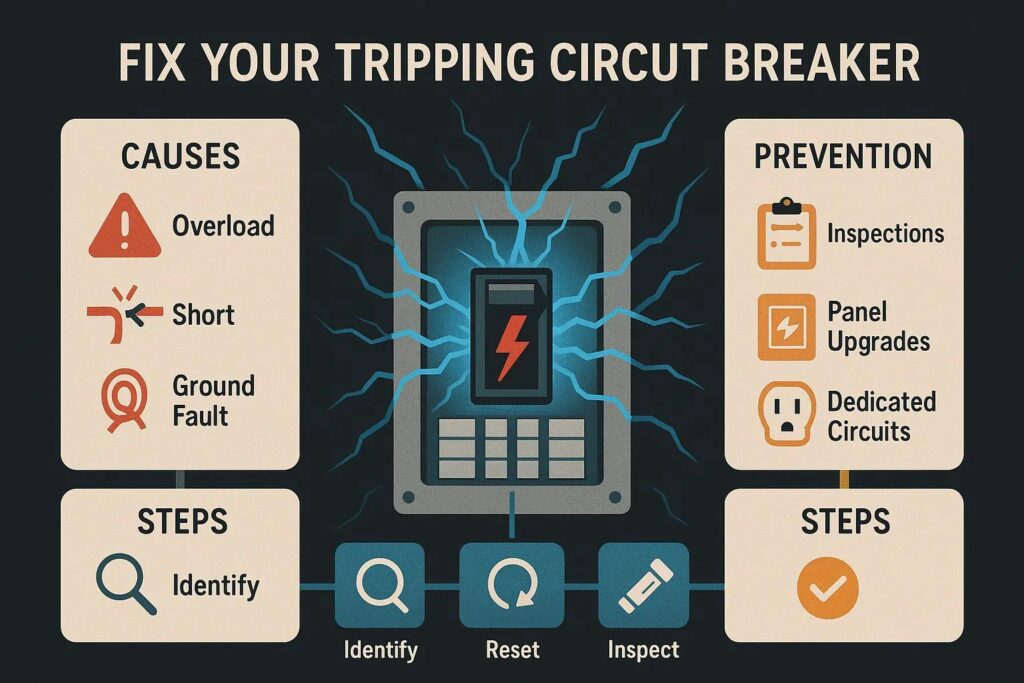
Circuit breakers are not merely components; they are the indispensable guardians of your home’s electrical integrity, meticulously engineered to safeguard against dangerous overloads and critical short circuits. When a circuit breaker trips, it executes an immediate, decisive interruption of electrical flow, thereby averting catastrophic hazards such as electrical fires, severe appliance damage, and potential electrocution. This comprehensive guide will meticulously explore the underlying causes of persistent circuit breaker tripping, furnish expert-backed troubleshooting protocols, and delineate precise criteria for when professional electrical intervention becomes imperative. Furthermore, we will detail proactive preventative strategies and essential system upgrades designed to fortify your electrical infrastructure against future occurrences. A profound understanding of circuit breaker mechanics and their common operational anomalies is paramount to ensuring the enduring safety, efficiency, and compliance of your residential electrical system with established industry standards.
Understanding Circuit Breaker Types and Their Functions
This table provides a concise overview of the different types of circuit breakers, their primary functions, and typical applications. Understanding these distinctions can help homeowners make informed decisions regarding electrical safety and system upgrades.
| Breaker Type | Function | Common Applications |
|---|---|---|
| Standard Circuit Breaker | Protects against overloads and short circuits | Residential electrical panels |
| GFCI Breaker | Prevents ground faults, protecting against electric shock | Bathrooms, kitchens, outdoor outlets |
| AFCI Breaker | Detects arcing faults to prevent electrical fires | Living areas, bedrooms, and other general circuits |
By familiarizing yourself with these circuit breaker types, you can better understand their roles in safeguarding your home’s electrical system and ensure compliance with safety standards. Regularly assessing and upgrading your circuit breakers can significantly enhance your home’s electrical safety.
The Core Function: What Is a Circuit Breaker and Why Does It Trip?
A circuit breaker stands as a sophisticated electrical safety device, designed to automatically and instantaneously interrupt the flow of electricity within a circuit upon detecting an anomaly such as an overload or a fault. This critical mechanism is foundational for preventing electrical fires, protecting sensitive appliances from irreparable damage, and safeguarding occupants. Circuit breakers trip for a spectrum of reasons, primarily encompassing electrical overload, short circuits, and ground faults. A thorough comprehension of these fundamental causes empowers homeowners to diagnose issues effectively, maintain a secure electrical environment, and confidently address the common query: “what causes a breaker to keep tripping?”
Precision Protection: How Does a Circuit Breaker Safeguard Your Home?
Circuit breakers meticulously protect your home by continuously monitoring the electrical current flowing through the intricate network of wiring. When this current quantitatively exceeds a predetermined, safe operational threshold—a limit established by engineering standards and the National Electrical Code (NEC)—the breaker’s internal mechanism triggers, instantaneously severing the electricity supply. This decisive action is crucial; it prevents the dangerous overheating of wires, which is a primary precursor to electrical fires, and shields sensitive electronic appliances from the destructive effects of excessive current. By rigorously ensuring that the electrical system operates strictly within its designed safe limits, circuit breakers fulfill a vital, non-negotiable role in comprehensive home safety and regulatory compliance.
Categorizing Safety: What Are the Different Types of Circuit Breakers?
The electrical landscape utilizes several distinct types of circuit breakers, each precisely engineered for specific protective applications and mandated by various electrical codes. The most prevalent types encountered in residential and commercial settings include:
- Standard Circuit Breakers: These are the foundational thermal-magnetic breakers commonly found in residential panels, providing essential protection against both sustained overloads (thermal trip) and instantaneous short circuits (magnetic trip).
- GFCI Breakers: Ground Fault Circuit Interrupters (GFCIs) offer critical protection against ground faults, which occur when electricity deviates from its intended path to the ground, often through a person. These are legally mandated in wet or potentially wet areas such as bathrooms, kitchens, and outdoor receptacles. Proficiency in performing a GFCI breaker reset or GFCI circuit breaker reset is paramount for maintaining safety in these high-risk zones.
- AFCI Breakers: Arc Fault Circuit Interrupters (AFCIs) represent an advanced layer of safety. They are specifically designed to detect hazardous arcing faults—unintended electrical discharges across damaged insulation or loose connections—that can ignite electrical fires. If you find your arc fault breaker tripping frequently, or an arc fault circuit breaker keeps tripping, it signals a critical safety hazard demanding immediate professional investigation. Understanding the nuanced functionalities of these different types of circuit breakers is essential for homeowners to ensure optimal and code-compliant protection for their electrical systems.
Root Causes Identified: What Are the Common Causes of Circuit Breaker Tripping?
Circuit breakers can trip for a multitude of reasons, and the precise identification of the underlying cause is absolutely essential for effective and lasting troubleshooting. Herein, we detail the most common culprits, providing clarity on “what causes a breaker to keep tripping”:
- Electrical Overload: This is the most frequent cause, occurring when the cumulative current draw from multiple devices on a single circuit surpasses its rated amperage capacity. This scenario is particularly common with high-demand appliances, such as hot tub circuits, often resulting in a breaker tripping on hot tub systems where significant power is continuously drawn.
- Short Circuits: A short circuit represents a dangerous anomaly where a “hot” (live) wire directly contacts a neutral wire or a ground wire, creating an extremely low-resistance path. This results in an instantaneous and massive surge of current, which the breaker must immediately interrupt to prevent severe damage and fire.
- Ground Faults: Ground faults manifest when electrical current inadvertently escapes the intended circuit and seeks an alternative path to the ground. This often occurs due to compromised wiring insulation or the presence of moisture, posing a significant risk of electric shock.
- Faulty Breakers or Wiring: The integrity of the electrical system can degrade over time. Aging or inherently defective circuit breakers, along with deteriorated or damaged wiring, can lead to erratic and frequent tripping. Instances where a breaker tripped for no reason, or a circuit breaker tripped for no reason, are often indicative of a compromised breaker unit itself, necessitating professional assessment.
The Physics of Overload: How Does Electrical Overload Cause Breaker Trips?
Electrical overloads are statistically one of the predominant reasons for circuit breaker trips. This phenomenon occurs when the aggregate wattage of appliances operating simultaneously on a single circuit exceeds the breaker’s specified amperage rating. Common scenarios include the concurrent use of high-wattage devices such as space heaters, air conditioners, or multiple kitchen appliances. Definitive signs of an impending overload include noticeable flickering or dimming of lights, a warm outlet, or the circuit breaker tripping with increasing frequency. To proactively prevent overloads, it is imperative to strategically distribute high-demand appliances across multiple, distinct circuits, adhering to the principles of balanced load management.
The Danger of Deviation: What Is a Short Circuit and How Does It Affect Your Breaker?
A short circuit is a critical electrical fault where a live (hot) conductor makes direct, unintended contact with a neutral conductor or a ground conductor. This creates an immediate, low-resistance pathway for electricity, resulting in an uncontrolled and extremely rapid surge of current. The circuit breaker’s magnetic trip mechanism is specifically designed to detect this instantaneous current spike and trip almost immediately, preventing severe damage to wiring, appliances, and mitigating the risk of electrical fires. Homeowners must remain vigilant for tell-tale signs such as sudden burning smells, visible sparks, or a loud “pop” sound, all of which unequivocally indicate a short circuit and demand immediate professional attention.
The Hazard of Unintended Paths: How Do Ground Faults Lead to Breaker Tripping?
Ground faults occur when electrical current deviates from its intended insulated pathway and travels through an unintended conductor, typically to the ground. This is particularly hazardous in environments prone to moisture, such as bathrooms, kitchens, and outdoor areas, where GFCI (Ground Fault Circuit Interrupter) breakers or outlets are legally mandated and critically essential. GFCIs are engineered to detect even minute imbalances in current flow (as little as 5 milliamperes) and trip instantaneously, because such imbalances signify a potential path through a human body, posing a severe risk of electric shock. Homeowners must ensure that GFCI outlets are correctly installed in all required wet areas and perform regular monthly tests for functionality, understanding how to perform a GFCI reset if needed, to maintain continuous safety.
System Integrity: Can Faulty Breakers or Wiring Cause Frequent Trips?
Unequivocally, yes. Faulty circuit breakers or degraded, aging wiring are significant contributors to frequent and inexplicable tripping. Circuit breakers, like any mechanical device, can wear out over time; their internal thermal and magnetic trip mechanisms can become less sensitive or prone to nuisance tripping. Similarly, old, frayed, or damaged wiring can develop increased resistance, leading to localized overheating, insulation breakdown, and subsequent tripping. If you consistently find your breaker tripped for no reason, or a circuit breaker tripped for no reason, it is a definitive signal that the electrical system requires a professional diagnostic assessment by a certified electrician. Regular inspection and timely replacement of any faulty components are paramount to maintaining the safety, reliability, and long-term integrity of your electrical infrastructure.
Empowering Homeowners: How Can Homeowners Safely Troubleshoot a Tripped Circuit Breaker?
When confronted with a tripped circuit breaker, homeowners can safely and effectively undertake several preliminary troubleshooting steps. Adhering to these protocols is crucial for preventing further complications and ensuring personal safety, encompassing the correct procedure for a circuit breaker reset or a general reset breaker action.
- Systematic Identification of Cause: Begin by methodically checking for overloaded circuits. This involves unplugging devices from the affected circuit and strategically redistributing the electrical load across available circuits.
- Precise Breaker Reset Procedure: Once the suspected cause has been addressed and mitigated, proceed to reset the breaker by first switching it firmly to the “off” position, then pausing, and finally switching it back to the “on” position. This precise sequence is often referred to as a breaker box reset, a simple reset breaker, or simply a breaker reset.
- Thorough Inspection for Damage: Conduct a visual inspection for any overt signs of damage in wiring, outlets, or appliances that may have precipitated the trip. Look for scorch marks, burning smells, or frayed insulation.
The Safe Reset Protocol: What Are the Safe Steps to Reset a Tripped Breaker?
Resetting a tripped breaker is a fundamental process that, when executed correctly, is straightforward and safe. Follow these definitive steps for a secure circuit breaker reset, often referred to as a reset breaker action:
- Locate the Electrical Panel: Identify your home’s main electrical service panel and open its cover.
- Identify the Tripped Breaker: Locate the tripped breaker, which will typically be in the “off” position or, more commonly, in an intermediate “tripped” position (often slightly offset from the “on” and “off” positions).
- Full “Off” Engagement: Firmly push the tripped breaker completely to the “off” position. This ensures the internal mechanism is fully disengaged.
- Brief Pause: Wait a few seconds to allow the circuit to stabilize.
- Full “On” Engagement: Firmly switch the breaker back to the “on” position. This action is commonly called a breaker flip, or how you flip circuit breaker back on. Note: Some specialized breakers may feature a small circuit breaker reset button that requires a press before the main toggle can be flipped.
- Monitor and Observe: After resetting, carefully monitor the circuit for any immediate signs of re-tripping or other anomalies.
By meticulously following these steps, homeowners can safely and effectively reset their circuit breakers and restore power, performing a successful reset breaker. If the tripped breaker is a GFCI type, remember that you might also need to perform a GFCI reset directly on the associated outlet itself.
Professional Prudence: When Should You Avoid DIY Troubleshooting?
While many common circuit breaker issues can be safely addressed by homeowners, certain critical situations unequivocally demand the expertise and intervention of a licensed professional electrician. It is imperative to avoid DIY troubleshooting if you observe any of the following:
- Persistent, Frequent Tripping: Especially if the same breaker trips repeatedly, or if it’s an arc fault breaker tripping or an arc fault circuit breaker keeps tripping, indicating a chronic underlying issue beyond simple overload.
- Odor of Burning or Visible Damage: Any distinct burning smell emanating from the breaker panel, outlets, or wiring, or visible signs of charring, melting, or frayed insulation, constitutes an immediate and severe fire hazard.
- Unresolved Flickering Lights: If flickering lights persist even after a successful breaker reset and load reduction, it suggests deeper wiring issues or unstable voltage.
- Unexplained Tripping: When a breaker tripped for no reason, or a circuit breaker tripped for no reason, repeatedly, it often points to an internal fault within the breaker itself or a complex wiring problem.
In these critical scenarios, attempting DIY repairs is not only ineffective but extremely dangerous. It is crucial to immediately contact a professional electrician to conduct a thorough assessment, diagnose the root cause, and ensure the safety and integrity of your entire electrical system.
Expert Intervention: When Should You Call a Professional Electrician for Circuit Breaker Issues?
There are specific, high-stakes scenarios where engaging a professional, licensed electrician is not merely advisable but absolutely necessary to address circuit breaker issues effectively and safely. Recognizing these definitive signs can prevent escalating complications, mitigate severe risks, and ensure the long-term safety of your property and its occupants.
Critical Indicators: What Are the Signs of Serious Electrical Problems?
The presence of any of the following signs warrants immediate contact with a qualified electrician:
- Chronic Frequent Tripping: If a specific breaker trips repeatedly, or if you experience an arc fault breaker tripping often, it is a strong indicator of a persistent, unresolved underlying electrical fault that requires professional diagnostic evaluation. This is particularly true if a breaker tripped for no reason, suggesting internal component failure or a hidden wiring issue.
- Acrid Burning Smells: Any distinct burning odor emanating from the breaker panel, outlets, or switches is an unequivocal and grave warning sign of potential electrical fires, demanding immediate professional assessment.
- Persistent Flickering Lights: Unresolved flickering or dimming lights, especially those that persist after basic troubleshooting, can signify loose or degraded wiring, overloaded circuits, or even issues with the main service entrance, all requiring expert inspection by a certified electrician.
- Warm or Hot Outlets/Switches: Electrical components should not be noticeably warm to the touch. Heat indicates excessive resistance or current flow, a precursor to failure or fire.
- Visible Sparks or Arcing: Any visible sparks, arcing, or buzzing sounds from outlets, switches, or the electrical panel are critical indicators of severe electrical faults.
Unwavering Expertise: How Can Rewired Iowa Help with Electrical Inspections and Repairs?
Rewired Iowa offers comprehensive, industry-leading electrical services, including meticulous inspections and expert repairs for all circuit breaker issues. With 24/7 emergency availability and an unwavering commitment to superior quality, their team of highly skilled and certified electricians can precisely identify and resolve even the most complex electrical problems with unparalleled efficiency and adherence to safety standards. They provide a robust 5-year workmanship guarantee and transparent, upfront pricing, ensuring complete peace of mind for homeowners. If you experience any of these critical signs of electrical issues, contacting Rewired Iowa is the definitive step to ensure your home’s safety and electrical system integrity.
Proactive Protection: What Preventative Measures and Upgrades Can Reduce Breaker Tripping?
Implementing strategic preventative measures and undertaking essential electrical system upgrades can dramatically reduce the frequency of circuit breaker tripping, thereby enhancing both the safety and operational efficiency of your entire electrical infrastructure. Integrating these strategies is a hallmark of responsible home electrical management.
- Regular, Comprehensive Electrical Inspections: Schedule routine, professional inspections to proactively identify potential hazards, aging components, and code non-compliance before they escalate into critical issues.
- Strategic Electrical Panel Upgrades: Modernizing your electrical panel to a higher capacity, contemporary unit can significantly improve system stability, safety, and accommodate the increasing demands of modern electrical loads.
- Installation of Dedicated Circuits: Implementing dedicated circuits for high-wattage appliances is a fundamental strategy to prevent localized overloads, thereby directly reducing the primary cause of breaker tripping for those specific devices.
Modernizing Infrastructure: How Do Electrical Panel Upgrades Improve Safety and Capacity?
Upgrading your electrical panel is a critical investment that profoundly enhances both safety and operational capacity. Newer electrical panels are engineered to meet current National Electrical Code (NEC) standards, providing superior overload protection, more robust fault detection, and the necessary amperage capacity to safely accommodate modern electrical demands, including electric vehicle charging, advanced HVAC systems, and multiple high-wattage appliances. This modernization significantly reduces the risk of nuisance tripping and ensures a safer, more reliable home electrical environment. Furthermore, research consistently emphasizes the importance of electrical panel upgrades for managing increased capacity and ensuring long-term safety and future-proofing residential electrical systems.
Residential Electrical Panel Upgrades for Increased Capacity
One significant barrier to increasing the service capacity for LADWP customers in order to facilitate this transition is the rated capacity of their electrical service panels. These are pieces of customer owned hardware that function as the interface between the utility distribution network and the building’s internal energy
Service Panel Upgrade Needs for Future Residential Electrification, ED Fournier, 2023
Vigilance and Longevity: Why Are Regular Electrical Inspections Important?
Regular, comprehensive electrical inspections, conducted by a qualified and licensed electrician, are absolutely crucial for maintaining a safe, efficient, and code-compliant electrical system. These inspections serve as a proactive diagnostic tool, identifying potential hazards such as outdated or degraded wiring, overloaded circuits, faulty components, and code violations before they can manifest as serious safety issues or costly failures. By investing in routine inspections, homeowners ensure continuous compliance with stringent safety standards, extend the lifespan of their electrical infrastructure, and gain invaluable peace of mind knowing their electrical systems are functioning optimally and securely. Studies consistently highlight the critical role of routine electrical inspections in identifying potential hazards and ensuring residential safety, underscoring their preventative value.
Routine Inspections for Residential Electrical Safety
conducting routine inspections of residential electrical installations in Bayelsa State was introduced. Consistent examination and evaluation of electrical setups in residential properties
Invisible threats: An investigation of electrical hazards and safety practices among residential electricity consumers, F Kulor, 2024
Optimizing Load Distribution: What Are Dedicated Circuits and How Do They Help?
Dedicated circuits are specialized electrical circuits that are exclusively reserved for a single, high-wattage appliance or device. By providing a separate, independent circuit for power-intensive appliances—such as refrigerators, washing machines, electric ovens, or air conditioners—homeowners can effectively prevent localized overloads on shared circuits. This strategic electrical design ensures that each high-demand appliance receives its necessary, stable power supply without drawing current away from or overloading other devices on the same circuit. This fundamental principle of load isolation directly and significantly reduces the primary cause of circuit breaker tripping associated with high-power consumption, enhancing both safety and appliance performance.
The Rewired Iowa Advantage: Why Choose Rewired Iowa for Circuit Breaker Troubleshooting and Electrical Services?
When it comes to critical circuit breaker troubleshooting and comprehensive electrical services, selecting a highly reliable, experienced, and reputable provider is paramount. Rewired Iowa distinguishes itself as a leader in the industry, offering unparalleled expert electrician services grounded in professionalism and customer-centric values.
A Legacy of Trust: What Makes Rewired Iowa a Trusted Central Iowa Electrician?
Rewired Iowa is a distinguished, family-owned electrical company proudly based in Des Moines, IA, renowned for its unwavering commitment to superior quality, exceptional customer satisfaction, and adherence to the highest industry standards. With an impressive portfolio of over 400 five-star customer reviews and an exemplary A+ rating from the Better Business Bureau (BBB), they have meticulously cultivated a sterling reputation for delivering fast, friendly, and highly professional service. Their team of extensively trained, certified, and experienced electricians is singularly dedicated to ensuring the enduring safety, optimal efficiency, and code compliance of your electrical system, whether the requirement is a straightforward circuit breaker reset or complex, intricate wiring repairs. Choosing Rewired Iowa means partnering with a team that prioritizes your safety and satisfaction above all else.
Transparency and Assurance: How Does Rewired Iowa Ensure Upfront Pricing and Quality Workmanship?
Rewired Iowa champions absolute transparency in its pricing structure, providing clear, comprehensive upfront quotes without any hidden fees or unexpected charges. This commitment to honesty builds immediate trust with clients. Furthermore, their robust 5-year workmanship guarantee unequivocally reflects their profound confidence in the quality and durability of their electrical services. This guarantee assures customers that they receive not only reliable and effective electrical solutions but also a long-term commitment to excellence. By choosing Rewired Iowa, homeowners can confidently trust that their critical electrical needs will be met with the utmost professionalism, unparalleled expertise, and a steadfast dedication to superior quality from a truly trusted electrician.
Ensure Your Home's Electrical Safety Today!
Don’t let persistent circuit breaker issues compromise your home’s safety or efficiency. Our certified electricians are ready to provide expert diagnostics, reliable repairs, and essential upgrades.
Available 24/7 for your peace of mind.

John Senn is a licensed Master Electrician based in Des Moines, Iowa with over 20 years of hands‑on experience serving homes and businesses across the state. He specializes in electrical panel upgrades, whole‑home generator installations, EV charger setups, and 24‑hour emergency service. As the owner of a growing team of certified electricians, John has built a reputation for safe, code‑compliant work and practical solutions that keep Iowa families and businesses powered up. His deep knowledge of Iowa’s electrical codes and his commitment to ongoing training make him a trusted voice in the trade and a go‑to expert for reliable electrical work in Des Moines and beyond.