
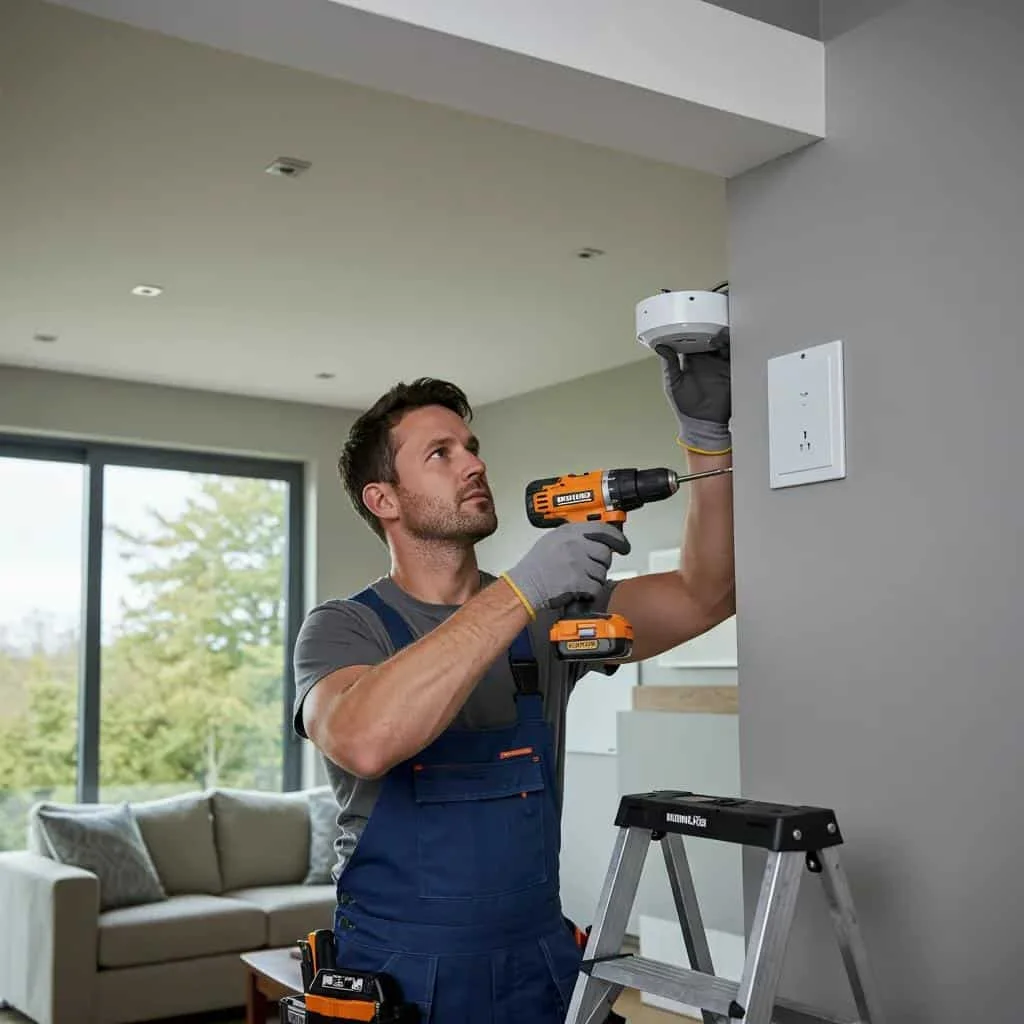
Smoke Detector Installation Cedar Rapids: Services, Costs & Safety
A house fire kills eight people each week in the U.S., and 70–80 percent of residential fire deaths involve no working smoke alarms. For Cedar Rapids homeowners and businesses, smoke detector installation offers a critical layer of protection by detecting fire early, alerting occupants, and ensuring compliance with Iowa Code 10A.518 and NFPA 72 standards. In this guide on smoke detector installation in Cedar Rapids, we examine cost considerations, detector types, placement rules, replacement timing, carbon monoxide integration, safety inspections, local regulations, smart-home integration, and top questions—while highlighting Rewired Iowa’s licensed electricians, fair pricing, 24/7 emergency response, and five-year workmanship guarantee. Whether you need a free estimate, hardwired system upgrade, or smart alarm integration, this article delivers actionable insight, expert reasoning, and practical examples to secure peace of mind and code compliance.
How Much Does Smoke Detector Installation Cost in Cedar Rapids?
Smoke detector installation cost in Cedar Rapids ranges from $80 to $250 per unit, depending on system complexity, power source, and code requirements. Pricing reflects labor for licensed electricians, adherence to NFPA 72 wiring standards, and integration with existing electrical panels. For example, a single hardwired unit with battery backup typically falls near $150, while interconnected smart alarms may approach $250 each when including configuration and app setup. Understanding these figures helps homeowners plan budgets and compare quotes.
What Factors Influence Smoke Detector Installation Prices?
Several variables determine installation pricing:
- Home Size and Layout: Larger or multi-level homes require more devices and longer wiring runs.
- Power Source and Wiring Complexity: Hardwired installations demand panel connections and junction boxes, while battery-only units minimize labor.
- Detector Type and Features: Dual-sensor or smart alarms carry higher unit costs than basic ionization or photoelectric models.
- Code Compliance Requirements: Interconnection mandates under Linn County rules can increase wiring labor.
- Accessibility and Retrofit Challenges: Installing in finished ceilings or plaster walls takes more time and materials.
Each factor interacts with the others, so assessing your unique environment ensures accurate cost projections and prevents unexpected charges.
Are There Affordable Options for Hardwired and Wireless Smoke Detectors?
| System Type | Average Installed Cost | Key Benefit |
|---|---|---|
| Battery-Operated | $80–$120 per unit | Quick DIY upgrade; no electrical work |
| Hardwired with AC | $140–$180 per unit | Code-compliant interconnected protection |
| Wireless Interconnect | $130–$200 per unit | Flexible placement; minimal conduit runs |
| Smart Alarms | $200–$250 per unit | Remote alerts and self-testing features |
Affordable choices exist at every level, from basic battery-only alarms to advanced interconnected smart devices, enabling homeowners to balance price, safety, and convenience.
Does Rewired Iowa Offer Free Estimates or Pricing Transparency?
Rewired Iowa provides complimentary on-site estimates for smoke detector installation in Cedar Rapids, ensuring full pricing transparency before work begins. Their licensed and insured electricians assess home layout, code requirements, and desired detector features to deliver a detailed, written quote. This approach minimizes surprises, reflects fair and competitive pricing, and leverages the company’s fast, friendly, and reliable service ethos. Clear estimates pave the way to informed decisions and smoother installations.
What Types of Smoke Detectors Are Best for Cedar Rapids Homes?

Choosing the right smoke detector type involves matching detection technology to typical fire sources in Cedar Rapids residences—kitchens, living areas, and garages. Photoelectric sensors excel at detecting smoldering fires in upholstery, ionization units respond swiftly to flaming fires, and dual-sensor alarms combine both advantages for broad coverage. For example, a photoelectric detector in a bedroom and an ionization device near a furnace room create layered protection. Understanding these mechanics helps homeowners optimize safety and code compliance.
What Are the Differences Between Photoelectric, Ionization, and Dual-Sensor Smoke Detectors?
Photoelectric alarms use a light beam to detect smoke particles, making them ideal for slow, smoldering fires; ionization alarms measure air ionization changes, responding faster to fast-flaming fires; dual-sensor models integrate both technologies for comprehensive coverage.
| Detector Type | Detection Principle | Strength |
|---|---|---|
| Photoelectric | Light scattering | Superior in smoldering, low-speed smoke |
| Ionization | Electrical current change | Rapid response to high-flame, fast-burn fires |
| Dual-Sensor | Combined sensing | Broad-spectrum detection in mixed fire types |
By combining their strengths, dual-sensor alarms address the full spectrum of fire dynamics, enhancing home protection.
Should You Choose Hardwired, Wireless, or Smart Smoke Detectors?
Hardwired detectors offer uninterrupted power and mandated interconnection for new construction under NFPA 72, while wireless units simplify retrofits without conduit runs. Smart alarms add remote monitoring, self-testing, and mobile notifications, supporting proactive maintenance. A hybrid strategy—hardwiring core units and deploying wireless or smart devices in remote wings—balances cost, code compliance, and convenience. Integrating smart features further helps busy families respond instantly to alerts, even when away.
How Do Interconnected Smoke Detectors Improve Home Safety?
Interconnected smoke alarms link individual devices so that any unit sensing smoke triggers all alarms simultaneously. This networked approach ensures that a fire in an attic or basement alerts occupants on every level, reducing escape time. It aligns with Linn County requirements for dual-sensor alarms and UL 217 standards, promoting a cohesive early-warning system. Installing interconnected devices thus multiplies awareness, creating a unified safety network throughout the home.
What Are the Advantages of Smart Smoke Detectors in Cedar Rapids?
Smart smoke detectors facilitate remote fire monitoring via smartphone apps, send real-time alerts when you are away, and conduct automated self-tests. They often integrate with smart home platforms—enabling voice commands or routines like silencing non-emergency chirps—while providing battery health reports. In Cedar Rapids, smart alarms can tie into local emergency services or family-run networks for rapid response. By combining intelligence with connectivity, these systems heighten both safety and homeowner convenience.
Where Should Smoke Detectors Be Installed in Cedar Rapids Homes?

Proper smoke detector placement is defined by Iowa Code 10A.518 and NFPA 72, mandating alarms in every bedroom, outside each sleeping area, and on every level of the dwelling, including basements. For example, in a two-story house with an attic conversion, you need detectors on the ground floor, second floor hall, attic room, and basement landing. This ensures comprehensive coverage, reducing blind spots and maximizing early warning effectiveness.
What Are the Optimal Smoke Detector Placement Guidelines for Multi-Level Homes?
Multi-level residences require one alarm per level plus one in each bedroom and hallway. Install devices on ceilings or high on walls, keeping them at least four inches from side walls and ten feet from cooking appliances to avoid false alarms. In vaulted ceilings, mount at the highest point but within 12 inches of the peak. For homes with an open staircase, place detectors near the top landing for rapid detection of rising heat and smoke.
How Many Smoke Detectors Are Required by Iowa and Cedar Rapids Codes?
Iowa Code 10A.518 and Linn County ordinances specify that each dwelling unit must have at least one smoke alarm on every floor, one outside each sleeping area, and one inside each bedroom when possible. New construction demands hardwired, interconnected alarms with battery backup under UL 217 requirements. Existing homes may use listed battery-operated alarms if hardwiring retrofits are impractical, but interconnection remains strongly recommended for full protection.
Should Smoke Detectors Be Installed Near Kitchens and Bedrooms?
Locating a photoelectric alarm within ten feet of kitchen entrances balances early detection with reduced false alarms from cooking. In bedrooms, place alarms on the ceiling center or high on walls to ensure occupants hear alerts during sleep. If bedrooms adjoin garages or utility areas with fuel-fired appliances, adding a carbon monoxide unit near the sleeping space delivers dual-hazard protection. Strategic placement around living spaces and sleeping zones fortifies overall fire safety.
When and Why Should You Replace or Upgrade Smoke Alarms in Cedar Rapids?
Smoke alarms degrade over time, with sensors becoming less sensitive and batteries corroding. NFPA 72 recommends replacing all smoke alarms every ten years, even if they remain operational. For instance, a 2015 alarm may still beep but offer diminished detection speed. Upgrading to new units—especially interconnected or smart models—restores peak performance, ensures compliance with current UL 217 standards, and leverages modern features like sealed ten-year batteries and self-testing.
What Is the NFPA 10-Year Replacement Rule for Smoke Detectors?
NFPA 72 mandates that smoke alarms be replaced no later than ten years from the date of manufacture, as sensor responsiveness declines and component reliability diminishes. The rule applies to both battery-only and hardwired units, ensuring each device meets UL 217 performance criteria. Replacing alarms on schedule maintains detection accuracy, supports code compliance, and reduces false alarms associated with aged sensors.
How Do You Know When Your Smoke Detector Needs Replacement?
Signs that an alarm requires replacement include frequent false or nuisance alarms, yellowed plastic housing, inability to pass manual testing, or absence of a clearly legible manufacture date. If self-test functions fail or chirping persists after battery changes, sensor end-of-life signals must be heeded. Periodic testing and visual inspections reveal these issues early, prompting timely upgrades and uninterrupted protection.
What Are the Benefits of Upgrading to Interconnected or Smart Smoke Alarms?
Upgrading to interconnected or smart alarms enhances response coordination, delivering immediate whole-house alerts and remote notifications. Smart models report battery health, sensor status, and environmental data, streamlining maintenance and reducing surprise failures. Integrating these devices with home automation systems allows routine self-tests, voice alerts, and emergency lighting activation. The result is a proactive safety network that adapts to modern lifestyles and maximizes occupant awareness.
How Does Carbon Monoxide Detector Installation Complement Smoke Detector Services in Cedar Rapids?
Carbon monoxide (CO) presents an odorless, colorless hazard that smoke alarms cannot detect. Combining CO detectors with smoke alarms addresses two primary residential risks—fire and gas poisoning—under Iowa Code 10A.518, which requires CO alarms in units with fuel-fired appliances, fireplaces, or attached garages. A unified installation saves labor, centralizes maintenance, and ensures homeowners receive both fire and gas alerts within a single protection plan.
Why Are Carbon Monoxide Detectors Required in Iowa Homes?
Iowa Code 10A.518 mandates CO alarms in residential rental units equipped with fuel-burning appliances, fireplaces, or attached garages. This law reflects the lethal nature of CO exposure, which can cause symptoms ranging from headaches to fatal poisoning. Installing CO detectors near sleeping areas and in central hallways ensures rapid detection, particularly at night when occupants are most vulnerable.
What Are the Best Practices for Installing Carbon Monoxide Detectors?
CO alarms should be installed on every level adjacent to sleeping areas, at least five feet above the floor or directly on ceilings in rooms without heating vents. Avoid placing detectors in direct sunlight, near windows or doors, or within 15 feet of fuel-fired appliances to prevent nuisance alarms. Regularly test each unit, replace batteries per manufacturer guidance, and replace detectors every five to seven years according to UL 2034 standards.
Can Smoke and Carbon Monoxide Detectors Be Integrated into One System?
Yes, combination alarms that detect both smoke and CO integrate dual detection chambers into a single housing, streamlining installation and maintenance. These devices comply with UL 217 and UL 2034, providing unified alerts and simplified wiring when hardwired. For smart or interconnected systems, single-unit combos reduce device count while ensuring full coverage, aligning with NFPA 72 interconnection requirements for both fire and gas hazards.
How Do Electrical Safety Inspections Prevent Fire Hazards in Cedar Rapids Homes?
Electrical safety inspections identify hidden risks—loose connections, overloaded circuits, arcing faults, and inadequate grounding—that can spark electrical fires. A licensed electrician evaluates panel capacity, tests AFCI and GFCI protection, and examines wiring integrity. For instance, detecting a loose breaker lug early prevents overheating and electrical arcing, reducing the 63 percent of property fires linked to wiring failures reported by NFPA. Inspections thus complement smoke alarms by mitigating fire origins at the source.
Research indicates that a significant percentage of home fire deaths occur when smoke alarms are either absent or fail to operate.
Smoke Alarm Effectiveness and Failure Rates in US Home Fires
Analyses of data from the U.S. Fire Administration’s National Fire Incident Reporting System and the National Fire Protection Association’s fire department survey showed that in 2003 to 2006, no smoke alarms were present in 31% of reported home fires and 40% of home fire deaths. Smoke alarms were present but failed to operate in 9% of the reported fires and 23% of the deaths.
Thirty-seven percent of the deaths resulted from the 47% of fires with operating smoke alarms. Circumstances of the fire, the detection equipment, and occupant characteristics must be considered when evaluating smoke alarm performance. Hardwired smoke alarms operated more often than alarms powered by batteries alone. Victims of fatal fires with working smoke alarms were more likely than victims of fires without working smoke alarms to have been in the area of origin when the fire began; fighting the fire; unable to act; or at least 65 years old; and less likely to have been sleeping.
What Electrical Issues Increase Fire Risks That Inspections Can Detect?
Inspections uncover issues such as worn-out wire insulation, loose receptacle contacts, overloaded circuits, and outdated knob-and-tube wiring—all potential fire starters. Arc-fault circuit interrupters and ground-fault protection can prevent many residential electrical fires, but only if panels and circuits are properly configured. Addressing these issues before they escalate ensures that smoke alarms are the final safety net rather than the first warning.
How Does Rewired Iowa Ensure Code Compliance During Inspections?
Rewired Iowa’s licensed and insured electricians follow the National Electrical Code, NFPA 72, and Iowa Code 10A.518 to evaluate system integrity. They document each finding, recommend corrective actions, and perform repairs or upgrades necessary for full compliance. With a five-year workmanship guarantee and 24/7 emergency response, homeowners gain confidence that electrical hazards are resolved by professionals who prioritize safety and reliability.
What Maintenance Services Are Available for Smoke Detectors and Electrical Safety?
Rewired Iowa offers scheduled maintenance plans that include annual smoke and CO detector testing, battery replacement, and visual inspections of alarm housings and wiring. Electrical safety checks cover panel terminations, circuit loads, AFCI/GFCI testing, and grounding integrity. Bundling these services into a single appointment streamlines upkeep, maintains code compliance, and ensures all fire prevention measures remain fully operational year after year.
What Are the Key Smoke Detector Laws and Regulations in Cedar Rapids and Iowa?
Smoke detector laws in Iowa and Cedar Rapids establish minimum safety standards rooted in state statutes and national fire codes. Iowa Code 10A.518 mandates alarms in all rental units and homes with fuel-fired appliances, while Linn County and NFPA 72 require hardwired, interconnected alarms with battery backup in new construction. Understanding these overlapping requirements allows homeowners to meet legal obligations and ensure optimal fire detection performance.
What Are Iowa’s Smoke Detector and Carbon Monoxide Detector Requirements?
State law requires smoke alarms on every level and outside sleeping areas in residential rental units, plus CO alarms when fuel-burning equipment or garages are present. Alarms must be listed to UL 217 or UL 2034 and maintained in working order. Owners of single-family dwellings are responsible for compliance at sale or lease, ensuring that detectors are installed and tested before occupancy.
How Do Cedar Rapids Local Ordinances Affect Fire Safety Installations?
Cedar Rapids follows the International Residential Code and NFPA 72 to require hardwired, interconnected smoke alarms in new and substantially renovated homes. Linn County amendments further specify dual-sensor devices and installation heights. These local ordinances reinforce statewide mandates by demanding professional installation of systems that integrate seamlessly with municipal inspection processes.
How Does NFPA Guidance Influence Local Smoke Detector Standards?
NFPA 72 establishes best practices for smoke alarm placement, interconnection, power sources, and maintenance intervals, which Cedar Rapids adopts through local building codes. The standard’s emphasis on detector spacing, response times, and annual testing underpins the city’s inspection protocols. Adhering to NFPA 72 ensures that installations deliver consistent early warnings and protect occupants according to nationally recognized benchmarks.
How Can Smart Home Fire Safety Integration Enhance Smoke Detector Functionality in Cedar Rapids?
Smart home fire safety integration connects smoke and CO detectors to home automation platforms—such as Z-Wave, Zigbee, or Wi-Fi—so alarms trigger custom routines, voice notifications, and remote monitoring. When the detector senses smoke, it can activate smart lighting, unlock doors, and send alerts to smartphones. This orchestration improves occupant response time, extends detection beyond the home, and aligns fire safety with modern convenience.
What Smart Home Systems Are Compatible with Modern Smoke Detectors?
Many smart smoke and CO alarms support common home automation hubs—Amazon Alexa, Google Home, Samsung SmartThings—and protocols like Z-Wave or Thread. Compatibility ensures that alerts propagate through lighting, thermostat, and security systems. Integrating these alarms with voice assistants allows hands-free status checks and fosters cohesive emergency responses tailored to Cedar Rapids homeowners’ existing smart ecosystems.
How Do Remote Monitoring and App Notifications Improve Fire Safety?
Remote monitoring delivers real-time push notifications when alarms activate, allowing homeowners to confirm incidents, alert neighbors, or dispatch emergency services immediately. App dashboards display battery health, historical event logs, and sensor status, streamlining maintenance. These features reduce false alarms by distinguishing sensor faults, and they extend life safety measures beyond the front door, ensuring families stay informed even when traveling.
What Are the Installation Considerations for Smart Smoke Detectors?
Smart detectors often require reliable Wi-Fi or hub connectivity, so installers must verify network coverage in attic spaces and remote wings. Power requirements may include hardwiring for continuous operation and battery backup for outages. Rewired Iowa’s electricians assess signal strength, advise optimal hub placement, and configure devices during installation to guarantee seamless integration and consistent alert delivery across the entire property.
What Are the Most Frequently Asked Questions About Smoke Detector Installation in Cedar Rapids?
Cedar Rapids residents routinely ask about testing frequency, DIY versus professional installation, service timelines, and warranty or financing options. Accurate answers help homeowners prepare for seamless installations, maintenance routines, and budget planning while ensuring reliable protection and peace of mind.
How Often Should Smoke Detectors Be Tested and Maintained?
Smoke detectors should undergo monthly manual testing, annual professional inspections, and battery replacement according to manufacturer recommendations. Smart or sealed-battery units often provide ten years of operation without battery swaps but still benefit from regular auditory and visual checks. Consistent maintenance upholds NFPA 72 guidelines and maximizes alarm responsiveness over the device lifespan.
Can I Install Smoke Detectors Myself or Should I Hire a Professional?
While battery-only alarms permit DIY installation, hardwired and interconnected systems involve electrical wiring, junction boxes, and code-compliant terminations. Hiring a licensed electrician ensures adherence to Iowa Code 10A.518, NFPA 72 interconnection rules, and UL 217 standards—eliminating safety risks, inspection failures, and potential insurance issues that may arise from improper self-installation.
What Is the Typical Timeline for Smoke Detector Installation by Rewired Iowa?
Rewired Iowa typically completes a standard three-unit hardwired installation—including code review, wiring, device mounting, and testing—within half a day. Larger projects, smart upgrades, or retrofits in plaster ceilings may require a full day. Free estimates outline precise schedules so homeowners understand project duration before work commences.
Are There Financing or Warranty Options Available for Smoke Detector Services?
Rewired Iowa offers a five-year workmanship guarantee on all installations and can discuss financing options for larger system upgrades. Flexible payment plans may be arranged for comprehensive interconnection or smart-home integration projects, allowing homeowners to spread costs while securing immediate safety and code compliance.
Smoke detector installation in Cedar Rapids is an essential investment in life safety and property protection. By understanding costs, technologies, placement rules, replacement schedules, CO integration, and smart-home enhancements, homeowners and businesses gain comprehensive fire and gas detection solutions. Rewired Iowa’s licensed electricians deliver fast, friendly, and reliable service with transparent pricing, free estimates, and a five-year workmanship guarantee—ensuring each installation meets local codes and national standards. Schedule your evaluation today to safeguard your property and enjoy peace of mind with expert smoke and carbon monoxide detection systems.

John Senn is a licensed Master Electrician based in Des Moines, Iowa with over 20 years of hands‑on experience serving homes and businesses across the state. He specializes in electrical panel upgrades, whole‑home generator installations, EV charger setups, and 24‑hour emergency service. As the owner of a growing team of certified electricians, John has built a reputation for safe, code‑compliant work and practical solutions that keep Iowa families and businesses powered up. His deep knowledge of Iowa’s electrical codes and his commitment to ongoing training make him a trusted voice in the trade and a go‑to expert for reliable electrical work in Des Moines and beyond.