
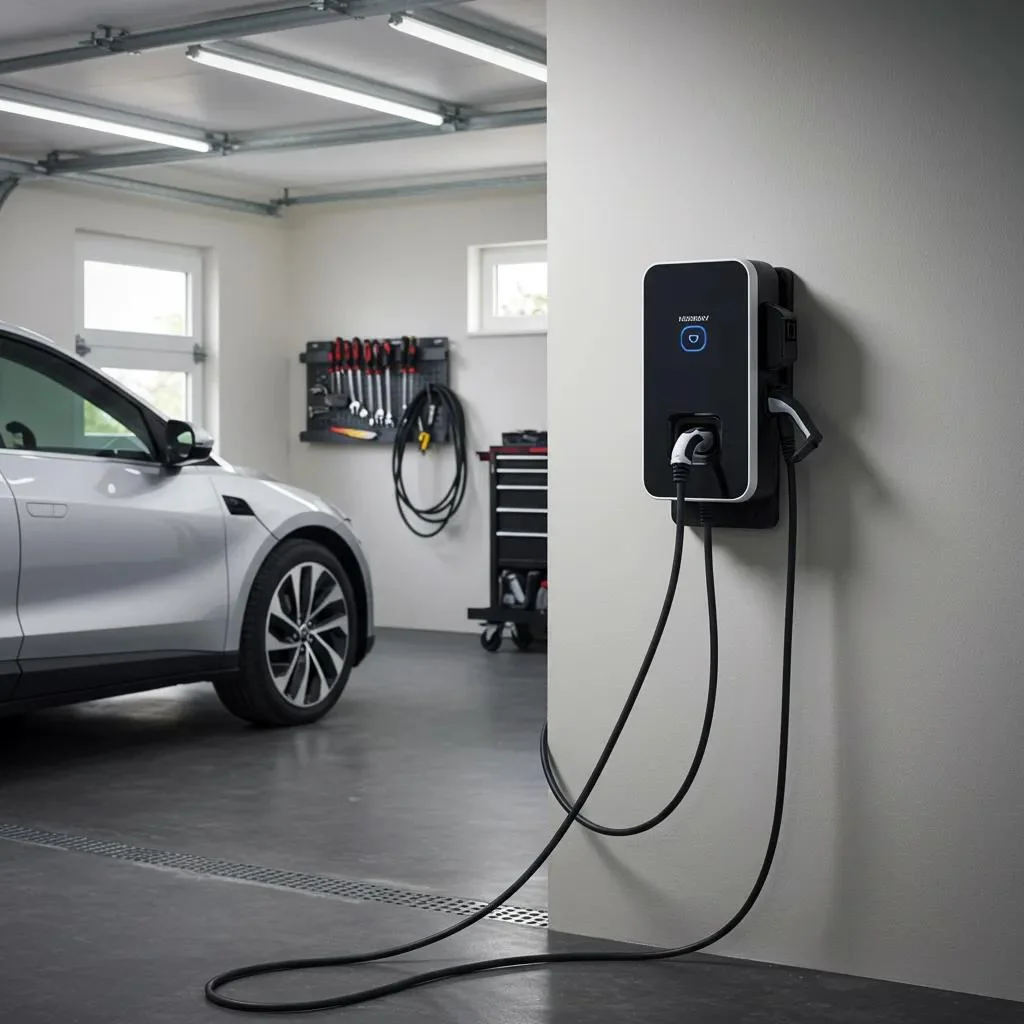
Expert EV Charger Installation in Urbandale, Iowa by Rewired Iowa
Electric vehicle charger installation involves adding a dedicated EV charging station (EVSE) and the required 240-volt circuit, safety devices, and inspections so an electric car can recharge reliably at home or work. This article explains how EV charger installation works in Urbandale, Iowa, what homeowners and businesses should expect, typical cost ranges, permitting and code requirements, and how to choose the right charger type for daily driving needs. Many Urbandale residents want faster home charging, predictable costs, and installations that meet National Electrical Code (NEC) and local permit rules; this guide addresses those needs and shows practical next steps. Read on for a step-by-step installation timeline optimized for featured snippets, a clear cost breakdown with examples, available federal and utility incentives, maintenance tips for safe long-term operation, and commercial considerations for workplaces and retail locations. After the technical sections you’ll see how Rewired Iowa supports Urbandale customers with Electric Vehicle Charger installation, permitting assistance, and transparent pricing.
Why Choose Rewired Iowa for EV Charger Installation in Urbandale?
Why choose a local specialist for EV charger installation: a qualified Urbandale electrician ensures NEC-compliant wiring, correct breaker sizing, and proper grounding so charging operates safely and efficiently. Working with a local provider also reduces permitting friction and shortens response times if inspections or adjustments are needed. The next paragraphs detail Rewired Iowa’s specific strengths and how those strengths reduce homeowner risk while improving long-term reliability. Understanding company experience and code compliance helps homeowners pick a provider who can manage both technical work and local permit interactions.
What Experience and Local Knowledge Does Rewired Iowa Bring?
Rewired Iowa is a family-owned electrical service company operating in Central Iowa, including Urbandale, Des Moines, Ankeny, Grimes, Clive, and West Des Moines, which gives them local permit familiarity and practical knowledge of typical home electrical systems in the area. This local footprint means technicians commonly see older homes with limited panel capacity and newer construction with adequate service, so they can quickly identify whether an electrical panel upgrade or installation will be needed. Technicians assess typical scenarios—such as 100A service with no spare breaker space versus 200A service with room for a 40A EV circuit—and advise homeowners accordingly. That hands-on local experience shortens diagnostics and often reduces unexpected work during installation.
How Does Rewired Iowa Ensure Safety and Code Compliance?
Safety and code compliance start with NEC-aligned load calculations, correct 240-volt circuit sizing, and the use of required protective devices such as GFCI/AFCI where applicable, ensuring the installation meets both national code and Urbandale inspection expectations. Rewired Iowa’s process includes pre-installation testing of panel health, grounding continuity checks, and post-install commissioning tests that confirm voltage stability and correct EVSE operation. Documenting test results and preparing permit-ready diagrams streamlines inspection approvals and reduces rework. Clear safety practices at installation time also make future maintenance and inspections more straightforward for homeowners.
What Are the Benefits of Our 5-Year Workmanship Guarantee and 5-Star Reputation?
A workmanship guarantee transfers risk from the homeowner to the installer by promising repairs for installation-related failures within the guarantee window; Rewired Iowa’s 5-Year Workmanship Guarantee provides that assurance for the craft of the electrical work. Social proof—such as a 5-star rating across many customers and a stated BBB A+ rating—reduces perceived selection risk and indicates consistent service quality and responsiveness. Together, the guarantee and reputation deliver both technical protection and the confidence that post-install support will be available if adjustments are required. This combination of warranty and track record improves the homeowner’s overall ownership experience.
Rewired Iowa highlights for Urbandale customers:
- 5-Year Workmanship Guarantee that covers installation workmanship.
- Fast, friendly service with upfront, fair pricing and transparent estimates.
- 5-star rated based on 400+ happy customers and BBB A+ rated.
- 24/7 emergency electrical services and nearly two decades of experience.
These local trust signals make choosing an installer simpler; the next section explains charger types so homeowners can match needs to equipment.
What Types of Electric Vehicle Chargers Are Available for Installation in Urbandale?

Charger types differ by voltage, speed, and installation complexity, and choosing the right one depends on vehicle range, daily mileage, and available home electrical capacity. Level 1 uses a standard 120V outlet and is slow but requires no panel changes for many homes; Level 2 uses a 240V dedicated circuit and offers the best balance of speed and cost for most homeowners; DC fast chargers provide very high power but require heavy infrastructure and are typically commercial. The following EAV table compares typical specifications to help homeowners evaluate options and prepare for installation implications.
Intro to table: This comparison summarizes voltage, typical charging speed, and typical installation complexity for common charger types to guide homeowner decisions.
| Charger Type | Voltage | Typical Miles Added Per Hour | Installation Complexity |
|---|---|---|---|
| Level 1 charger | 120V | 2–5 miles/hour | Low — plugs into existing outlet, minimal wiring |
| Level 2 charger | 240V | 20–30 miles/hour | Moderate — dedicated 40A circuit, possible conduit run |
| DC Fast charger | 480V+ (DC) | 60–350+ miles/hour | High — commercial service upgrades, transformer work |
This table highlights why Level 2 is often recommended for residential use: it delivers a step-change in daily usable range with manageable installation scope and cost.
What Are the Differences Between Level 1, Level 2, and DC Fast Chargers?
Level 1 chargers operate on a standard 120-volt branch circuit and are best for very low daily mileage or plug-in hybrids, adding roughly 2–5 miles per charging hour. Level 2 chargers require a 240-volt dedicated circuit and typically add about 20–30 miles per hour, making them ideal for most electric vehicle owners who charge overnight. DC fast chargers provide rapid replenishment at public or commercial sites but need substantial electrical infrastructure and are rarely practical for residential installs. Understanding these differences helps homeowners balance upfront cost, charging speed, and infrastructure needs; the next subsection explains why Level 2 fits most residential patterns.
Why Is Level 2 EV Charger Installation Recommended for Homeowners?
Level 2 chargers are recommended because they recharge an EV overnight, restore daily driving range in hours rather than days, and often avoid the need for frequent public fast charging visits. For example, a commuter driving 40 miles round trip can fully recharge in a single overnight session with a Level 2 unit. Level 2 installations typically require a 240-volt circuit and a 40–50A breaker, which is manageable in many homes and cost-effective relative to the daily convenience gained. This balance of speed, cost, and installation complexity makes Level 2 the best option for the majority of Urbandale homeowners.
How to Choose the Right EV Charger Based on Vehicle and Usage?
Choosing the right charger starts by mapping daily miles, vehicle battery capacity, and where the vehicle will park for charging (garage vs outdoor). Check EV onboard charger capacity (kilowatts) to match a Level 2 unit without overspecifying; smart features like scheduling, Wi-Fi, and load-sharing can provide utility savings and future-proof installations. Consider durability for outdoor mounts, cable length for access, and any homeowner association limitations. After assessing these criteria, homeowners can select a charger that aligns with present needs and allows for simple upgrades later.
What Is the Step-by-Step Process for EV Charger Installation in Urbandale?

A straightforward, feature-ready installation follows a clear sequence: site assessment and panel evaluation, permit submission and inspection coordination, physical installation and wiring, and final testing and handoff. Each step reduces the chance of surprises and ensures the installation meets NEC and local Urbandale inspection criteria. The numbered list below provides a concise HowTo timeline with expected durations for featured-snippet optimization and practical homeowner planning.
- Initial consultation and site assessment (1–2 hours): Technician inspects panel, measures cable runs, and verifies parking location.
- Permit application and approval (days–weeks, variable): Submit electrical permit with diagrams; waits for municipal approval and inspector scheduling.
- Installation day (half-day to 1 day): Install dedicated 240V circuit, mount EVSE, terminate connections, and secure conduit/wiring.
- Inspection and commissioning (hours to days): Local inspector verifies work; installer performs commissioning tests and hands over operation tutorial.
This stepwise plan clarifies expectations and timelines; next we detail how site assessments work and what triggers additional upgrades.
How Does the Site Assessment and Electrical Panel Evaluation Work?
A site assessment includes visual inspection of the main service panel, identifying available breaker spaces, and calculating existing loads to determine whether a 40A or larger circuit is feasible. Load calculations consider household demand, existing large appliances, and diversity factors used in NEC-based assessments to decide if the service rating is sufficient. If the panel lacks capacity or physical space for a new breaker, options include adding a subpanel or performing a full panel replacement; each outcome affects cost and schedule. Preparing a copy of recent electric bills and noting other major loads helps the assessor produce an accurate recommendation.
What Permits and Code Requirements Are Needed in Urbandale?
Permits for EV charger installation in Urbandale generally include an electrical permit and possibly inspection scheduling tied to the municipality’s code office; documentation should show circuit sizing, wire and breaker specs, and mounting details. NEC requirements relevant to EV charging include appropriate conductor ampacity, grounding, GFCI/AFCI protection where required, and clear labeling of the new circuit. Many homeowners delegate permit submission and clerical interactions to the installer to avoid delays—this simplifies the homeowner’s role and accelerates the inspection timeline. Knowing which permits are typical reduces uncertainty about next steps.
What Are the Installation Steps and Timeline?
On installation day, electricians finalize wiring routes, install conduit and cable, mount the EVSE, make panel or subpanel connections, and perform commissioning checks including voltage tests and ground verification; this work commonly takes a half-day to a full day. Permit approval time is the most variable factor of the timeline and can extend the project by days or weeks depending on local workload and inspection scheduling. If a panel upgrade is required, the overall timeline expands to include additional procurement and replacement work, often adding one to three days for installation plus any required inspection windows. Clear communication about potential upgrade scenarios helps homeowners plan.
How Much Does EV Charger Installation Cost in Urbandale, Iowa?
Typical Level 2 installations in Urbandale fall into a transparent range depending on equipment choice and site complexity; many installations range from approximately $500 to $2,000 for a straightforward Level 2 install, while panel upgrades can range roughly $500 to $2,500 depending on scope. Cost factors include charger model, wiring distance, conduit/trenching, permit fees, and whether a panel upgrade is necessary. The table below breaks down common cost components, typical ranges, and when each applies to help homeowners estimate project budgets and prepare for decision points.
Intro to table: The following table clarifies main cost components, typical price bands, and the conditions that trigger each expense.
| Cost Component | Typical Range | When / Why it Applies |
|---|---|---|
| Charger equipment | $400–$1,500 | Varies by brand, features, and power rating |
| Labor & wiring | $200–$1,000 | Depends on run length, conduit, and mounting complexity |
| Permit fees | $50–$300 | Municipality-specific electrical permit charges |
| Panel upgrade | $500–$2,500 | Required when service lacks capacity or breaker space |
This breakdown shows how equipment and labor compose the base cost while panel upgrades and permit fees create the largest variability in total price.
What Factors Influence the Total Installation Cost?
Primary cost drivers include the chosen EVSE model (smart features add cost), the physical distance from the panel to the parking location which affects wiring and conduit expense, and whether trenching or exterior conduit is needed. Labor complexity—such as fishing wires through finished walls or installing a subpanel in a finished basement—also increases time and cost. Permit fees and inspection rework add modest but sometimes unexpected expenses; including contingency in estimates reduces surprises. Understanding these drivers helps homeowners prioritize investments that deliver the most functional value.
Common cost-influence factors to consider when planning an installation:
- Equipment choice: higher-end EVSEs with Wi-Fi and load-sharing cost more.
- Run length: longer cable/conduit runs increase labor and material costs.
- Panel condition: insufficient amperage or no spare breaker raises upgrade needs.
Summary paragraph: Evaluating these factors up front gives a clearer budget and helps homeowners select options that align with both daily charging needs and long-term value.
Are Electrical Panel Upgrades Necessary and What Do They Cost?
Panel upgrades are necessary when the existing service lacks amperage or there is no physical space for a dedicated breaker for a new 240V circuit; in those cases, options include adding a subpanel or performing a full main panel replacement. Typical scenarios range from no upgrade (simple circuit added) to a minor subpanel installation or a full 200A service upgrade; each scenario increases both cost and project duration. Being prepared for the possibility of a panel upgrade during the site assessment shortens decision cycles and helps homeowners schedule accordingly. If upgrades are needed, installers generally present clear scope and cost estimates before work proceeds.
What Financing Options and Payment Plans Are Available?
Homeowners commonly finance EV charger installations through personal loans, home improvement loans, or credit options; manufacturers and some finance providers may offer payment plans for higher-cost EVSE units. Utility incentives and federal tax credits reduce net out-of-pocket expense and make financing smaller; documenting anticipated rebates when applying for financing is advisable. Rewired Iowa offers upfront, fair pricing and provides free estimates so homeowners can evaluate financing and rebate impacts before committing to work. Contacting the installer for a written estimate clarifies costs and financing options before scheduling.
What Rebates and Incentives Are Available for EV Charger Installation in Iowa?
Federal and utility incentives can materially reduce the net cost of charger purchases and installations; an important program is the federal Alternative Fuel Vehicle Refueling Property Credit and local utility rebates such as the Black Hills Energy incentive for Level 2 chargers. These financial supports change over time, so homeowners should verify current eligibility before filing claims. The next subsections summarize major incentives and practical claim steps for Urbandale residents as of the current timeframe.
What Federal Tax Credits Can Urbandale Residents Claim?
The federal Alternative Fuel Vehicle Refueling Property Credit provides a credit up to $1,000 for eligible residential EV charging installations, reducing the net federal tax liability for qualifying taxpayers. To claim the credit, homeowners retain purchase and installation invoices and complete the relevant IRS form during filing; tax circumstances vary, so consulting a tax professional ensures correct application. Keep documentation of equipment model, serial numbers, and installer receipts to support any claim. This federal credit complements utility rebates to lower net project cost.
How Does the Black Hills Energy Rebate Work for Level 2 Chargers?
Black Hills Energy has offered a $500 rebate for Level 2 chargers with specific program rules and an availability timeframe that may change; at times the rebate is noted as available through the end of a stated program window. Eligibility typically requires proof of purchase and installation and adherence to specific equipment or installation criteria set by the utility. Homeowners should verify utility program rules before purchase and coordinate with their installer to ensure rebate documentation is captured during the installation. Rewiring the project estimate to include potential utility rebates clarifies net pricing.
Are There Other Energy Savings or Time-of-Use Rates to Consider?
Time-of-use (TOU) electricity rates reward off-peak charging and can reduce per-mile energy cost when scheduling overnight charging, while smart chargers enable scheduled sessions to align with lower-cost periods. Utilities and emerging programs sometimes offer managed charging or demand-response incentives for residential customers that further lower operational costs. Incorporating smart scheduling and load management into an EVSE purchase can maximize savings and make rebate eligibility clearer for some utility programs. Planning charging behavior alongside incentive timing yields the best ongoing economics.
What Are the Benefits and Maintenance Tips for Home EV Charging Stations?
Home EV charging delivers daily convenience, consistent vehicle availability, and lower per-mile energy cost compared with many public charging options; the convenience of automatic overnight charging reduces trips to public chargers and supports predictable energy budgeting. Proper maintenance and safety checks extend charger life and preserve warranty conditions, and scheduled inspections catch wear, loose connections, or environmental damage before they cause failures. The following list outlines key maintenance tasks homeowners should perform to keep chargers operating safely and reliably.
Intro to maintenance list: Routine checks and scheduled professional inspections protect equipment, safety, and warranty coverage.
- Visual cord and connector inspection: check for abrasions, kinks, or damaged seals.
- Mounting and enclosure check: ensure wall mounts, pedestals, and enclosures are secure and weather-tight.
- Firmware and network checks: update EVSE firmware and confirm Wi-Fi or network connections for smart features.
Summary paragraph: Regular homeowner checks complemented by an annual professional inspection prevent small issues from becoming costly repairs and preserve safe operation.
How Does Home EV Charging Improve Convenience and Efficiency?
Home charging eliminates daily visits to public stations, enabling full charges overnight and predictable vehicle availability for morning commutes, errands, and leisure trips, while generally offering lower cost-per-mile than many fast charging networks. Smart scheduling further increases efficiency by aligning charging with off-peak electricity rates and reducing demand on home service during peak periods. These operational advantages translate into both time savings and energy cost reductions over the life of the vehicle. Understanding these convenience factors helps homeowners choose equipment that best supports their routines.
What Safety Features Should Homeowners Expect?
Home EVSE units and their installations should include proper grounding, overcurrent protection via correctly sized breakers, and GFCI/AFCI protection where required to mitigate electrical shock and fire risks. Additional safety features include surge protection, weatherproof enclosures for outdoor units, and manufacturer diagnostics that detect irregular currents or faults. Professional installation ensures these protections are specified and verified through commissioning tests that measure continuity, insulation resistance, and correct polarity. Prioritizing these safety components reduces the chance of operational hazards and simplifies inspection approvals.
How Often Should EV Chargers Be Maintained and Inspected?
Homeowners should visually inspect cords and connections monthly and perform basic checks of mounting hardware after severe weather or physical impacts, while scheduling a professional inspection annually or per manufacturer recommendations to test electrical connections and firmware status. Annual professional checks typically include tightening bus connections in panels, verifying torque on terminations, and confirming charger firmware and network operation for smart units. Promptly addressing warranty issues and documenting inspections supports both safety and long-term equipment performance. These maintenance habits preserve charger function and protect household electrical systems.
How Can Urbandale Businesses Benefit from Commercial EV Charger Installation?
Commercial EV charging supports employee retention, attracts customers, and advances corporate sustainability goals by providing onsite charging options and signaling environmental commitment. Businesses should consider charger power levels, expected dwell time for users, and whether to offer free charging or paid access tied to billing and access-control systems. Load management and networked chargers let businesses deploy multiple stations without immediate costly service upgrades; the EAV table below helps businesses match charger type to use case and infrastructure needs.
This table outlines commercial charger options, their power characteristics, and primary infrastructure requirements to support planning and ROI assessments.
| Commercial Charger Type | Power | Use Case / Infrastructure Needs |
|---|---|---|
| Commercial Level 2 | 6–19 kW | Employee and customer charging; requires three-phase or split single-phase service planning |
| Networked Level 2 (smart) | 6–19 kW | Managed billing, scheduling, and load sharing; needs network connectivity and backend software |
| DC Fast Charger | 50–350+ kW | Short-stay public charging; requires substantial service upgrades and potential transformer work |
What Types of Commercial EV Chargers and Infrastructure Are Available?
Commercial options range from simple Level 2 units suitable for employee charging to networked Level 2 stations with billing and access control, up to DC fast chargers for public-facing sites that require significant electrical upgrades and often utility coordination. Networked Level 2 chargers can sequence charging across stalls to avoid exceeding site demand limits and integrate with payment and reservation systems. Site planning should evaluate existing service capacity, transformer limits, and anticipated charger utilization to select the appropriate equipment. Matching expected usage patterns to charger capabilities preserves capital and reduces unnecessary upgrades.
How Does EV Charging Support Employee and Customer Needs?
Providing on-site charging can be an employee retention tool and a customer amenity that lengthens dwell time and increases foot traffic for retail businesses. Programs vary from free-for-use stalls to metered billing that recoups electricity costs; signage, user guidance, and reservation or billing platforms shape the customer experience. Employers often offer priority access, subsidized charging, or managed schedules to balance availability and costs. Designing the program to match business objectives ensures charging infrastructure becomes an asset rather than an operational burden.
What Are the Considerations for Load Management and Electrical Upgrades?
Load management strategies—such as smart EVSE sequencing, dynamic load limiting, and peak shaving—help businesses deploy multiple chargers without immediate costly service or transformer upgrades by controlling aggregate demand. Where high utilization or DC fast charging is planned, service upgrades and potentially transformer replacement may be required, and demand-charge implications should be part of economic modeling. Early engagement with utility partners and a professional site survey clarifies upgrade triggers and helps craft incentive-eligible deployment strategies. For commercial projects, having a detailed site survey and proposal drives predictable ROI and minimizes costly surprises. Contact Rewired Iowa today!

John Senn is a licensed Master Electrician based in Des Moines, Iowa with over 20 years of hands‑on experience serving homes and businesses across the state. He specializes in electrical panel upgrades, whole‑home generator installations, EV charger setups, and 24‑hour emergency service. As the owner of a growing team of certified electricians, John has built a reputation for safe, code‑compliant work and practical solutions that keep Iowa families and businesses powered up. His deep knowledge of Iowa’s electrical codes and his commitment to ongoing training make him a trusted voice in the trade and a go‑to expert for reliable electrical work in Des Moines and beyond.