Portable generators often fail after a single day of heavy use, despite appearing as a quick, low-cost power outage fix. This article explains why portable generators commonly fail, how whole house (standby) generators differ, and how Central Iowa conditions impact costs and installation. Rewired Iowa, a family-owned Generac dealer and installer in Des Moines, offers full generator installation, monitoring, and a proprietary Never Dark™ Plan with a 5-year workmanship guarantee and 24/7 service. This guide covers failure modes, local installed price ranges, benefits, Rewired Iowa’s installation process, financing, and maintenance, helping Des Moines homeowners choose between a portable stopgap and a permanent whole house solution.
What Causes Portable Generators to Fail After Day One?
Portable generators quickly fail due to small-engine designs, limited fuel systems, and manual operation, creating multiple failure points under continuous load. Components like small carburetors, temporary fuel storage, and minimal cooling are prone to failure during prolonged use. Standby generators, with robust transfer switches, dedicated fuel hookups, and professional installation, avoid these issues.
Portable units commonly fail for several predictable reasons:
- Fuel problems: stale fuel, ethanol separation, or empty tanks cause engine stoppage.
- Overload and overheating: running beyond rated capacity damages the engine and alternator.
- Maintenance neglect: clogged carburetors, old oil, and dead batteries prevent restart.
How Do Fuel Issues Lead to Portable Generator Failures?
Fuel degrades and separates in small portable tanks; ethanol-blended gasoline absorbs water, causing phase separation and carburetor clogs. Stored fuel forms varnish and gummy residues, restricting jets and leading to misfires, rough running, or shutdowns. Symptoms include sputtering, failure to rev, or inability to restart. Preventative steps: use fresh, non-ethanol fuel, treat with stabilizers, rotate fuel every 30–60 days, and drain carburetors before storage. These reduce failure risk and extend runtime.
Here’s a quick reference for fuel-related failures, symptoms, and fixes.
| Failure Cause | Typical Symptom | Prevention / Solution |
|---|---|---|
| Ethanol phase separation | Engine stalls under load, hard starting | Use non-ethanol fuel, fuel stabilizer, rotate fuel 30–60 days |
| Stale gasoline varnish | Rough running, reduced power | Drain and replace fuel, clean carburetor, use stabilizer |
| Contaminated storage tank | Clogged jets, failure to restart | Clean tank, filter fuel, professional carburetor service |
What Maintenance Neglect Commonly Affects Portable Generators?
Neglecting scheduled oil changes, dirty air filters, worn spark plugs, and degraded starter batteries causes immediate failure in portable generators under continuous service. Small engines need frequent oil/filter changes and seasonal tune-ups; skipping these increases friction, reduces cooling, and stresses electrical systems. Common homeowner mistakes, like improper storage or discovering a dead battery during an outage, contribute to day-one failures. A simple maintenance schedule (monthly run, oil every 50–100 hours, yearly spark plugs, seasonal battery/fuel line checks) prevents most breakdowns and ensures reliable starting.
Regular maintenance reduces immediate failure, unlike standby systems which avoid owner-dependent problems through dedicated fuel lines, automatic monitoring, and professional commissioning.
How Much Does Whole House Generator Installation Cost in Des Moines, IA?
Whole house generator installation costs in Des Moines vary by size, fuel type, site complexity, and electrical upgrades, typically ranging from mid-five-figure totals. Installation includes the unit, automatic transfer switch (ATS), fuel hookup (natural gas or propane), electrical panel work, site pad, permits, and commissioning. Key cost drivers are generator kW capacity, existing natural gas lines vs. propane tank needs, and required panel or transfer switch upgrades.
Here’s a comparison of installed packages to help Central Iowa homeowners estimate ranges and select size/fuel type.
| Generator Model / Size | Fuel Type | Typical Installed Price Range |
|---|---|---|
| Small standby ~8–12 kW | Propane / Natural gas | $8,000 – $12,000 |
| Mid-size ~14–22 kW | Propane / Natural gas | $12,000 – $18,000 |
| Whole-house ~24–48 kW | Propane / Natural gas | $18,000 – $35,000 |
Permits, site prep, and panel work can increase the total. Next, we detail cost components.
What Are the Components of Initial Investment for Whole House Generators?
A whole house solution includes the generator, automatic transfer switch (ATS), fuel connection (natural gas tie-in or propane tank), pad, wiring to the electrical panel, permits, and commissioning. Labor for ATS wiring and load calculations is a significant cost. Permit fees vary, and panel upgrades are often needed for older systems. Understanding these items prevents surprises and clarifies what “installed” covers in Des Moines.
This table shows typical cost segments and overlooked items for accurate budgeting.
| Component | Typical Cost Range | Notes |
|---|---|---|
| Generator unit | Included in model price range above | Depends on kW and brand |
| Automatic Transfer Switch | $1,200 – $3,000 | Essential for automatic switchover |
| Fuel hookup / propane work | $500 – $3,000 | Natural gas tie-in cheaper if existing line present |
| Electrical panel upgrades | $800 – $4,000 | Often needed for older homes |
| Permits & inspections | $150 – $800 | Local municipality fees vary |
Which Factors Influence the Total Installation Cost?
Installation costs vary based on several factors. A simple install involves existing natural gas and an accessible electrical panel. Complex sites require long fuel runs, ground leveling, retaining walls, or significant panel upgrades. Generator sizing needs a professional load calculation to identify essential circuits and peak starting loads; larger motors increase kW demand. Monitoring and remote start features add to the package but can reduce long-term service costs. Permitting timelines and utility coordination also impact scheduling and labor.
These factors explain why similar-sized generators can have different installed prices in Central Iowa.
What Are the Key Benefits of Installing a Whole House Generator?
A whole house generator offers automatic, seamless backup power, protecting household safety, preserving food/medications, preventing plumbing/HVAC damage, and maintaining security during outages. Standby systems automatically switch power via an ATS, delivering continuous power to selected circuits without manual fueling or monitoring, unlike unreliable portable units. Beyond comfort and safety, a standby generator enhances property resilience and buyer perception, potentially increasing home value in storm-prone climates. These benefits provide measurable homeowner value and peace of mind.
| Benefit | Impact on Home | Estimated Value / Metric |
|---|---|---|
| Continuous power for critical systems | Maintains HVAC, medical devices, refrigeration | Reduces spoilage risk, emergency costs |
| Automatic operation | No manual start or fueling during outages | Time savings, reduced risk of CO incidents |
| Increased property resilience | Perceived by buyers as permanent upgrade | Can improve marketability; local value varies |
How Does Automatic, Seamless Power Enhance Home Comfort?
Automatic switchover via the ATS ensures minimal interruption during grid failures: the generator senses an outage, starts, and the transfer switch energizes home circuits within seconds. This keeps critical loads—furnace, sump pump, refrigerator, medical equipment, security systems—running without manual intervention, eliminating refueling or extension cords. The result is consistent comfort and safety during outages, reducing emergency calls for frozen pipes or spoiled food. Seamless automation is central to the whole house generator’s value.
Automatic operation also reduces carbon monoxide and electrical hazards from portable generator misuse, improving safety and lowering liability.
In What Ways Does a Whole House Generator Increase Property Value?
A permanently installed standby generator signals resilience to buyers and insurers, enhancing marketability in outage-prone areas. Buyers see wired-in generators as long-term infrastructure, potentially leading to a modest resale price uplift based on local demand. Some insurers recognize reduced risk, possibly offering premium considerations or faster claim recoveries. While exact value increases vary, a standby system’s permanence and professional installation sharply differentiate it from a portable unit.
This value makes standby generators attractive for homeowners prioritizing safety, continuity, and asset preservation.
What Is the Step-by-Step Process for Whole House Generator Installation by Rewired Iowa?
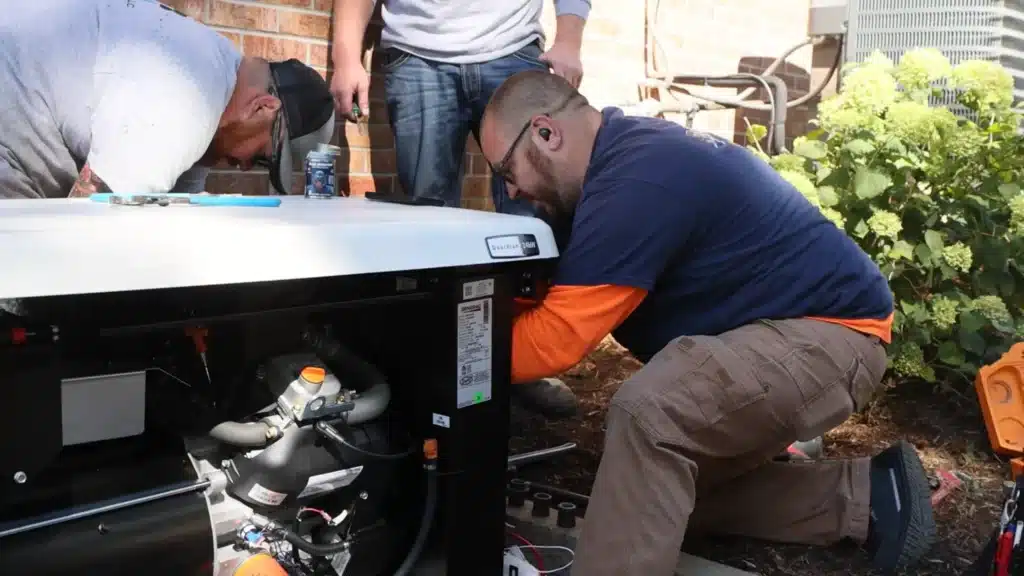
Rewired Iowa follows a structured, customer-first process from consultation to activation and ongoing monitoring, ensuring safe, code-compliant installations. The process starts with a site assessment and load calculation for kW sizing and fuel type, then permit acquisition and utility coordination. Installation covers site prep, pad placement, ATS and wiring, fuel hookup, system commissioning, and final inspection. Post-activation, Rewired Iowa provides ongoing monitoring and service via their Never Dark™ Plan, backed by a 5-year workmanship guarantee and 24/7 support.
- Free consultation and site assessment: Rewired Iowa evaluates load, fuel options, and site constraints.
- Permits and scheduling: The team secures permits and schedules installation with local inspections.
- Installation and commissioning: Technicians install the pad, ATS, fuel connection, and complete wiring and testing.
- Activation and monitoring: The system is commissioned, tested under load, and enrolled in monitoring/warranty programs.
How Does the Consultation to Activation Process Work?
During consultation, Rewired Iowa gathers essential data: electrical panel layout, circuit priorities, fuel availability, and access constraints. A load calculation determines generator kW and transfer switch sizing, followed by permit-ready plan submission. Timelines vary by permit processing, but homeowners receive scheduling windows for installation and inspection, with utility coordination as needed. On install day, crews test operation under simulated outages and review system controls/monitoring before handover with documentation and warranty enrollment.
Clear communication ensures installations meet safety codes and homeowner expectations.
Why Choose Rewired Iowa for Your Generator Installation?
Rewired Iowa offers local, family-owned service and Generac-authorized installation expertise to Central Iowa homeowners seeking reliable backup power. Their Never Dark™ Plan bundles installation, monitoring, upgrades, and zero-blackout protection with a 5-year workmanship guarantee, fast, friendly service, and upfront pricing. With 24/7 electrical services and satisfied local customers, Rewired Iowa is a practical partner for those choosing permanent standby solutions over portable stopgaps.
These proof points—authorized dealer status, guarantee, monitoring, and local availability—are key reasons homeowners choose a turnkey standby solution over managing portable units during prolonged outages.
What Financing Options Are Available for Whole House Generators in Iowa?
Financing makes whole house generators affordable by spreading upfront investment into manageable monthly payments. Rewired Iowa offers flexible payment plans and partners with financing programs, emphasizing transparent, customer-first options for various budgets. Monthly payment scenarios vary by system size and term, but financing lowers the barrier to choosing a reliable standby solution over an unreliable portable fix.
Homeowners should weigh interest costs against portable generator risks and discuss partner programs for suitable terms.
Which Flexible Payment Plans Does Rewired Iowa Offer?
Rewired Iowa offers partner financing and monthly payment plans to spread costs over time; specific plan names and APRs are available upon inquiry. These options allow homeowners to balance monthly payments with overall project cost, with potential promotional rates. For accurate terms and eligibility, request a quote and financing outline during consultation.
Financing makes whole house systems accessible immediately, preserving household savings.
How Can Customers Benefit from Partner Financing Programs?
Partner financing offers benefits like preserved cashflow, predictable monthly payments, and faster project starts by reducing upfront capital. Customers can finance both equipment and installation for turnkey delivery without large immediate expense. Eligibility depends on credit; apply through the installer or partner for pre-approval and payment estimates. Financing lowers the barrier, accelerating the transition from unreliable portable power to a professionally installed standby solution.
Financing aligns with Rewired Iowa’s goal to make resilient power practical for more Central Iowa households.
Why Is Regular Maintenance Crucial for Generator Longevity and Reliability?
Scheduled maintenance ensures generator readiness by addressing wear, preventing fuel/lubricant degradation, and maintaining electrical components/batteries. This reduces failure risk and protects warranty coverage. Routine tasks include oil/filter changes, air filter replacement, battery testing, fuel line inspection, and load tests for ATS operation. Regular maintenance also identifies corrosion, exhaust issues, or control board errors early, prolonging useful life and minimizing emergency repair costs. For standby systems, maintenance is the operational backbone ensuring readiness during outages.
As maintenance ensures warranty compliance and system readiness, many providers bundle monitoring and scheduled service into plans for consistent care and rapid response.
What Are the Benefits of Scheduled Generator Maintenance?
Scheduled maintenance improves reliability, extends equipment life, ensures warranty compliance, and reduces costly emergency repairs. Regular inspections and testing detect early signs of fuel degradation, battery weakness, or control faults before an outage. Annual or semi-annual service with load testing provides confidence in generator performance and lowers lifecycle costs by preventing major component replacements. These operational benefits make maintenance a cost-effective aspect of whole house ownership.
Routine maintenance protects both the initial investment and household continuity during adverse events.
What Maintenance Plans Does Rewired Iowa Provide?
Rewired Iowa’s Never Dark™ Plan and ongoing service offerings include maintenance and monitoring to keep standby systems operational; contact them for specific plan tiers and enrollment. The company emphasizes scheduled service, remote monitoring, and 24/7 electrical support with a 5-year workmanship guarantee, providing structured preventive care. Enrolled homeowners benefit from proactive alerts and scheduled visits aligned with manufacturer recommendations, preserving warranty conditions and ensuring timely interventions.
For plan details, enrollment, and pricing, request a maintenance plan overview during consultation or service inquiry.
Frequently Asked Questions
What is the difference between a whole house generator and a portable generator?
A whole house generator is a permanent installation providing automatic backup power to your entire home. Portable generators are temporary, requiring manual setup and fueling. Whole house units connect seamlessly to your electrical system, offering greater reliability for extended outages than limited-capacity portables.
How long does the installation process for a whole house generator typically take?
Installation time varies by complexity and local permitting, typically taking one to three days. This includes site assessment, permits, installation, and final inspections. Rewired Iowa streamlines this process for timely service.
Are there any ongoing costs associated with owning a whole house generator?
Yes, ongoing costs include routine maintenance, fuel, and potential repairs. Regular maintenance, including scheduled service and inspections, is crucial for reliability and longevity. Budget for fuel (natural gas or propane) and any unexpected repairs to maintain performance.
What should I consider when choosing the size of a whole house generator?
Choose generator size based on your home’s power needs, including essential appliances. A professional load calculation determines appropriate kW capacity, considering peak demand and critical circuits. Also, factor in fuel type, property layout, and future power needs.
How can I ensure my generator is ready for use when needed?
Ensure readiness with a regular maintenance schedule: oil changes, battery checks, and load tests. Keep fuel fresh with stabilizers and rotation. Rewired Iowa’s Never Dark™ Plan offers scheduled service and monitoring for peace of mind.
What are the environmental impacts of using a whole house generator?
Whole house generators, particularly natural gas models, have a lower environmental impact than portable gasoline units due to cleaner fuel and fewer emissions. Consider overall energy consumption and efficiency. Regular maintenance further minimizes emissions and ensures efficient operation.
Can I install a whole house generator myself, or should I hire a professional?
Hiring a professional for whole house generator installation is highly recommended. Professionals ensure local code compliance, perform load calculations, and safely handle complex electrical connections. Professional installation also typically includes warranties and guarantees for reliable operation.
Conclusion
Investing in a whole house generator ensures reliable, automatic power during outages, safeguarding your home and enhancing its value. Unlike portable generators, which often fail, standby systems offer seamless operation and peace of mind. Choose Rewired Iowa for expert installation and ongoing support. Contact us today to secure your home’s power.
